

























































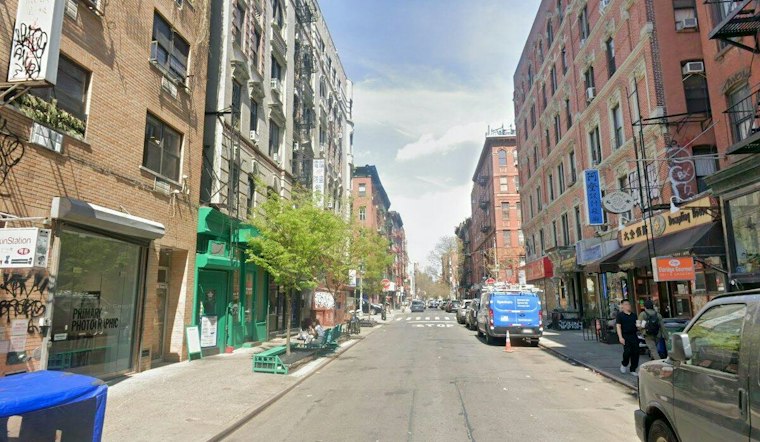
On New York's Lower East Side, a new restaurant called Eldridge Street Store is staying open until 4 a.m. on weekends and still packing in customers at 11:30 p.m. even on Sundays. The spot is part of a broader shift back toward late-night dining after years of restaurants pulling back their hours during and after the pandemic.
According to Bloomberg, Eldridge Street Store was built to honor New York dining heritage, and it stays open until midnight on weeknights before extending to 4 a.m. on weekends. The restaurant even includes a glass-encased pale-blue waiter's jacket from Wo Hop, the 88-year-old basement restaurant famous for its lo mein and egg rolls, as a nod to the overnight institutions that came before it. Photographer Chris Arias captured the scene inside the restaurant for the outlet's reporting.
A Nod to Chinatown's Overnight Legends
Wo Hop's own history helps explain why a new restaurant would want to borrow its symbolism. Founded in 1938 at 17 Mott Street, Wo Hop is Chinatown's second-oldest restaurant and earned a James Beard Foundation America's Classics award in 2022, according to Wikipedia. The restaurant expanded its iconic late-night basement operation into a street-level dining space in June 2025, a move that underscores how much appetite remains for the kind of after-hours Cantonese-American comfort food that drew generations of musicians and night-shift workers downstairs on Mott Street.
Eldridge Street Store itself was developed in partnership with community group Welcome to Chinatown, explicitly designed as a late-night fusion and tea venue meant to capture the historical nighttime energy of local Chinese eateries, per Welcome to Chinatown. That mission places the restaurant squarely in a Lower East Side corridor that has already seen a wave of new evening concepts try to capture the neighborhood's hungry late crowds.
Part of a Wider Neighborhood Revival
Just down the block, Franco-Vietnamese spot Bistrot Ha opened a 45-seat dining room at 137 Eldridge Street in early 2026, part of a broader post-pandemic surge in new evening concepts along Eldridge Street and surrounding blocks, as Hoodline previously reported on a fish sauce frenzy. Long wait times and high demand for walkable neighborhood tables have pushed operators across the strip to test later and later service hours.
That local momentum tracks with a national pattern. Between 2020 and 2024, the number of 24-hour dining establishments in the United States dropped by 18%, with New York City experiencing a 13% decline, according to Yelp data cited by VinePair. Los Angeles saw an even steeper 35% reduction in around-the-clock eateries over the same stretch, the outlet found.
Hours Are Creeping Back, Slowly
Datassential research showed that U.S. restaurants operated an average of 2.6 fewer hours per week in 2023 compared with pre-pandemic 2019 levels, though that marked a partial recovery from 2022, when operating hours were down by 6.4 hours weekly. Independent restaurants saw the steepest pullback, averaging a 4.6-hour weekly reduction compared with 2019, per the same research.
Economic pressure still looms over any late-night rebound. The National Restaurant Association's 2025 operational report found that 33% of full-service restaurant operators nationwide reduced their regular operating hours and 16% completely closed on days they were previously open, moves aimed at offsetting elevated food and labor expenses. Food costs and labor pressures remain concerns for restaurants.
Yet demand for a late table hasn't disappeared, it's just shifting toward different nights. OpenTable market research cited by Bar & Restaurant found that post-pandemic late-night dining growth has been strongest on weeknights rather than weekends, with seated reservations past 9 p.m. rising 18% on Mondays, 23% on Wednesdays, and 24% on Thursdays. Operators elsewhere have leaned into that pattern with late happy hours and specialized after-hours menus to pull in off-peak weekday crowds.
How Other Cities Are Handling the Late Shift
The push and pull between nightlife revival and neighborhood regulation isn't unique to New York. In London, Mayor Sadiq Khan replaced the city's Night Czar position in early 2025 with a new Night-time Economy Taskforce following the departure of Amy Lamé, after reports showed roughly half of London's nightclubs had closed over the preceding eight years, according to the London Forum. At the same time, OpenTable UK data recorded 6 p.m. dinner bookings rising by 11% year-over-year in London in 2025, with the average UK dinnertime shifting earlier to 6:12 p.m., a trend The Week US linked to remote work flexibility and wellness-focused dining habits.
In Greater Boston, the regulatory tightrope looks a bit different. Municipalities including Brookline established designated late-night dining zones in late 2024 to streamline midnight and 1 a.m. licensing, while Boston's city licensing board has limited 2 a.m. or 3 a.m. permits in residential corridors like Kenmore Square due to neighbor noise concerns, according to the Brookline Select Board. Those hurdles illustrate the kind of neighborhood friction that late-night operators, including those on the Lower East Side, have to navigate as they chase back the after-midnight crowd that once defined blocks like Mott and Eldridge streets.





