

























































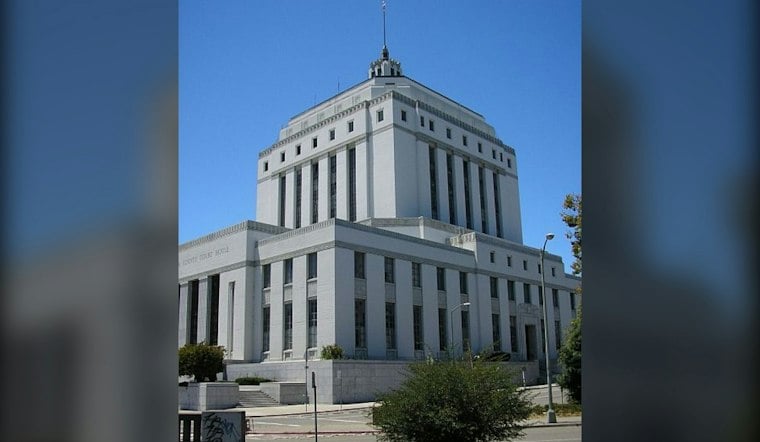
An environmental group and an agency representing local farmers have sued the State of California, demanding a court order that would force the state to slash water pumping from the Sacramento-San Joaquin River Delta by half. The lawsuit, filed this week in Alameda County Superior Court, targets the State Water Project, a sprawling network of reservoirs, aqueducts, pipelines and pumping plants that moves water more than 700 miles from Northern California to the south, supplying roughly 27 million people and 750,000 acres of farmland.
The California Water Impact Network and the Central Delta Water Agency filed suit against the California Department of Water Resources, according to the Los Angeles Times. The plaintiffs seek a 50% cut in State Water Project Delta exports, court oversight of pumping curtailments, and a long-term plan, arguing the pumping violates both the California Constitution and the Public Trust Doctrine. Carolee Krieger, representing the California Water Impact Network, said the goal is to save the Delta, while Brett Baker said the suit focuses on curbing ecosystem, community and economic degradation in the region, per the Times. The Central Delta Water Agency represents hundreds of local farmers, the paper reports.
A Legal Theory Rooted in a 1983 Water Rights Case
The plaintiffs are leaning on a legal doctrine with deep California roots. In the 1983 case National Audubon Society v. Superior Court, the California Supreme Court ruled that the Public Trust Doctrine continually constrains water allocations, giving the state an ongoing duty to protect ecological values in navigable waterways, according to the UC Davis Law Review. That Mono Lake ruling established that water rights granted by the state remain subject to review and modification if they degrade the environment.
The suit also cites Article X, Section 2 of the California Constitution, a 1928 amendment mandating that all water in the state be put to reasonable and beneficial use while barring wasteful or unreasonable diversion methods, per Justia Law. That provision functions as a blanket limit on every water right in California, public or private. According to the Times, excessive pumping draws seawater farther into the estuary, making irrigation water salty and damaging crops, while also triggering toxic algae blooms that pose health threats to people and animals.
Fish Populations Have Collapsed Under Decades of Pumping
The ecological stakes underlying the lawsuit are stark. Chinook salmon, steelhead trout, smelt and sturgeon have declined dramatically over the last few decades, the Times reports, and droughts have turned Delta waterways bright green with algae blooms. California Department of Fish and Wildlife's Fall Midwater Trawl survey recorded zero wild Delta smelt for eight consecutive years through late 2025, according to FISHBIO data cited by Indybay.
Plaintiffs argue that excessive Delta pumping has encouraged more growers to plant almonds and pistachios in the San Joaquin Valley, permanent crops that cannot be fallowed during droughts, compounding the state's water problems, the Times reports. That claim lines up with broader trends: California's bearing almond acreage reached roughly 1.385 million acres in 2026 after decades of expansion, with statewide almond cash receipts totaling $6.87 billion in 2025, according to Rotner and Associates. About 56% of State Water Project water flows to urban areas and 44% goes to agriculture, per the Times.
State Says It Won't Comment, Defends Its Balancing Act
A Department of Water Resources spokesperson said the agency does not comment on pending litigation, the Times reports. More broadly, Governor Gavin Newsom's administration has defended the state's approach as a balance between Delta pumping, fish and ecosystem protection, and water deliveries. California officials and the Biden administration set new rules in 2024 for operating the state's main water delivery systems aimed at protecting imperiled fish while reliably supplying water to residents, according to the Times, which also notes that climate change threatens to shrink California's reliably deliverable water supply over the next two decades.
Legal scholar Dave Owen predicted the lawsuit will be difficult for the plaintiffs and that the state is likely to prevail, telling the Times he expects state lawyers to argue the case amounts to a political objection to a primary California water-allocation system rather than a legitimate legal claim, and to fight it with significant resources. Owen described the lawsuit as a frontal assault on the State Water Project, per the same report. Environmental advocates have considered bringing a Delta water lawsuit for years, the Times notes.
The Suit Arrives Amid a String of Delta Troubles
The litigation lands as the state's long-term plan for moving more Delta water faces its own obstacles. The Newsom administration has pushed for a 45-mile tunnel beneath the Delta, known as the Delta Conveyance Project, as an alternative to current pumping infrastructure. But a court yanked the tunnel's bond lifeline in January, when a California appellate court invalidated DWR's revenue bond authorization for the $20.1 billion project, a major legal hurdle for the state's long-term Delta plumbing plans.
Lawmakers approved a $158.2 million infrastructure package in September that includes $90.2 million to repair fragile Delta levees, many of which date to the 1800s and do not meet Army Corps standards.
Whatever the court decides in this latest challenge, the outcome will ripple through every corner of a water system that touches tens of millions of Californians.





