

























































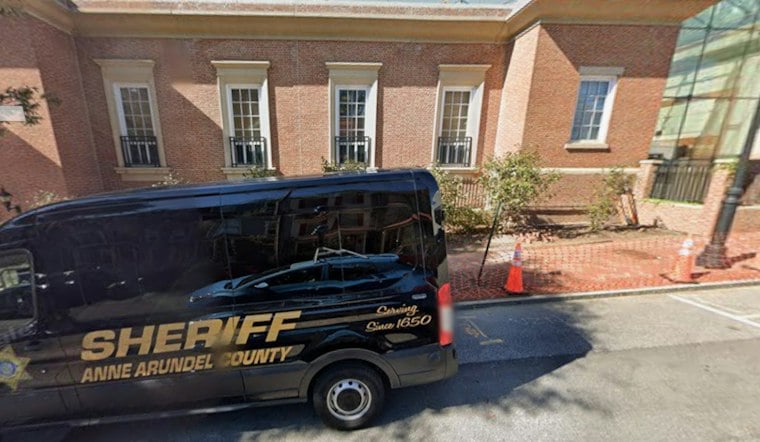
Decades after a young narcotics detective nearly shot the man he was arresting outside a drug den in Pasadena, that same lawman and his onetime target have written a book together. Ron Bateman, the former Anne Arundel County sheriff, and Billy Joe Nichols, a onetime drug kingpin who ran cocaine from Colombia, have co-authored a memoir chronicling their intertwined pasts in the working-class Anne Arundel County community where they both grew up.
As reported by The Baltimore Banner, the book is billed in the outlet's reporting as “Covert Underworlds: Memoirs of a Dealer and a Detective,” described as an account of law enforcement and drug culture in 1980s Pasadena. The Banner reports it was published this month and traces the parallel lives of Bateman, now 65, and Nichols, 67, as they came of age in northern Anne Arundel County before ending up on opposite sides of the law.
Notably, a promotional post on Instagram lists the title differently, as “Opposing Sides: Memoirs of a Drug Dealer and a Detective.” The discrepancy between the two titles has not been resolved, and it's unclear which one reflects the book's actual, final name.
From Narcotics Detective to Sheriff
Bateman's law enforcement career began long before he ever sat down to write with Nichols. He worked undercover as a narcotics detective for the Anne Arundel County Police Department, where the Banner's reporting says he arrested Nichols as a young officer. Bateman spent roughly 23 years with the department across patrol, narcotics and homicide assignments, according to the Capital Gazette.
He later became the county's elected sheriff, a path that began in 2003 when he joined the Anne Arundel County Sheriff's Office as chief deputy under then-Sheriff George Johnson, per the same account. Bateman was first elected sheriff in 2006 and won reelection in 2010 and 2014, serving in the role through 2018 according to the Banner's reporting.
During the arrest that set their stories on a collision course, Bateman nearly shot Nichols, the Banner reports. The outlet does not detail the full circumstances of that confrontation, but the brush with gunfire became one of the defining moments the two men revisited while building the book.
A Trafficker's Rise and Fall
Nichols' own account, as relayed by the Banner, describes him as a former drug kingpin who supplied Baltimore's Cherry Hill neighborhood, most of the city's west side, and the area known as the Block. He has said his operation had ties to the Medellín cartel, an assertion attributed to Nichols himself in the Banner's reporting rather than independently confirmed by investigators.
Court records paint a stark picture of the scale of his trafficking. According to a federal appellate opinion in United States v. Nichols, he piloted a Piper Aztec that smuggled 100 kilograms of cocaine from Colombia to Raceland, Louisiana, in July 1982. The following month, the same opinion states, he ferried a far larger haul of 2,560 kilograms of cocaine on the same Colombia-to-Louisiana route.
Conspirators agreed to pay Nichols $300,000 for each trip, the court opinion states. The Fifth Circuit affirmed his conviction on conspiracy counts tied to cocaine importation and possession with intent to distribute in a ruling issued January 9, 1985. Separately, the Banner reports Nichols was sentenced to five years in federal prison in 1984.
Looking Back on a Wild Youth
Nichols has said his descent into the drug trade started early, telling the Banner he began going wild around sixth and seventh grade and was long gone by eighth grade. He also said he grew marijuana using methods he researched at the University of Maryland library, a detail that speaks to the homegrown, almost improvisational beginnings of an operation that would eventually move cocaine by the ton.
These days, Nichols has stopped dealing drugs and works at the Port of Baltimore, according to the Banner's reporting. He has said he wants parents and friends to recognize warning signs in young people before a path like his own takes hold, and has said he plans to use part of any proceeds from the book to fund a community center in Pasadena.
For Bateman, the project was not something he had previously planned, he told the Banner. He said he interviewed Nichols for hours at a time while putting the book together, sessions that apparently allowed two men who once stood on opposite sides of handcuffs to reconstruct a shared history of working-class Pasadena in the 1980s.
A promotional post on Instagram touted ambitions beyond the page, with language suggesting hopes of seeing the story reach the screen and aspirations toward a national bestseller list. Those claims are promotional in nature and have not been independently verified.





