

























































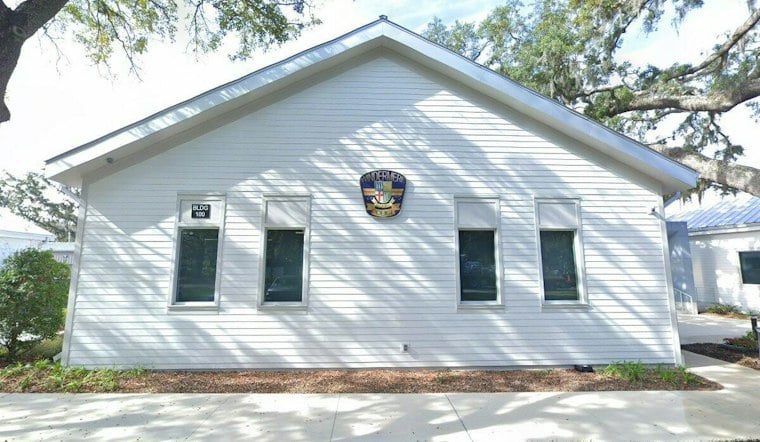
A woman posing as an FBI courier drove off with $18,400 in cash packed inside a shoebox after an 82-year-old Windermere resident fell for a phone scam this week, according to the Windermere Police Department. Detectives say at least one suspect called the victim by phone, claimed to be an FBI agent, and convinced her they were investigating bank fraud before sending someone to collect the money in person.
How the Scheme Unfolded in Windermere
The incident happened Tuesday, according to the Windermere Police Department, as reported by WKMG. The suspect arrived at the victim's home posing as an FBI courier and picked up the shoebox containing the cash before leaving in a silver Toyota, per the police release. Detectives are now looking for the woman believed to be responsible and have released her image publicly, asking anyone with information to come forward.
Windermere police have asked tipsters to contact Sgt. John Allen at (407) 909-5306 or [email protected]. The station's report notes that no additional details had been released as of publication, leaving open whether investigators have identified the courier or connected her to a broader network.
A Tactic Seen Across Florida and Beyond
The shoebox hand-off is not an isolated trick. Fraud networks specifically instruct victims to pack withdrawn cash into everyday household containers like shoeboxes so the transfer looks unremarkable and doesn't raise alarms with bank tellers, according to law enforcement and consumer protection authorities cited by Hoodline's earlier reporting. A nearly identical pattern played out in Fruit Cove in June, when an 81-year-old woman was instructed to hand $18,000 in cash to a doorstep courier before her husband and a neighbor intervened and called 911, leading to a Jacksonville courier's arrest.
The Federal Bureau of Investigation has repeatedly warned that its agents and other federal law enforcement officers will never call citizens to demand money, threaten immediate arrest, or send couriers to collect cash, gift cards, gold, or cryptocurrency, according to guidance posted on FBI.gov. That official protocol directly contradicts the premise scammers used on the Windermere victim, who was told she was helping investigate bank fraud.
Why Windermere Is an Appealing Target
Windermere's demographics help explain why organized fraud rings zero in on towns like it. Census Bureau data shows the town's median household income sits at $177,778, more than double the statewide average, with 22 percent of residents aged 65 or older, according to figures compiled by Census Reporter. That combination of wealth and an older population has made Central Florida communities a recurring target for phone-and-courier schemes that rely on fear of federal law enforcement to pressure victims into quick compliance.
The scale of the problem shows up in state and national numbers alike. Florida residents aged 60 and older reported $709.8 million in cybercrime losses across 17,147 complaints in 2025, an 83 percent surge over the prior year that placed the state second nationally for elder fraud losses, per the South Florida Reporter. Nationwide, elder fraud losses climbed to $7.75 billion across more than 201,000 complaints in 2025, with victims 60 and older accounting for over 37 percent of all cybercrime financial losses in the country, according to Security Hero.
Potential Charges if a Suspect Is Caught
Florida law treats crimes against elderly victims with added severity. Under Florida Statute § 812.0145, grand theft valued between $10,000 and $50,000 against a victim 65 or older is a second-degree felony punishable by up to 15 years in prison, a $10,000 fine, mandatory restitution, and up to 500 hours of community service. If a suspect also falsely impersonated a law enforcement officer while committing the underlying felony, Florida Statute § 843.08 enhances that offense to its own second-degree felony, carrying another potential 15-year prison term and $10,000 fine.
Government impersonation remains the most frequently reported fraud category nationally for nine consecutive years, with losses reaching roughly $920 million in 2025, up from $789 million in 2024, according to Federal Trade Commission data cited in Hoodline's prior coverage of a similar Arizona case. Similar courier-based schemes have surfaced recently in Nebraska and Michigan, underscoring that the Windermere case fits a pattern investigators elsewhere have also been tracking.
Anyone who has been targeted by a similar scheme is urged to contact local police and report details to IC3.gov. Victims can also request a hold-harmless cash recall through their financial institution as quickly as possible.





