

























































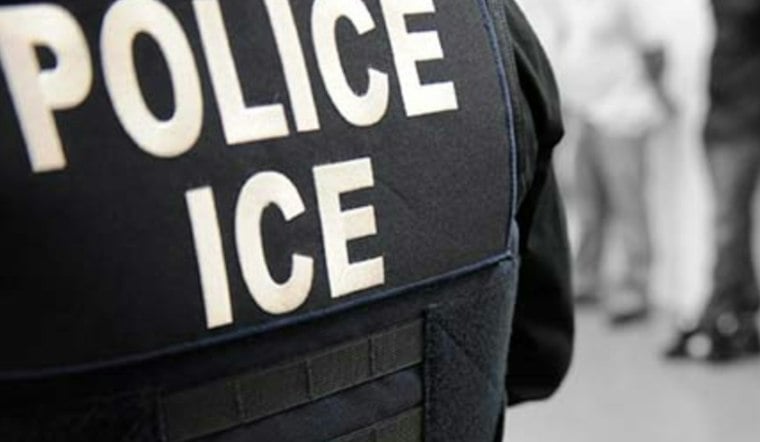
A federal judge in Brooklyn has thrown out the Trump administration's lawsuit seeking to block New York City laws that limit cooperation with federal immigration enforcement, ruling that the government lacked a valid basis to sue. U.S. District Judge Ramon Reyes found that the administration could not challenge a city law barring police from detaining immigrants simply because federal authorities asked them to.
According to Reuters, Reyes ruled that New York state law prohibits police from detaining immigrants at the request of federal authorities, and that separate city laws restrict local authorities from sharing immigrants' release dates, whereabouts, or other custody information. The judge said federal law does not require state and local governments to share that kind of custody information, and he rejected the administration's core argument that federal law superseded the challenged city laws. The government, Reyes found, could not force local governments to assist with immigration enforcement.
The Trump administration filed the lawsuit in New York federal court in July 2025 as part of a broader campaign against sanctuary city policies nationwide, policies designed to shield immigrants from the administration's mass deportation campaign, per Reuters. That original complaint, filed as United States v. City of New York, specifically targeted New York City Administrative Codes §§ 9-131, 9-205, 14-154, and 10-178, along with NYPD Operations Order No. 4, arguing those provisions were preempted under the Supremacy Clause, according to the Civil Rights Litigation Clearinghouse.
A Legal Doctrine Decades in the Making
The ruling leans on a well-worn constitutional principle. Legal arguments defending sanctuary laws against federal preemption suits have long relied on the Supreme Court's 1997 decision in Printz v. United States, which the National Constitution Center notes established under the Tenth Amendment that the federal government cannot commandeer state and local officers to administer federal regulatory programs. That precedent came from a 5-4 decision authored by Justice Antonin Scalia involving federal handgun background checks.
New York's own courts have reinforced similar limits independently of city law. A 2018 ruling by the New York Supreme Court Appellate Division in People ex rel. Wells v. DeMarco found that state law grants local police no authority to detain individuals solely on civil immigration detainers without a judicial warrant, according to the New York Civil Liberties Union, a case that arose from a challenge to civil holds enforced by the Suffolk County Sheriff's Office.
New York City's sanctuary framework is not an absolute bar on cooperation, however. Under the city's 2014 detainer laws, enacted through Local Laws 58 and 59, local law enforcement and corrections departments are barred from honoring ICE detainers unless a person has been convicted of a covered violent or serious crime and ICE presents a warrant signed by a federal judge, per the New York City Mayor's Office of Immigrant Affairs.
City Hall Divided Over How Far to Bend
The legal fight has exposed political cracks inside city government. Following the Justice Department's 2025 lawsuit, then-Mayor Eric Adams pushed to modify sanctuary laws to allow police coordination on violent crime suspects, citing specific violent incidents involving undocumented suspects, but City Council Speaker Adrienne Adams and the council majority refused to alter the protections, according to CBS News. Current Mayor Zohran Mamdani has moved the other direction, signing Executive Order No. 13 in February 2026 to prohibit non-city personnel from using city property for immigration enforcement and to bar city agencies from sharing data collected for municipal purposes with federal immigration authorities, as Hoodline previously reported.
Meanwhile, federal authorities have increasingly bypassed local restrictions altogether rather than fight them in court. The Department of Homeland Security reported that between January 20, 2025, and October 8, 2026, state and local agencies in New York declined to honor 16,070 civil detainer requests, covering 52,503 total associated criminal charges and convictions, including charges for 9,502 assaults, 2,198 weapons offenses, and 131 homicides. From late July through late August 2026, federal authorities ran Operation Rotten Apple, arresting 2,100 people across New York City, Long Island, and the Hudson Valley in a direct push around local non-cooperation policies, with DHS Secretary Markwayne Mullin personally announcing the results.
Tensions Boil Over in the Streets
Those field operations have produced volatile confrontations. On October 8, 2026, an ICE officer discharged a firearm during an attempted arrest in the Bronx after a suspect allegedly weaponized a vehicle against agents. Demonstrators marched in lower Manhattan the next day in response to the shooting, according to Reuters, intensifying an already heated local debate over sanctuary policy just a week before Reyes dismissed the federal lawsuit.
The Justice Department did not immediately respond to a request for comment on the ruling, Reuters reported. The dismissal is not the first time federal courts have weighed in on New York's sanctuary stance; in February 2020 the Second Circuit Court of Appeals sided with the Justice Department in New York v. Barr, upholding federal conditions attached to Edward Byrne Memorial Justice Assistance Grants that required local governments to give federal immigration officials access to detention facilities, a decision that created a split with other federal appeals courts, per the National Conference of State Legislatures. Reyes's ruling leaves that earlier funding dispute untouched while rejecting the administration's newer attempt to override the city's detainer and information-sharing laws outright. The Reuters article on the dismissal was reported by Jack Queen in New York and edited by Matthew Lewis.




