

























































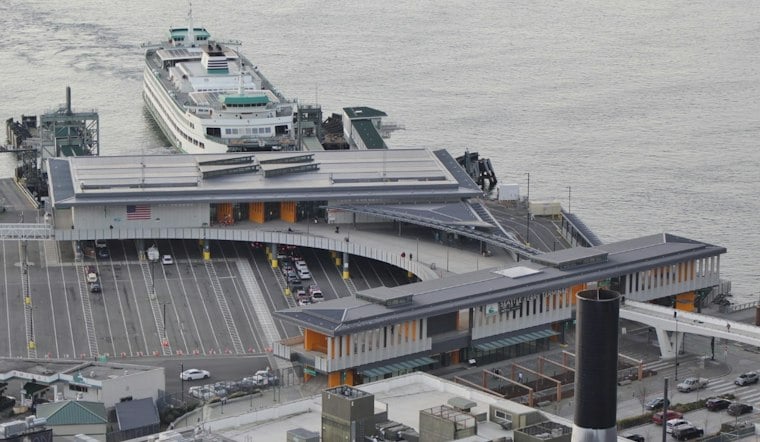
Washington State Ferries riders across Puget Sound woke up Monday to a mess of cancellations and one-boat service, with routes connecting Seattle, Bainbridge Island, Bremerton, Edmonds, Kingston, Mukilteo, Clinton, Port Townsend, Coupeville and the San Juan Islands all hit by crew shortages tied to a wave of sick calls. The disruptions left commuters scrambling for alternate routes or simply stuck on the dock, waiting to see if a boat would show up at all.
According to KOMO News, the agency experienced a lack of qualified crew due to sick calls, forcing cancellations or reduced one-boat service on several of its busiest corridors. Dock workers told KIRO Newsradio that the morning cancellations appeared to stem from a sick-out among marine engineers pushing for a 20% wage increase amid contract negotiations that have dragged on since engine room staff contracts expired without a new agreement.
WSF spokesperson Justin Fujioka told KOMO that the agency works to find a qualified relief employee whenever a crew member calls out, but that a sailing cannot operate safely without one. Under the state's collective bargaining rules, off-duty employees can choose whether to accept or decline shifts offered to fill those open positions, meaning dispatchers have no way to force a replacement into the engine room even when hundreds of calls go out, a constraint detailed in a WSDOT workforce report. Fujioka said the agency is investigating what may be contributing to the number of callouts and the difficulty filling open positions, and he urged riders to check WSF's travel alert bulletins for current information before heading to the dock.
Why a Single Missing Crew Member Can Sink a Sailing
The reason one sick call can cancel an entire sailing comes down to federal law. Washington State Ferries is bound by U.S. Coast Guard Certificates of Inspection that mandate strict minimum crewing levels on every vessel, so missing even one required position legally keeps a boat tied to the dock, according to WSDOT. Those minimums exist to ensure emergency response readiness, which leaves no legal workaround when engine room staff don't show.
The engine room staffing fight has been building for months. The Marine Engineers' Beneficial Association, which represents roughly 400 WSF engine room workers, publicly warned in June that a 20% pay disparity between engine room staff and deck officers was driving severe burnout and unsustainable overtime reliance, as reported by the Bainbridge Island Review. Engine room workers logged roughly 109,000 overtime hours in 2025, the outlet reported, a workload the union says is pushing people out the door.
A union survey conducted that same month found more than 60% of engine room respondents said they were somewhat or very likely to retire or leave state employment altogether for higher-paying private-sector maritime jobs, per the Bainbridge Island Review's reporting. The pay gap helps explain why: private-sector chief engineers can earn up to $300,000 a year, compared with under $150,000 at WSF.
An Aging Fleet With No Backup Boats
The staffing crunch is compounded by a fleet that has shrunk and aged at the same time. Washington's ferry fleet contracted from 25 vessels in 2015 to 21 active vessels in 2026, with 11 of the remaining boats over 40 years old and zero spare relief vessels available to swap in when a boat goes down, according to WorkBoat. That leaves little cushion for a system that, as KOMO notes, reflects decades of underinvestment in vessel construction.
WSF remains the largest ferry operator in the country, having carried 20.1 million riders and 9.4 million vehicles across eight routes and 20 terminals in 2025, per Wikipedia figures cited in the dossier. For many Puget Sound commuters, these routes function as floating extensions of the state highway system, which is why a sick-out on a handful of boats can ripple across an entire region's morning commute.
Long-Term Fixes Are Years Away
State leaders have been working to address both the aging fleet and the workforce pipeline, though the fruits of that labor are still years out. In August, Governor Bob Ferguson announced the start of construction on Washington's first new ferry in 11 years, a $714.5 million shipbuilding contract with Florida-based Eastern Shipbuilding Group, part of a $1.15 billion total project cost to build three hybrid-electric ferries, the first of which isn't expected until 2030, according to MyNorthwest. State officials exercised an option for a third vessel in that deal to address future demand.
On the labor side, WSF partnered with the Maritime Institute of Technology and Graduate Studies to offer fully funded two-year apprenticeships, welcoming its second scholarship cohort in January 2025 to train new licensed deck officers without requiring prior maritime experience, per MITAGS. The agency's own 2025 Year in Review reported that crew-related sailing cancellations had dropped by nearly 70% compared to 2024 following targeted hiring and the restoration of 18-vessel service, with roughly 7,000 additional sailings operated that year.
Monday's disruptions suggest that progress remains fragile. Even with hiring gains and a long-term shipbuilding plan underway, the system's day-to-day reliability still hinges on resolving the engine room wage dispute and keeping every vessel staffed to the federal minimum required to sail.




