

























































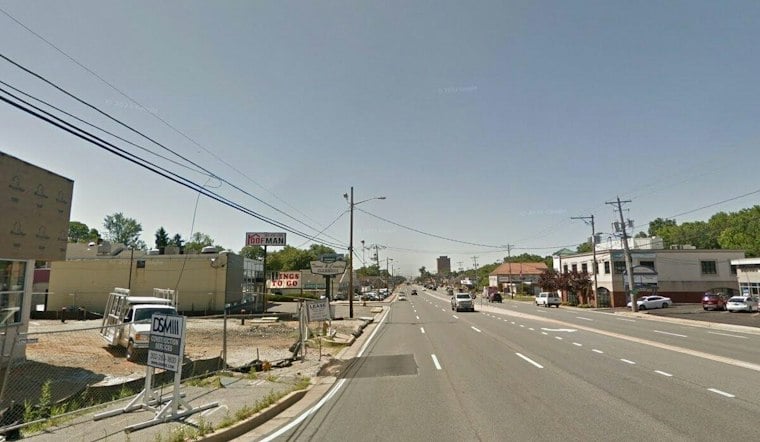
A tractor-trailer driver was hospitalized Wednesday morning after a 55-gallon drum of formaldehyde began leaking inside his trailer on Concord Pike near East Park Drive, triggering a hazmat response that snarled traffic across one of northern New Castle County's busiest corridors. The 59-year-old driver was treated for an inhalation injury and is listed in stable condition.
Multiple agencies were dispatched around 11:04 a.m. Wednesday after the leak was discovered, according to the New Castle County Department of Public Safety Emergency Medical Services Division. Separately, emergency dispatch logs reviewed by Christiana Fire Company indicate crews were alerted to the uncontained hazardous material situation at 10:03 a.m., establishing an earlier timeline for when first responders began coordinating the regional response.
What Was Leaking, and Why It Mattered
Formaldehyde is classified as a known human carcinogen, and the Occupational Safety and Health Administration sets its permissible workplace exposure limit at 0.75 parts per million over an eight-hour shift, with sensory and respiratory irritation starting at concentrations as low as 0.1 to 1.0 parts per million, according to OSHA. Chemical solutions containing 25 percent or more formaldehyde are classified under federal shipping rules as Class 8 corrosive or Class 3 flammable liquids, requiring specialized hazardous packaging and external vehicle placards, per the Pipeline and Hazardous Materials Safety Administration. The exact concentration of the formaldehyde solution involved in Wednesday's spill has not been disclosed.
Delaware State Police is investigating the incident, the station's report notes, while Delaware environmental regulations require immediate notification to DNREC's 24-Hour Emergency Response Hotline whenever an uncontained release of hazardous chemicals occurs. It remains unknown which freight carrier operated the truck or what the shipment's origin and destination were.
Federal Rules Governing Cargo Securement
Federal hazardous materials transportation regulations under 49 CFR 177.834 require all packages containing hazardous materials on motor vehicles to be secured against shifting and relative movement during transit, according to guidance cited by EHS Leaders. Separately, federal motor carrier safety rules mandate that commercial truck drivers inspect their cargo securement within the first 50 miles of a journey and re-examine tiedowns whenever their duty status changes, per the Utah Department of Transportation. Because a load shift inside the trailer caused the drum to leak, it raises questions about whether blocking, bracing, and tiedown securement standards were followed before the truck took to the road — though no citations for improper load securement have been reported as of this writing.
Traffic Backup on a Key Regional Artery
U.S. Route 202 along Concord Pike is a critical six-lane commercial and commuter arterial in northern New Castle County, carrying between 30,000 and 55,000 vehicles per day, according to the Wilmington Area Planning Council. The corridor connects Wilmington to Pennsylvania and serves major retail and commercial centers, which helps explain why the hazmat investigation caused a massive traffic backup in the area, as NBC10 Philadelphia reported.
The Talleyville Fire Company, known as Station 25, serves as the primary volunteer fire company covering the Concord Pike commercial corridor in suburban Wilmington, according to the City of New Castle. New Castle County's 2026 All-Hazard Mitigation Plan classifies transit-based hazardous material releases as a key technological hazard, identifying respiratory inhalation injuries as the primary health threat during transportation spills — a designation that underscores why the driver's inhalation injury prompted immediate hospitalization.
Concord Pike's history as a transportation corridor stretches back more than two centuries: the route was originally chartered in 1811 as the Wilmington and Great Valley Turnpike before being incorporated into the federal highway system in the 1920s and 1930s, per Wikipedia. Wednesday's spill is at least the second major hazmat incident on a U.S. highway in as many days, following a tractor-trailer crash that spilled hazardous chemicals and shut down all eastbound lanes of I-40 in Fayette County on Tuesday.



