

























































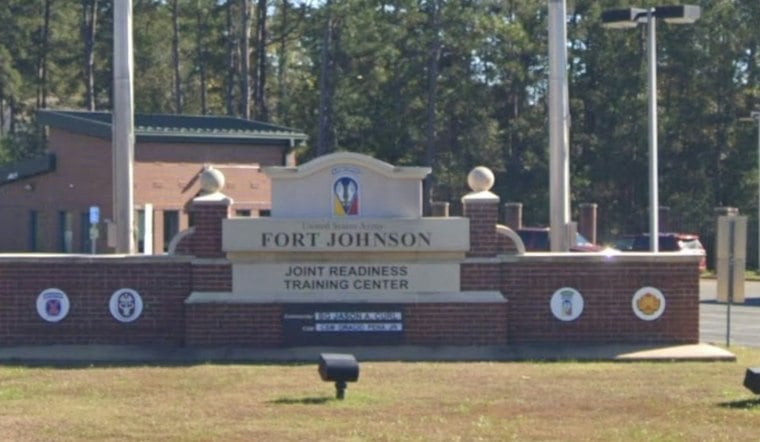
Forterra announced Monday it has been selected as the Systems Integration Partner for unmanned systems under Project LAUNCH Box at the Joint Readiness Training Center at Fort Johnson, Louisiana, putting the company in direct control of autonomous assets used by the base's resident opposing force battalion. The move makes the installation a training and evaluation setting for unmanned-systems integration and autonomy.
The selection, detailed in a Forterra announcement, comes as the Army races to stitch together a growing pile of drone and robotics hardware under a single operating language. As FOX 5 San Diego and KUSI News reported, the integrated system is meant to serve Geronimo and the battalions rotating through the center, letting the Army evaluate hardware from multiple vendors and contractors without interference between systems. Forterra's Scott Sanders, the company's chief growth officer, told the outlet the ultimate goal is simpler than it sounds: letting an 18-year-old soldier under stress plan a battlefield mission without waiting on orders from higher headquarters.
Geronimo Plays the Enemy — Now With Better Tools
Fort Johnson, renamed from Fort Polk in 2023 to honor World War I Medal of Honor recipient Sgt. William Henry Johnson, was originally established in 1941 to host the 400,000-troop Louisiana Maneuvers ahead of World War II, according to VetFriends. Today, the Joint Readiness Training Center uses the installation's challenging terrain for training, as described in a Wikipedia entry on the installation.
The center's resident opposing force is the 1st Battalion, 509th Infantry Regiment, nicknamed Geronimo, which plays the enemy against each brigade rotating through training, according to the FOX 5 San Diego and KUSI News report. Geronimo soldiers are issued tools that simulate enemy drones, communications, and intelligence feeds so visiting units get a realistic adversary. Lt. Col. Trevor Jones, who commands Geronimo, wrote that the Army needs to change how it trains and fights and must learn through rapid failure, warning that the risk of being outclassed by a rival military's transformation is real amid fast-moving technological change, the outlet reported.
One Data Layer Instead of 50 Controllers
The friction Jones described is exactly what Forterra's middleware, called OASIS-Fabric and OneLink, is designed to eliminate. The platform serves as a data layer allowing different systems to communicate in a common language, integrating information from communications technologies and other hardware and processing it at scale, the company says. Phil Cotter, Forterra's head of growth, sustainment and shaping operations, said Geronimo already challenges units training at Fort Johnson and that trainees should not also need to learn 50 systems, 50 battery chargers, and 50 handheld controllers with their own range limitations, according to the FOX 5 San Diego and KUSI News account.
Logan Morris, chairman of Fort Polk Progress and a former civilian aide to the Army secretary, framed the stakes similarly: the military needs different technologies to counter autonomous enemy weapons across platforms, but soldiers must currently learn each system and process its data separately before anything integrates — a process that costs time and money, the outlet reported. If the Fort Johnson pilot works, the Army plans to bring the system to all its training centers and eventually to combat operations.
Combat-Tested in Ukraine First
Forterra isn't walking into Louisiana untested. Under a U.S. government initiative, the company produced and delivered 105 Lancer autonomous vehicles to Ukrainian forces, where they completed more than 1,400 logistics resupply missions and 88 medical evacuations under active combat fire as of August, according to a Forterra statement. Sanders said the system was successfully tested in Ukraine and that the company plans to roll it out broadly to the U.S. military, one training center at a time, the FOX 5 San Diego and KUSI News report noted. Forterra acknowledges the new platform is not guaranteed to work perfectly or immediately once it reaches Louisiana.
The company was founded in 2002 as Robotic Research Autonomous Industries and rebranded in February 2024, according to Tectonic Defense. Earlier this month, on October 7, Forterra also partnered with electric ground vehicle maker Hypercraft to integrate its AutoDrive software into the 13-foot Razorback Unmanned Ground Vehicle, which can carry up to 4,000 pounds of payload across contested off-road terrain. In August, the Army named Forterra one of six vendors evaluated for its Infantry Last Tactical Mile initiative, testing the company's AutoDrive platform and Vektor communications system for frontline resupply and casualty evacuation.
Data Security and a Pentagon Push for Speed
Forterra says it can mitigate risks to platform data based on its experience handling government data, and the company now holds what it describes as the first major ground autonomy program of record for the Department of War, having completed an authority-to-operate process. Even so, the FOX 5 San Diego and KUSI News report noted that further gaps and precautions around platform data security may still need to be identified.
The push at Fort Johnson lines up with a broader Pentagon directive. On September 30, Defense Secretary Pete Hegseth announced an Autonomous Warfare Command in his speech, while Acting Army Secretary Adam R. Telle directed the establishment of the U.S. Army Futures and Autonomous Systems Command, which Hoodline previously covered in Atlanta, establishing a mandate to field autonomous systems across six core combat formation areas by fiscal year 2028, according to Defense One. Congressman Mike Simpson, a Republican from Idaho, said the United States must catch up quickly to avoid adversaries gaining an advantage, adding that he is excited new technology can protect American war fighters, per the FOX 5 San Diego and KUSI News report.
Training for New Systems
The Army's Drone Dominance program has selected vendors for small uncrewed aerial systems, according to Breaking Defense. Bryan Pickens, who served 14 combat deployments in Afghanistan and Iraq across more than 20 years in U.S. special operations, said the United States has a lot of catching up to do, adding that counter-insurgency skills from the Global War on Terror prepared American forces to fight what he called dirt farmers, not peer enemies, the FOX 5 San Diego and KUSI News report said. Pickens now focuses on training U.S. and NATO forces on current warfare and modernizing the force.
The Fort Johnson pilot is intended to help the Army integrate unmanned systems into training. JRTC rotations provide a setting for training and evaluating those systems. Whether Forterra's common data layer can actually let an infantry squad skip the 50-controller problem Cotter described will be the real test as rotations begin.





