

























































More than 80% of Tarrant County's public high school graduates in 2025 were officially labeled college ready, but strip out one commonly used pathway and that figure falls to just over half. The gap has prompted a new report from the Fort Worth Education Partnership and pointed questions from Fort Worth ISD's own superintendent about whether the state's college-readiness system is telling families the truth.
According to the Fort Worth Education Partnership report issued Tuesday, Tarrant County had 25,785 public school graduates in 2025, and 83% of them met at least one of Texas' college readiness requirements. But when college-preparatory courses are excluded from the count, that number drops to 53%, as reported by Fort Worth Report. Within Fort Worth's city limits, the pattern holds: 82% of graduates were considered college-ready, but only 51% were when prep courses don't count.
Brent Beasley, president and CEO of the Fort Worth Education Partnership, said the system overstates college readiness by using college-prep courses to boost the numbers, per the same report. He added that families need an accurate message about whether their children are actually prepared.
A Statewide Pattern, Not Just a Local One
The concern isn't limited to Tarrant County. A Texas Tech University study led by education policy professor Jacob Kirksey examined nearly 1 million Texas high school graduates from 2016 through 2023 and found that students who achieved college-ready status solely through high school college prep courses were 5% less likely to earn a college degree or credential within six years than students not labeled college ready at all, and 18% less likely than their dual-credit peers, according to The Texas Tribune. Kirksey said students may bear real costs in tuition, time and motivation when that label turns out to be unreliable, according to Fort Worth Report.
By contrast, the same study found that students with qualifying SAT or ACT scores were 22 percentage points more likely to complete a bachelor's degree within six years, while earning an associate degree in high school was associated with a 16 percentage-point increase and dual credit with a 12 percentage-point increase. The study's authors caution these findings demonstrate associations, not necessarily causation, per the Fort Worth Report's account of the research.
Texas Education Agency performance data for the 2022 graduating cohort reinforces the concern: fewer than half of students classified as college-ready solely through high school prep courses earned a C or better in their first non-remedial English, math and writing college classes, according to the Kinder Institute for Urban Research.
What Counts as College Ready in Texas
Under Texas' College, Career and Military Readiness accountability system, students can earn the college-ready label through several different routes treated as equal: qualifying SAT, ACT or Texas Success Initiative scores, passing certain advanced-level exams, qualifying dual-credit courses, an associate degree, or collaboratively created college preparatory classes, the Fort Worth Report's analysis notes. Students can also qualify through more than one indicator at once, and the state currently gives schools equal credit for college-readiness ratings regardless of which pathway a student used.
In practice, few Tarrant County seniors actually clear the toughest bars. Among the county's 2025 graduating seniors, 93% took the SAT or ACT but only 25% met the college-readiness standard on those tests. Seventy percent took at least one section of the Texas Success Initiative assessment, yet just 14% met the benchmark in both reading and math. Only 20% received qualifying dual credit, and a mere 2% earned an associate degree before graduation.
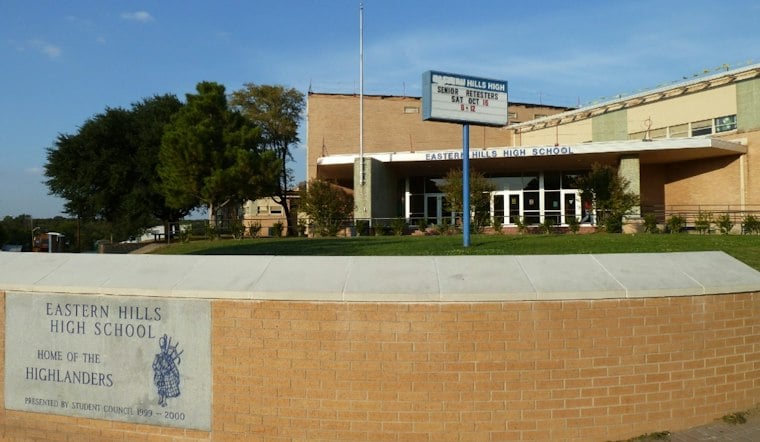
The disparities show up starkly at the campus level. At Eastern Hills High School, 91% of graduates were designated college-ready, but only 3% achieved that status through the SAT or ACT standard. At Polytechnic High School, 95% of students earned the college-ready designation, while just 4% met the SAT or ACT benchmark, according to the same report. The Fort Worth Education Partnership report also found that Black, Hispanic, low-income and English-as-a-second-language graduates achieved college-ready status via pre-college coursework only at a higher percentage than other graduates.
Tracking Fort Worth Students Years Later
The partnership's report followed 31,489 students who were enrolled in eighth grade at public middle schools within Fort Worth city limits from 2013 to 2015. Of that group, only 14% received a bachelor's degree from a Texas institution within six years of high school graduation, 5% received an associate degree, and 3% earned a degree from outside Texas. Roughly 22% of those who attained some form of secondary education also obtained a certificate or other postsecondary credential. The partnership found college completion results were essentially unchanged for students who attended eighth grade between 2011 and 2013, suggesting the pattern isn't new. Because of the six-year lag built into the data, it's not yet possible to say how many of the class of 2025 will ultimately graduate from college.
Fort Worth ISD Leaders Push Back
The gap between the label and the outcome surfaced directly at Fort Worth ISD's board table. Superintendent Peter Licata raised concerns during a late-September board discussion that college-preparatory courses may not adequately prepare students for higher education, saying the coursework required for readiness credit may not be substantial enough. Board President Pete Geren, who also leads the Sid W. Richardson Foundation — a financial supporter of Fort Worth Report — said standardized assessment results are meaningful only when schools adequately prepare students for them, according to the outlet's reporting.
State Rules Are Tightening, Slowly
Texas regulators are moving to close the gap too, though not immediately. The state will tighten college-preparatory course standards beginning with the class of 2027, counting only preparatory classes provided by state-approved organizations toward college-ready accountability credits. Providers can qualify by demonstrating that at least 60% of their successful program completers earn a C or higher in their first corresponding college-level course; an alternative route allows a 50% rate if the provider also earns high marks in a faculty review of course materials. The Texas Education Agency has postponed a related requirement restricting CCMR accountability credit exclusively to state-approved providers until the 2028 accountability year, which applies to 2026–2027 graduates, according to agency guidance. Separately, updated TEA rules beginning with the 2027 accountability year will require that college-prep course credits be completed during a student's senior year to count, according to Education Service Center Region 13. Further out, under House Bill 8, CCMR indicators will be sorted into three weighted tiers — Foundational, Demonstrated and Advanced — starting with the graduating class of 2030, with college prep course completion assigned to the lowest, Foundational tier, per Progress Learning. These readiness standard changes are expected to affect some high schools' A-F accountability ratings.
Why It Matters for Local Families
Students who believe they are college-ready based on the label may later be required to take remedial courses that don't count toward their degree, investing time and money in education they never complete, the Fort Worth Education Partnership report warns. In Tarrant County, the Tarrant To & Through Partnership is a college-access effort.
The Tarrant To & Through Partnership has a digital Pathways to Careers advising platform for middle and high school students across the county. The Federal Reserve Bank of Dallas lists the partnership among four Texas initiatives in its Advance Together program, which offers technical assistance and grants aimed at expanding postsecondary credential attainment in lower-income communities. Laurie George, a member of Fort Worth Report's Reader Advisory Council, is among those tied to the broader local reporting effort on the issue.





