

























































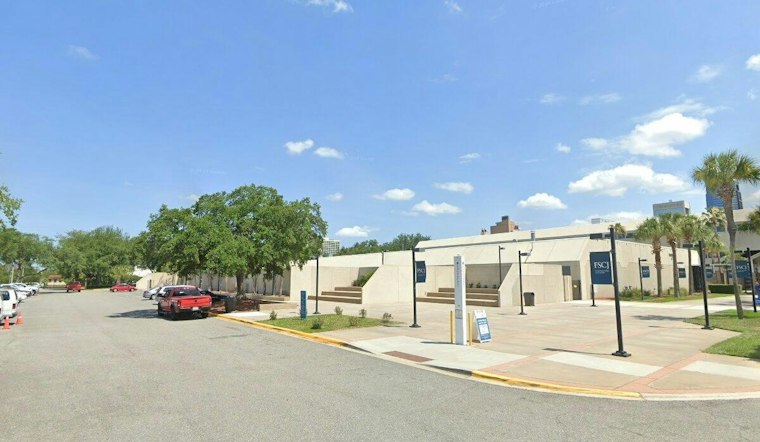
Florida State College at Jacksonville now has a large, fully automated semiconductor lab that officials describe as the first of its kind in the state, giving students hands-on experience with the same technology used on real chip-manufacturing floors. The facility lets students practice the exact processes used in semiconductor production, from handling delicate materials to running quality-control checks, long before they ever take a job at a factory.
The lab opened with a ribbon-cutting on Sept. 21, according to NC3, which reported it as Florida's first advanced semiconductor workforce training lab. It was built with help from Festo Didactic and backed by a $2.3 million State of Florida capitalization grant, per the same report. The facility includes 14 workstations covering silicon-wafer handling, metrology, inspection, industrial robotics, AI vision inspection, manufacturing execution software and autonomous mobile robotics, according to Plant Services.
As News4JAX reports as part of its ongoing Trade Up series examining skilled-trades careers, done in partnership with WareWorks, the lab gives students a space to learn from their mistakes before stepping onto a real factory floor. FSCJ Associate Dean of Engineering and Industry Chris Lee said students learn about electricity, pneumatics, quality control and AI inspection, with training covering programmable logic controllers, human-machine interfaces, robotics, mechatronics and autonomous vehicles, per that report.
Why Semiconductors Matter to Everyday Life
Semiconductors are made from silicon, a material found in sand, and are used to make the computer chips found in phones, cars and televisions, per News4JAX's report. Lee noted the COVID-19 pandemic underscored the importance of chip production, and said chip shortages during that period contributed to higher prices and delayed manufacturing, per the same report.
Lee said the lab aims to attract semiconductor companies to Northeast Florida while preparing residents for high-paying jobs, according to News4JAX. He added that similar equipment and processes are used across other industries, including beverages, pharmaceuticals, cars and consumer goods, naming Anheuser-Busch, Bacardi, Coca-Cola, Pepsi, Medtronic, Johnson & Johnson and Vistakon as examples of local employers who could use graduates with these skills.
Skills Meant to Travel Beyond the Chip Floor
FSCJ officials say the skillsets students acquire in the lab translate directly into dozens of technical and operational industries, not just semiconductor fabrication, according to the NC3 report. The college's Advanced Manufacturing Automation Technical Certificate is built around that same philosophy, emphasizing broad, transferable skills in PLCs, industrial automation, robotics, human-machine interfacing and troubleshooting, per the program's description on the Florida State College at Jacksonville website.
The Jacksonville Business Journal reports the facility aims to establish a workforce pipeline directly into fabrication facilities. That ambition lines up with a wider statewide push: the Florida Semiconductor Institute reports the state has invested more than $1 billion in semiconductor workforce development, building pathways toward more than 10,000 high-wage jobs, and ranks third nationally in semiconductor establishments with over 120 facilities as of its 2024 workforce report.
A National Shortage of Chip Technicians
The stakes extend well beyond Jacksonville. The Semiconductor Industry Association projects 115,000 new semiconductor-sector jobs nationally by 2030, with roughly 58% of those roles at risk of going unfilled and technicians accounting for 39% of that shortfall, according to the NC3 report. Plant Services notes the broader manufacturing workforce is grappling with a skills gap as more workers retire than enter the trades.
Florida's semiconductor manufacturing sector already supports more than 18,000 jobs with a wage impact exceeding $5 billion, per the Florida Semiconductor Institute's 2024 report, and the state's manufacturing sector overall contributed $73 billion to Florida's GDP in 2022. The institute also points to its Chip In Florida program, which involved more than 190 instructors weaving semiconductor projects into their classrooms this past spring, and to training hubs the state has built at the University of Florida, University of South Florida, University of Central Florida and Florida International University, with satellite programs at state and technical colleges.
Reaching Younger Students, Including Girls in STEM
FSCJ's lab isn't just for college-age students pursuing certificates. It's also intended to introduce younger students to the field, according to News4JAX. The college recently held a girls' STEM camp where middle schoolers programmed a system to move a part between stations, using light and images to identify its destination.
Lee said the environment is designed to encourage girls to ask questions, make mistakes and learn, per the same report. The effort mirrors similar academic-industry partnerships elsewhere, such as a five-year collaboration Purdue University established with Accenture in 2022 focused on smart manufacturing and workforce upskilling, and an engineering lab Fluke opened with Washington State University in September giving more than 4,000 students across five campuses hands-on experience with measurement and test technologies, according to Plant Services.





