

























































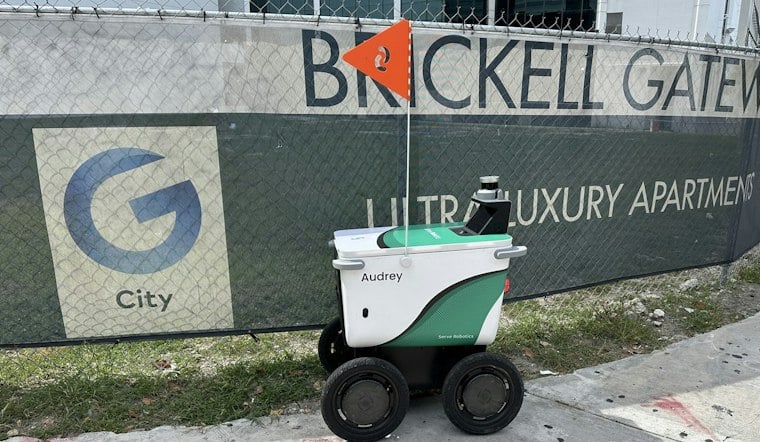
Glendale city leaders have joined a growing chorus of Angelenos demanding tighter oversight of sidewalk delivery robots, amid concerns about wheelchair access and other issues involving the machines across the Los Angeles area. The push for regulation, reported by Kristine Lazar, comes as delivery robots have caused a variety of issues in recent months across the region, prompting at least one city to act decisively.
On September 22, the Glendale City Council voted to adopt a one-year pilot program that caps the number of personal delivery device operators at two, with each allowed to deploy no more than 30 robots on city sidewalks, according to Crescenta Valley Weekly and Glendale News-Press. The operating agreements require continuous ADA accessibility, a four-foot clearance path for pedestrians, liability insurance, and monthly data reporting from the companies running the bots. As CBS News Los Angeles reports, Glendale's move reflects a broader regional reckoning as residents throughout Los Angeles push back against the rapid rollout of autonomous and remote-piloted delivery machines on public sidewalks.
A Moratorium Came First
Glendale's pilot program didn't emerge out of nowhere. On March 31, the city council voted to direct staff to prepare proposals that could include a temporary moratorium on sidewalk delivery robots, after members raised concerns about operators deploying devices without warning, robots blocking ADA access ramps, and the potential displacement of human delivery drivers, according to Restaurant Business Magazine's reporting at the time and as reported by Glendale News-Press. That earlier discussion set the stage for the more detailed framework city leaders approved in September, with a tightly capped, closely monitored trial run.
The friction in Glendale mirrors what's been playing out across the broader Los Angeles area, where delivery robot fleets have scaled up dramatically in just a few years. Serve Robotics expanded its Los Angeles sidewalk fleet from just two neighborhoods in 2023 to 40 neighborhoods by May, deploying more than 500 robots, as noted by the Los Angeles Times. Its third-generation model is equipped with Nvidia processors. That explosive growth helps explain why sidewalk congestion and accessibility complaints have become such a prominent flashpoint for city councils across the region.
Commercial Partnerships Keep Robots Multiplying
The business side of the robot boom has also been shifting. In August, Serve Robotics partnered with Grubhub to deliver food from nearly 200 Los Angeles-area restaurants, expanding its merchant network, as the Los Angeles Times reported. Serve also has a longstanding, ongoing relationship with Uber Eats. Meanwhile, competitor Coco Robotics operates about 300 delivery robots across Los Angeles and this year partnered with audio navigation app BlindSquare to transmit real-time sidewalk obstacle data, an effort aimed at helping visually impaired pedestrians navigate around the growing robot traffic.
Those accessibility concerns aren't hypothetical. In September 2025, a mobility scooter user in Los Angeles reported being repeatedly blocked and cut off by a Serve delivery robot, an incident that underscored the kind of real-world friction between autonomous devices and residents with mobility disabilities that has driven much of the current regulatory push. Hoodline previously covered a similar incident in which a pedestrian was caught on video freeing a Serve robot trapped in sidewalk bushes.
Glendale Joins a Patchwork of Local Rules
The City of Los Angeles, meanwhile, began developing sidewalk robot rules through its Department of Transportation in 2021.
The resistance isn't confined to Southern California, either. Restaurant Business Magazine notes that Chicago aldermen blocked fleet expansions in 2026 over accessibility complaints. For now, Glendale's narrower approach — fewer robots, stricter clearance requirements, and mandatory monthly reporting — stands as its answer to a problem that shows no sign of rolling away anytime soon.



