

























































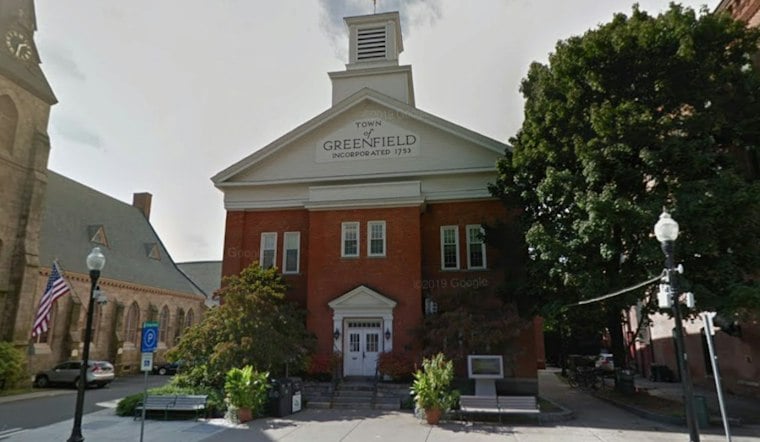
Greenfield's City Council voted 10-1 this week to create a rental registry requiring landlords across the city to register their units with the Health Department, pay annual fees and complete self-inspections whenever a unit changes tenants. The vote caps years of on-and-off attempts to regulate the city's roughly 3,600 rental units, which make up about 45 percent of Greenfield's housing stock in a city of around 17,600 people.
Councilor John Bottomley cast the lone dissenting vote, while Councilor Wahab Minhas abstained and Councilor Rachel Gordon was absent, according to the Greenfield Recorder. Vice President John Garrett sponsored the measure and told the paper it had been in development for years — a reference to the city's past attempts to establish rental registries that produced little result, according to Garrett and other speakers cited by WAMC Northeast Public Radio.
Under the ordinance, landlords must register all rental units with the Health Department and renew that registration every year for $30 per unit, the Recorder reports. Owners are also required to self-inspect each unit whenever it turns over to a new tenant. Landlords with more than six units will face a Health Department inspection at least once every five years, while those with six or fewer units need only complete the registration and self-inspection paperwork.
Fees, Fines and a Revolving Fund
The ordinance adds a $75 fee for inspecting each unit after the first year, plus a tiered fine schedule for noncompliance: $100 for a first offense, $200 for a second violation and $300 for a third or subsequent violation, per the Recorder's reporting. Councilors also considered stripping out a revolving fund meant to let the Health Department use collected fees and fines to cover inspection costs, but that amendment failed 7-4, with Garrett abstaining, so the fund stayed in the final ordinance.
Four amendments that did pass will shape how the registry works in practice: tenants will be able to request copies of the most recent self-inspection form for their unit; the ordinance includes protections when tenants refuse entry; the Health Department's phone number must be posted; and councilors removed a provision that would have subjected properties with repeated law-enforcement responses to yearly inspections. That change scales back an earlier version of the plan, which the Recorder reported on the week before the vote, that would have required yearly inspections for designated “problem properties” instead of the five-year schedule that ultimately prevailed.
The Health Department will be responsible for implementing the registry and is expected to notify landlords within the month, with owners given 35 days from that notice to comply, the Recorder reported.
Tenants Union Says Registry Fills a Gap
Kat Miller, who helped launch the Greenfield Tenants Union, supported the ordinance and said it is intended to ensure apartments meet basic health and safety standards. Miller used a health code violation as key evidence in her own eviction fight, and told WAMC that a yearly inspection mandate in place for a decade would have removed ambiguity about whether landlords knew about damage in their units. Greenfield housing advocates and the tenants union welcomed the council's approval of the ordinance.
The ordinance itself states its purpose as ensuring safe and sanitary conditions in Greenfield rental housing, providing clear and accessible operating guidelines for rental properties, and increasing awareness of health regulations while maintaining predictable inspection schedules, according to WAMC's reporting. Housing Greenfield coordinator Susan Worgaftik said the measure was drafted with inspiration from similar rental regulations already in place in Boston, Northampton and Amherst, per the Recorder.
Landlords and Realtors Push Back on Costs
Not everyone welcomed the new rules. Some landlords expressed concern about the ordinance's fees and fines, WAMC reported, while Dawn Ruffini, representing the Realtor Association of Pioneer Valley, warned that the added costs and paperwork could be passed on to tenants through higher rents. Ruffini questioned whether piling new regulatory requirements onto landlords would actually help Greenfield's existing housing shortage.
Ruffini also raised concerns about the taxpayer cost and staffing the program would require, and argued that existing Massachusetts codes and inspection procedures already address unsafe housing conditions. State law does give tenants and local boards of health tools to act on unsafe conditions — an affected tenant or a board of health may petition District Court, Housing Court or Superior Court when conditions violate state standards, under Massachusetts General Laws Chapter 111, Section 127C. A related statute, Chapter 111, Section 127L, provides a tenant-repair and rent-deduction remedy after qualifying violations, notice and failure to repair.
Greenfield's approach echoes registry and inspection systems already running in other Massachusetts cities and beyond. Boston's existing rental-inspection program charges a $15 filing fee per unit report and offers a five-year alternative inspection option, according to the city's own guidance, though a separate Boston City Council proposal reported by NBC Boston would raise initial registration fees from $25 to $75 and annual fees from $15 to $50. Similar rental registration efforts have also moved forward recently in Mishawaka, Indiana, and Rockport, Maine, where voters will consider a November ballot question on a rental housing ordinance focused on safety inspections, according to the Bangor Daily News.





