

























































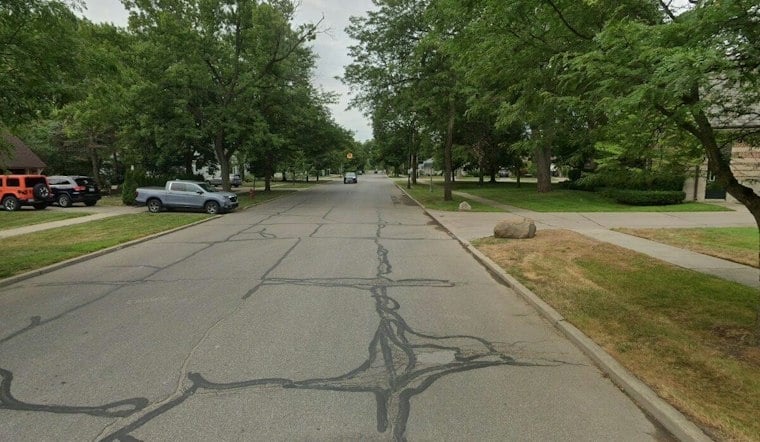
Residents in Grosse Pointe Farms say the contractors behind the city's $47 million sewer separation project have left trash at work sites, parked personal vehicles on sidewalks and lawns, and in at least one case used a homeowner's outdoor electrical outlet without asking. The complaints come as crews dig through residential streets as part of a project designed to reduce the risk of basement flooding during major rain events.
According to WXYZ 7 News Detroit, resident Patrick Karabon said concerns about contractor professionalism have existed since the project began, and he has documented worker vehicles parked on sidewalks and lawns along with debris and trash left behind. Karabon said trash had been left on private property and later moved to the easement, and he has raised the issue repeatedly with city officials. Another resident, Sandra Maloney, said workers parking vehicles created additional problems for pedestrians, since cars were parked over sidewalks that were already impeded by construction.
A WXYZ reporter observed bagged trash near Lexington and Barclay, along with a contractor vehicle parked in a resident's driveway at the same intersection. The vehicle was moved only after the reporter asked whether the worker actually lived at the home, the station reported. City officials told WXYZ they had notified the contractor about debris concerns and that efforts had been made to collect loose debris at the site.
City Explains Parking and Equipment Use
City officials said a vehicle parked on a lawn right-of-way was being used to keep equipment nearby for density testing of recently poured concrete, noting that contractors sometimes need to work within the public right-of-way to complete the job. Officials also said an engineer had temporarily used a resident's driveway while the homeowner did not need access, and that the vehicle has since been moved from the driveway.
Separately, residents raised concerns about a contractor using a homeowner's outdoor electrical outlet without permission. Doorbell camera video showed a worker carrying a yellow box onto private property and plugging it into an outdoor outlet, per the station's report. Maloney questioned whether contractors should be allowed to use a homeowner's electricity at all, calling the practice invasive. City officials described the yellow box as a battery-operated tracer reader used while crews are digging, and said the city is not aware of contractors using private electrical service. Maloney said she remained skeptical of that explanation.
DiPonio Contracting is performing the sewer work, and a site supervisor for the company declined to comment on homeowners' concerns when approached by WXYZ, instead calling the report a groundbreaking story.
A $47 Million Fix for a 2021 Flooding Disaster
The city has described the work as its largest public works project in more than a quarter century, and construction began at the start of the previous year with completion expected by the end of the following year. The project is being completed in phases, so individual residents will not experience construction impacts for the entire duration of the work, the city has said.
The citywide sewer separation effort traces back to torrential rainstorms on June 25 and 26, 2021, which dumped more than 6 inches of rain on Metro Detroit and flooded thousands of area basements with sewage, according to Planet Detroit. The project includes roughly seven miles of new storm sewers that will be separated from the district's combined sewer system, removing about one-third of wet-weather flow and reducing the likelihood and severity of basement flooding, along with a new stormwater pump station at Moross Road and Chalfonte.
To pay for it, Grosse Pointe Farms City Council approved issuing up to $33.38 million in general obligation unlimited tax bonds in March 2026 for phases two and three, following an initial $11.875 million bond issue in March 2025 for Phase 1, the Grosse Pointe News reported. Contract No. 3, covering inland sewer separation and water main replacement on streets including Chalfonte, Lexington, Barclay and Shelbourne, went to DiPonio Contracting for $15,926,949.75 as the lowest of seven bidders. The Moross/Chalfonte pump station, Contract No. 2, was awarded separately to Sorensen Gross Company Inc. of Flint for $18,733,000 as the lowest of eight bidders, with that portion of the work slated for completion in summer 2028.
Residents Will Pay Through Their Tax Bills
Grosse Pointe Farms residents will cover the cost through property taxes, with an estimated 2 mills added annually over a 25-year bond repayment period, starting at roughly 1.8 mills in the first year, per the Grosse Pointe News report. That direct taxpayer burden has sharpened resident expectations for contractor professionalism and closer city oversight as construction continues through neighborhoods.
The city said it has a construction observer on site during active work, a role filled by engineering firm Hubbell, Roth & Clark, which was contracted to design the sewer project and maintains a full-time, on-site project observer to monitor construction activities and manage neighbor complaints, according to the City of Grosse Pointe Farms. City officials said they will continue working with the contractor and residents to minimize disruptions, and the contractor is responsible for leaving construction areas in as good or better condition than before construction began.
Despite the friction, residents told WXYZ they believe the project is necessary even with their complaints, and city officials have asked for patience as the work continues. The sewage pumping facility at 305 Chalfonte Avenue that the new system is meant to supplement dates back to 1929, designed by Detroit architect J. Ivan Dise and engineered by Hubbell, Hartgering & Roth, according to Historical Architecture of Grosse Pointe, underscoring just how dated the city's core wastewater infrastructure had become before this overhaul began.


