

























































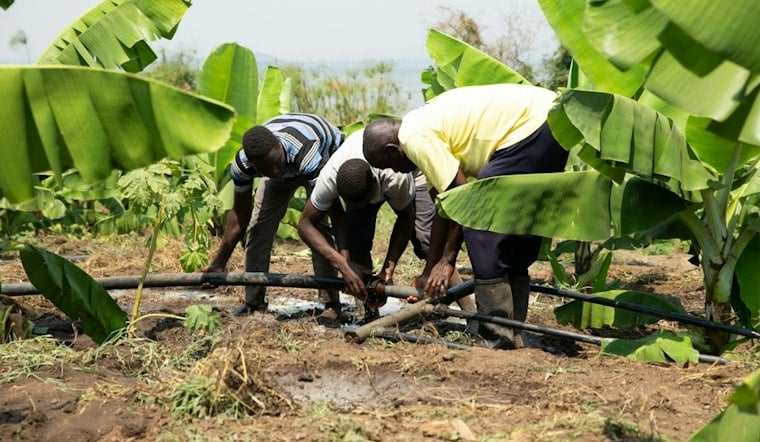
A disaster-relief fund for Hawaiʻi farmers and ranchers awarded $552,380 to producers affected by the 2026 Kona Low storms, which damaged fields, orchards and pastures from Oʻahu to Molokaʻi. More than 300 producers applied, and approved recipients could receive up to $10,000 for losses not covered by insurance or federal aid, according to Maui Now.
The money came from the Hawaiʻi Farmers Disaster Relief Fund, a joint effort of the Hawaiʻi Agricultural Foundation and the Hawaiʻi Farm Bureau. According to bigislandnow.com, the two organizations reviewed the flood of applications with help from the North Shore Economic Vitality Partnership to figure out where the need was greatest and get funds moving. A separate report from Maui Now put the award total at $552,000, a figure that differs slightly from the $552,380 cited in the bigislandnow.com account — the dossier does not explain the gap between the two numbers.
The fund itself traces back to a $300,000 pool raised earlier this year, before contributions from individual donors, private foundations, corporations and community partners apparently pushed the total higher. Eligible uses for the money were broad: crop recovery and replanting, livestock replacement, irrigation and fencing repairs, debris removal, infrastructure restoration, equipment replacement, greenhouse repairs and soil restoration, the outlet's July report noted.
Storms Piled Up Faster Than Recovery Could Keep Pace
The damage didn't stop with the original Kona Low systems. Hurricanes Lala, Lowell and Nolo brought additional heavy rain, flooding and damaging winds across the islands in the months that followed, compounding losses for producers who were still trying to recover. Early assessments had already estimated more than $40 million in agricultural losses statewide from the Kona Lows alone, per bigislandnow.com's reporting.
Brian Miyamoto said producers have faced repeated weather events and that rebuilding takes time. He said the grants are helping, but the need extends beyond this round of funding, according to Maui Now.
Hawaiʻi Agricultural Foundation executive director Denise Yamaguchi credited donors and community support with making the grants possible, and said the funding would help producers recover and rebuild.
A Thin Safety Net for Small Farms
The scale of the challenge facing Hawaiʻi's agricultural sector is tied to how little formal insurance coverage exists in the islands. As Civil Beat has reported, only about 3% of Hawaiʻi's farms carry a USDA crop insurance policy — just 225 operations statewide. More than 60% of the state's roughly 6,500 farms are nine acres or smaller, making individual operations especially vulnerable when disaster strikes. Between 1995 and 2024, Hawaiʻi received just over $27 million in crop insurance payouts against more than $160 million in disaster-relief funding, Civil Beat found, underscoring how much producers rely on relief funds like this one rather than insurance claims.
Flooding from the Kona Lows was severe by any measure. The Guardian reported that two of the storms dumped as much as 50 inches of rain on Oʻahu and produced some of the state's worst flooding since 2004. Farmers across the North Shore of Oʻahu, Maui, Molokaʻi and the Big Island had reported more than $10.5 million in damage after three storms hit in fewer than 30 days, according to Civil Beat's earlier reporting.
Other Aid Programs Filled Gaps Earlier This Year
This grant round was not the state's first attempt to help. Hawaiʻi had earlier launched a separate $500,000 emergency relief fund offering farmers grants of up to $1,500 each, The Guardian reported in March, as reported by The Guardian. The Hawaiʻi Department of Agriculture and Biosecurity also announced an Emergency Farmer Relief Program around the same time, under which farms, ranches and businesses could apply for a one-time $1,500 grant to address immediate storm needs, provided they documented their losses and held a General Excise Tax license.
Additional support came from the Office of Hawaiian Affairs, which stood up a Mahiʻai Micro Fund offering Native Hawaiian farmers awards of up to $5,000, and from USDA-administered Emergency Conservation Program funding meant to help repair and restore farmland damaged specifically during the March 10 through March 24 Kona Low window, per the Hawaii Farm Bureau. The university's College of Tropical Agriculture and Human Resilience also reopened its Agricultural Diagnostic Service Center that spring, offering every affected farmer up to three free soil and plant tests.
How Hawaiʻi Responded to Earlier Farm Disasters
After heavy rain and flooding on Kaua‘i from April 13 to 20, 2018, a federal agricultural disaster designation made local farm operators eligible to be considered for certain Farm Service Agency assistance, including emergency loans, according to the Hawaiʻi Department of Agriculture & Biosecurity. In May 2018, the state also approved disaster-related agricultural loans of up to $500,000 at 3% interest for farmers affected by flooding on Kaua‘i and O‘ahu and the Kīlauea eruption on Hawai‘i Island, the department reported. Those earlier programs offered eligibility for federal assistance and state loans; the current fund instead provides grants through a joint effort by two agricultural organizations.
The Hawaiʻi Agricultural Foundation and Hawaiʻi Farm Bureau say their work is not finished. The two groups indicated they intend to continue supporting Hawaiʻi's agricultural community through ongoing and future disasters, and the Hawaiʻi Farmers Disaster Relief Fund remains open for additional contributions.





