

























































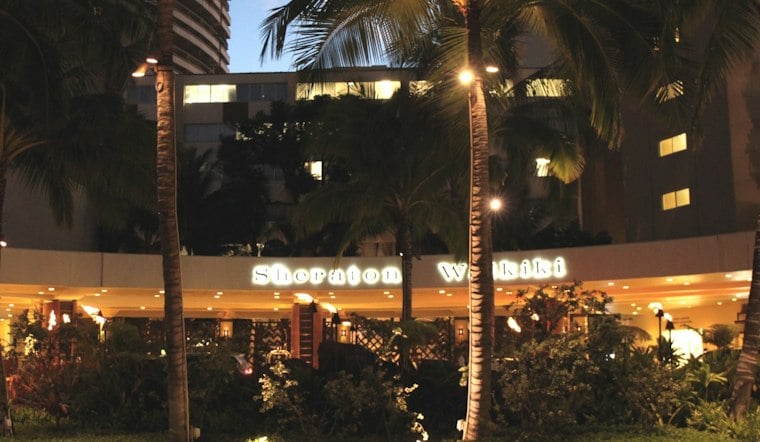
Hawaiʻi's permitting system has been slow enough to add more than 14 months of waiting to a single-family home approval in the City and County of Honolulu before recent reforms kicked in, and now the state is bringing its fix to the public stage. The Simplifying Permitting for Enhanced Economic Development Task Force, known as SPEED, will host a daylong summit on Jan. 15, 2027, at the Sheraton Waikīkī Beach Resort to present its findings on how to speed up approvals for homes, infrastructure, and businesses across the islands.
The event, covered by Maui Now, will run from 7:30 a.m. to 5 p.m. and gather state, county, and industry leaders to discuss how Hawaiʻi can untangle the overlapping reviews that have bogged down projects for years. A pau hana networking reception follows from 5:30 to 7:30 p.m. in Waikīkī, available as a $40 add-on to summit registration. Registration itself runs $75 through Dec. 31, climbing to $95 from Jan. 1 through Jan. 13, and $115 on the two days of the event, with a limited-time discount offered to federal, state, and county government employees.
The SPEED Task Force was created under Act 133 of the 2025 Session Laws and House Concurrent Resolution 157 as a 34-member interagency working group tasked with identifying administrative and legislative reforms for statewide permit coordination, according to the Hawaii State Legislature. Task force chair Greggor Ilagan, who also chairs the House Committee on Economic Development & Technology, has said coordinated, streamlined permitting improvements are needed for lasting progress, framing modernization as something that can support affordable housing, infrastructure upgrades, and economic resilience statewide.
Why the Delays Have Piled Up
Complex developments often require concurrent state-level reviews covering historic preservation, water, and wastewater considerations on top of county-level building approvals, and those long timelines add time, expense, and uncertainty to projects amid rising construction costs. Senate Vice Chair of Economic Development and Tourism Glenn Wakai, who also chairs a SPEED Task Force Permitted Interaction Group, has said addressing permitting bottlenecks can encourage innovation and investment while spurring job creation, lowering project costs, and strengthening the economy.
In a June interview, Ilagan told Hawaii Public Radio that he discussed departments breaking down barriers and said county permitting directors were talking to each other. The urgency behind that coordination traces back to a 2024 Hawaiʻi Housing Planning Study from the Hawaii Housing Finance and Development Corporation, which estimated the state needs 64,490 additional housing units by 2027 to meet resident demand, with Honolulu County alone accounting for more than 25,000 of those units.
Legislative Deadlines Already in Motion
Lawmakers haven't waited for the summit to start acting. During the 2026 session, the Legislature passed measures letting county mayors offer higher salaries to recruit scarce permit reviewers, a bill streamlining historic preservation reviews, and legislation standardizing permit data across counties, per the same Hawaii Public Radio report. Gov. Josh Green went further on July 8, 2026, signing Senate Bill 2544 into law to create Hawaii Builds, a five-year pilot program requiring county planning directors to rule on regulatory exemptions within 45 days and the state Department of Health to decide water-safety issues within 60 days for qualifying affordable housing developments — a measure Hoodline covered in a prior report on the fast-track law. The law provides $100 million over five years from the Dwelling Unit Revolving Fund for construction or pre-development work.
Honolulu has also leaned on technology. The city replaced its 26-year-old POSSE software on Aug. 4, 2025, with HNL Build, a $5.6 million Salesforce-based permitting platform funded by federal fiscal recovery dollars, according to Hawaii Free Press. Civil Beat reported that median review wait times for new single-family building permits on Oʻahu fell 40% to 2.5 months between August 2025 and April 2026, even as total permit applications surged 34% by September 2026, with the city also deploying an AI prescreening tool called CivCheck to accelerate residential plan reviews.
Neighbor Islands Still Lag Behind
Not every county has seen the same gains. Data from the University of Hawaii Economic Research Organization's 2026 Housing Factbook showed Hawaiʻi County recording the fastest 2025 median single-family permit time at 127 days, while Maui County came in at 186 days — a figure lowered by faster disaster recovery permits — and Kauaʻi County trailed at 309 days.
What's on the Agenda in Waikīkī
To work through the thorniest technical issues ahead of January, the SPEED Task Force set up Permitted Interaction Groups focused on building permits, wastewater permitting, and State Historic Preservation Division compliance, according to the Hawaii House of Representatives. Those subgroups will feed into the summit, which Maui Now reports will include presentations, panel discussions, and collaborative sessions with government, building industry, and private-sector leaders, along with breakout sessions on workforce development, technology and innovation, stakeholder and community engagement, and state-county infrastructure coordination.
The summit will also hold county-specific discussions addressing regulatory challenges unique to Oʻahu, Maui, Hawaiʻi, and Kauaʻi. Attending architects may be eligible to earn up to 6.5 AIA continuing education credits through AIA Hawaii, including 2.5 HSW credits and 4.0 LU credits. Full agenda details and registration are posted at www.hawaiispeedsummit.com.





