

























































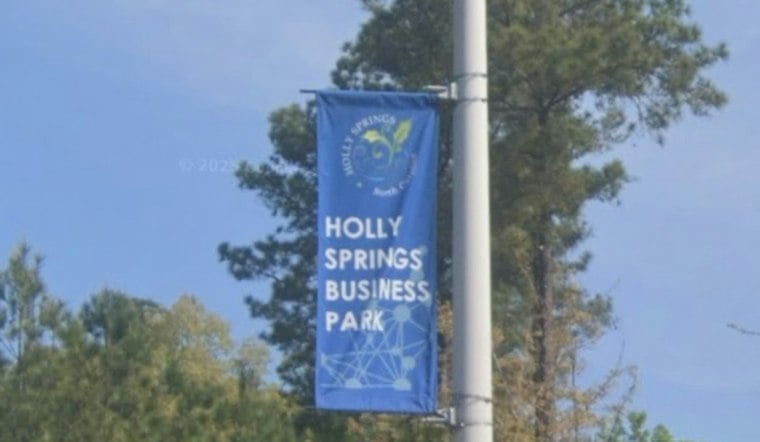
A sprawling factory in Holly Springs is responsible for roughly one-third of all flu vaccines distributed across the United States, and it employs more than 1,000 people doing it. CSL Seqirus' campus there has grown into one of the largest cell-based influenza vaccine manufacturing sites in the world, filling about 35 million doses last year alone and shipping them to health agencies and retailers nationwide, including Walgreens.
The scale of the operation is hard to overstate. As Axios reported, the Holly Springs site spans nearly 700,000 square feet and is built to pivot from routine seasonal production into pandemic-scale output if needed. Under a federal contract, the facility is prepared to deliver up to 150 million doses of cell-based pandemic influenza vaccine within six months of a pandemic being declared, according to CSL Seqirus.
CSL Seqirus, a unit of the Australian biotech company CSL, is among the largest cell-based flu vaccine makers in the world and has become a linchpin of the global influenza response network. Vaccines produced at the Holly Springs campus reach hundreds of millions of people across five continents, per hollyspringsupdate.com, with the company offering flu vaccines in more than 20 countries using egg, cell and adjuvant technologies.
From Novartis Plant to Pandemic-Ready Hub
The Holly Springs facility traces back to Novartis, which opened the site in 2009; CSL later bought the plant from Novartis, according to the Axios report. Sources differ on the exact year of that acquisition — hollyspringsupdate.com cites 2014, while the North Carolina Biotechnology Center cites 2015 and puts the sale price at $275 million.
In 2022, CSL completed a $156 million expansion of the Holly Springs facility that added a second fill-finish line and warehouse space, a project CSL's newsroom says was designed to boost both regular seasonal output and surge capacity for a future flu pandemic. That expansion created more than 80 additional highly skilled jobs in the community. Sources also differ on the plant's exact footprint: the North Carolina Biotechnology Center has described it both as spanning more than half a million square feet and, elsewhere, as encompassing almost half a million square feet, while hollyspringsupdate.com puts the figure at 700,000 square feet on 170 acres.
A Year-Round, Global Formulation Process
Flu vaccine production is not a seasonal sprint so much as a year-round relay. CSL Seqirus receives targeted flu strains from health organizations around the world throughout the year and formulates vaccines over a months-long process to match each one, per the Axios report. The company works on vaccines for the Southern Hemisphere even as manufacturing for North American and European flu seasons is ramping up, since cell-based vaccines are one of four main delivery mechanisms, alongside egg-based, recombinant and mRNA approaches.
Local hiring has kept pace with that global demand. Baron Fulk, CSL's head of fill finish, told Axios that most employees at the Holly Springs site are hired after completing local certification programs. The plant's growth has coincided with a broader biotech boom in the area: biotech firms have expanded significantly in Holly Springs since 2020, and companies including Amgen, FUJIFILM Diosynth, Genentech and Janssen Pharmaceuticals are investing billions of dollars in the surrounding region, according to the same report.
Vaccination Rates Still Below Pre-Pandemic Levels
Demand for the vaccines Holly Springs produces has been shaped by a rockier few years for U.S. flu vaccination overall. Stefan Merlo, CSL's vice president of commercial operations in North America, told Axios that Americans getting vaccinated against the flu remain below pandemic-era numbers, with U.S. vaccination rates hitting their lowest levels in seven flu seasons during 2025, according to AARP. Merlo pointed to a mix of causes: vaccine fatigue following the pandemic, declining vaccine confidence, and mixed messaging from elected officials.
Those lower vaccination rates have accompanied two of the worst flu seasons in a row, Merlo said, including a year that saw the most pediatric flu deaths since 2009. Separately, CDC data show 290 flu-associated deaths among children were reported for the 2024–2025 season as of mid-February 2026, the highest number recorded since the agency began tracking such deaths in 2004.
Looking Ahead to This Season
Despite the grim recent history, Merlo said early tracking suggests this year's vaccination rate will land in line with recent seasons rather than fall further, and he believes U.S. vaccination rates have already hit bottom. He expects rates to slowly climb back toward pre-pandemic levels over time, even as he acknowledged that the flu virus itself is unaffected by whether or not people choose to get vaccinated.
Merlo told Axios he would like to see 300 million vaccines produced and administered to cover the entire population, though he conceded that goal is not realistic given current demand and uptake. For now, CSL Seqirus says it recently completed its 2026/27 manufacturing campaign and announced expanded U.S. availability of influenza vaccine, keeping Holly Springs' production lines running at the center of the nation's flu-fighting supply chain.





