

























































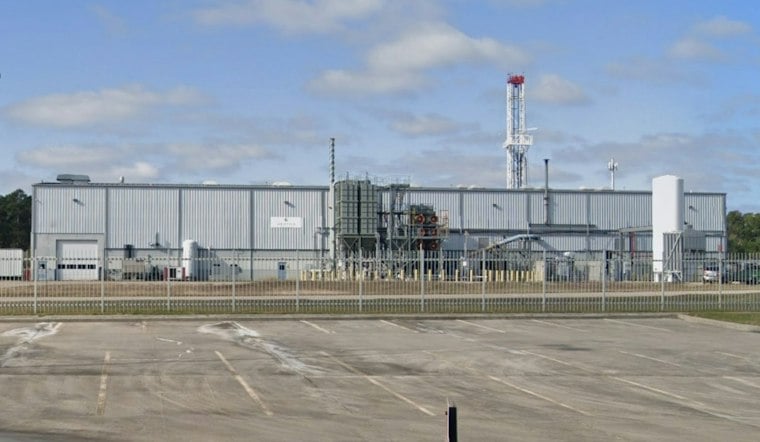
A Conroe construction site off FM 3082 just became ground zero for an attempt to loosen China's grip on a critical slice of American manufacturing. Hertha Metals broke ground Thursday, October 8, 2026, on Chalyx, a roughly $100 million plant designed to produce about 10,000 metric tons per year of steel-grade and magnet-grade high-purity iron, the material at the heart of the powerful magnets used in electric cars, wind turbines, data centers, robots and defense equipment.
The project is going up right beside Hertha's existing Pi100 pilot plant, according to mining.com. Chalyx is designed to run on domestic iron ore, primarily sourced from Minnesota's Iron Range, paired with Texas natural gas, a combination the outlet reports is central to the plant's pitch of reducing dependence on imported materials. Company officials describe Chalyx as poised to become the first modern iron and steel innovation complex in the U.S., according to Chron.
The stakes behind the groundbreaking are significant. An estimated 94% of the high-purity iron used in rare-earth magnets is currently made in China, per mining.com, and the United States imports almost all of the high-purity iron used in its own rare-earth permanent magnets, according to ventureburn.com. China's dominance runs deeper still: the country accounts for 60% of mined magnet rare earths, 91% of refined output and 94% of permanent magnet production, according to think.ing.com.
A One-Step Process Built for Any Grade of Ore
Hertha Metals developed a process that makes iron or steel from ore in a single step using one furnace, the company says, with that furnace capable of producing either liquid steel or very pure iron. Unlike most traditional plants, Hertha's process can use low-quality iron ore, according to the company. The business is separately developing FLEXHERS, a process that combines electric arc furnace technology with natural gas or hydrogen to produce iron and steel, the outlet notes.
Hertha says the approach can cut production costs by 25%. On emissions, the company reports roughly 50% lower output when operated on natural gas and up to 98% lower emissions when running on hydrogen. At its Pi100 pilot plant, Hertha has already reached 99.95% purity and is actively working to qualify as a supplier to major U.S. magnet makers, though the companies involved were not identified.
Funding, Partners, and a Founder's Two-Year Bet
Before the groundbreaking, Hertha Metals closed a $133.65 million Series A funding round. That round included a $65 million equity investment from the U.S. government through the IBAS program, per Chron's reporting on the deal. Hertha has named CV Engineering as Chalyx's engineering, procurement and construction management partner, with Kalyan Sennerikuppam, the firm's president and CEO, saying CV Engineering will build the plant to steel-industry standards around a process already running at pilot scale.
Laureen Meroueh, CEO and founder of Hertha Metals, said her team worked for two years to prove its technology through production and that Chalyx is the next step toward demonstrating commercial delivery. She said persistence is becoming the foundation for a new generation of iron and steelmaking, and added that successful operations at Chalyx could lay the foundation for a future 500,000-metric-ton-per-year steel mill.
Conroe's Plant Is One Piece of a Much Bigger Race
Chalyx is expected to come online in late 2027, with magnet-grade high-purity iron production beginning in early 2028, supplying U.S. companies that make rare-earth magnets. It is not the only major domestic bet on this supply chain. USA Rare Earth has broken ground on a $1.2 billion rare-earth metal and magnet manufacturing facility in Blacksburg, South Carolina, an approximately 800,000-square-foot project expected to create about 490 manufacturing jobs, according to interestingengineering.com. That facility is targeting annual production of 6,400 metric tons of sintered neodymium-iron-boron magnets and 5,000 metric tons of strip-cast metal and alloy, with commissioning expected to begin in 2028, the same year Hertha aims to begin magnet-grade output in Conroe.
Elsewhere in the supply chain, MP Materials produced a record 50,692 tonnes of rare-earth oxide in concentrate in 2025, think.ing.com reports. But even with projects like Chalyx and the Blacksburg facility underway, the outlet notes that the U.S. still produces more raw rare earths than it can process into the specialized materials and magnets domestic industry needs. Diversified magnet output outside China is projected to meet well below 20% of demand outside China by 2035, according to the same analysis, underscoring just how much ground a $100 million plant on FM 3082 still has to make up.





