

























































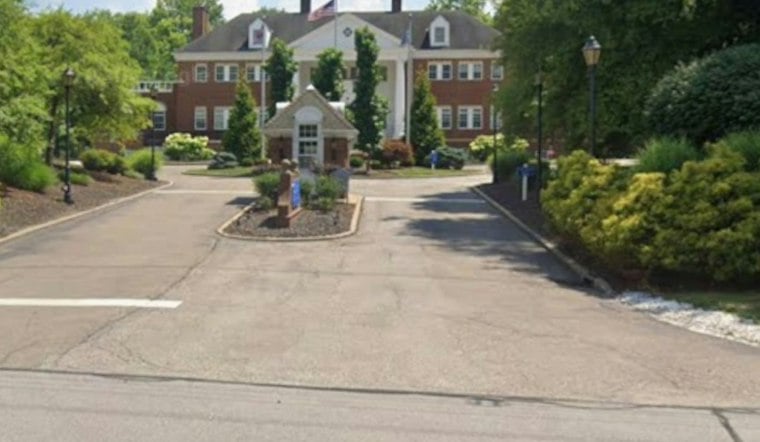
Hudson City Council is weighing up to $41 million in borrowing to fund a new public works facility, an expansion of the city's own broadband network, and renovations and an addition to one fire and EMS facility. The package touches nearly every corner of city infrastructure, from salt storage barns to fiber-optic cable, and it's tangled up with the city's plans to turn a shuttered Joann property into a technology campus.
Three Big-Ticket Borrowing Measures
According to Cleveland.com, the largest piece of the plan is up to $21 million in bonds for a new Department of Public Works facility and equipment. Those bonds would replace part of $31 million in short-term notes the city issued in 2025 that come due in December, and they could be repaid over as many as 25 years, per the same report.
The public works borrowing follows earlier financing for the same project: Hudson authorized $31 million in short-term notes in 2025, but construction bids came in lower than expected. The city’s current ordinance says the lower bids allow it to pay down $10 million of those notes and permanently finance the construction with bonds. The project also has a longer financing history: the city bought the Hudson Drive parcels for $1.9 million and separately authorized funding for design. Hudson’s public works bond filing lays out those prior steps.
Council is also considering up to $15 million in short-term borrowing to expand Velocity Broadband's fiber-optic network, the city's municipal internet service. A separate borrowing measure would authorize up to $6.825 million for improvements at 5810 Hudson Drive, including a new salt storage facility and a maintenance and storage building, the outlet reports.
Velocity began in 2015 as a city-owned fiber network built primarily to serve businesses; the residential expansion marks a significant change in its reach. Hudson’s financing documents put the full four-year fiber-to-the-home rollout at an estimated $18.8 million, with $7.5 million in notes authorized earlier and the proposed additional borrowing intended to cover later buildout areas. The city says it first explored a private partnership before deciding to expand the system itself. The broadband ordinance describes the financing plan.
Fire and EMS Facility Also on the Table
A fourth piece of the borrowing package covers up to $5 million for fire and EMS facility renovations and an addition that includes a detached garage, the article notes. Council gave second readings to three of the borrowing measures on Oct. 5, moving the proposals closer to a final vote, though the record does not indicate whether any of the measures have since received final approval.
Tying It to the Former Joann Site
The public works overhaul is unfolding alongside plans for the former Joann property, a 91-acre site the city hopes to redevelop as Hudson Innovation Park, a technology, research, and development campus. Officials want that site ready for development by 2028, according to the report.
Separately, Council passed its consent agenda unanimously, which included authorization to seek bids on the second phase of the city's fiber-to-the-home project, estimated at $6.4 million. Council also authorized bidding on a $650,000 project to build an asphalt pad and relocate a temporary salt storage foundation currently sitting on the Hudson Innovation Park site. Relocating that salt storage barn would clear the central portion of the former Joann property for future development, the outlet notes.
The city’s fiber build is not the only network construction underway. Hudson says private provider Kinetic, formerly Windstream, is also installing fiber in some neighborhoods, independently of Velocity. The parallel projects can bring separate crews and overlapping work to the same areas; the city says utility locations and underground conditions can limit its ability to avoid repeated disruption. That means the residential expansion is unfolding amid both municipal investment and private-sector competition. Hudson’s construction update explains the overlap.
Taken together, the borrowing measures and bid authorizations suggest Hudson is trying to untangle its public works operations from the land it hopes to turn into a tech corridor, all while juggling a broadband build-out and fire station upgrades on parallel tracks.





