

























































A 25-year-old man from India has pleaded guilty to conspiracy to commit wire fraud after admitting he collected $137,458 worth of gold bars from an 80-year-old Kaneohe woman who had drained her life savings believing she was protecting herself from identity thieves. Harsh Fojalal Shah entered his plea on September 25, admitting to his role in an international fraud scheme that prosecutors say was orchestrated out of Gujarat, India.
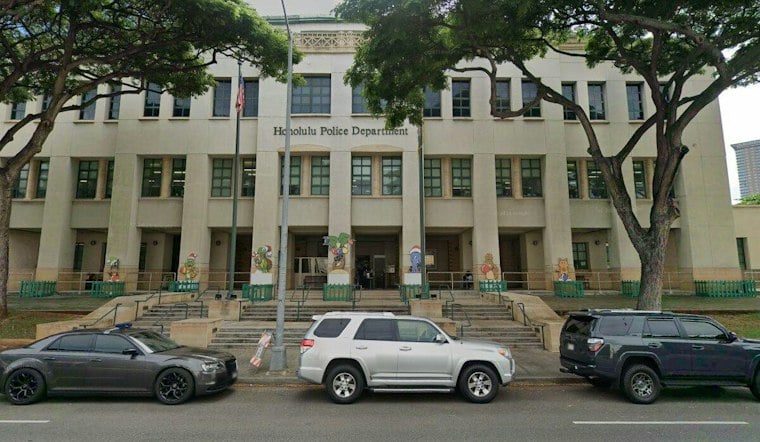
According to the Honolulu Star-Advertiser, Shah had originally been charged with conspiracy and four counts of wire fraud, but the U.S. Department of Justice agreed to drop the wire fraud counts as part of his plea deal. The Kaneohe victim first reported the fraud to Honolulu Police Department officers on June 15, after a fake Apple support message told her that her phone had been hacked, and a man claiming to be U.S. Marshal Silas V. Darden warned her that her identity and financial accounts were at risk. Pressured by the fraudster posing as law enforcement, she liquidated her IRA, ultimately buying $429,608 in gold before law enforcement intervened.
A Sting With Prop Gold and a One-Dollar Password
Federal agents did not let the scheme play out undisturbed. On July 20, agents with Homeland Security Investigations conducted a controlled sting in Kaneohe using prop gold, catching Shah after he handed the elderly victim a one-dollar bill as a confirmation password before she handed over a box he believed held ten gold bars, according to the U.S. Attorney's Office for the District of Hawaii. That dollar bill had served as a pre-arranged verification token supplied by the overseas call center running the scam.
Immediately after taking the box, Shah tried to shake off surveillance, performing evasive driving maneuvers across Honolulu before federal officers intercepted and arrested him, the U.S. Attorney's Office said. The federal wire fraud investigation was led by Homeland Security Investigations in coordination with the Honolulu Police Department and the Hawaii Attorney General's Office, underscoring how local and federal authorities are increasingly teaming up to trace these international crime rings back to street-level couriers.
A Courier Paid Thousands While the Victim Lost Everything
Shah admitted he made between $25,000 and $30,000 from ten pickups, collecting packages of gold from elderly victims and receiving reimbursement for his flights, hotels, and sometimes rental cars, per the Star-Advertiser's reporting. He was in Hawaii specifically to collect about 100 ounces of gold, according to federal court records. Investigators say Shah operated as part of a four-member WhatsApp group chat that arranged the gold pickups, and that he deleted messages after exchanges were completed.
Shah, a citizen of India, is scheduled to be sentenced on January 12, 2027. He faces up to 20 years in federal prison, a fine of up to $250,000, and a term of supervised release, and will be removed and deported from the United States following any prison term, per federal court documents. Federal prosecutors are seeking $162,458 in forfeiture from Shah.
A Second Courier Case Links Kaneohe to Montana
Shah's case is not isolated. A man known as Leonard Lawrence, also known as Liu Yang, was charged with conspiracy and wire fraud on June 18 after allegedly conning a Missoula, Montana woman who liquidated her assets and bought three separate batches of gold bars worth $203,609, which she handed over to Lawrence. The FBI arrested Lawrence in Missoula on June 17, he was indicted on July 2, and he pleaded guilty to wire fraud on September 2. He faces up to 20 years in federal prison.
The pattern mirrors other courier cases Hoodline has tracked, including an Indian national sentenced to 30 months for flying between Texas, North Carolina, Kansas, and Oklahoma over 48 hours to collect gold bars from three elderly victims. Low-level couriers in these schemes typically earn modest per-pickup fees while the overseas orchestrators running the WhatsApp dispatch operations keep the bulk of the proceeds.
Hawaii Seniors Losing Tens of Millions Each Year
The scale of the problem in Hawaii is stark. Hawaii residents over age 60 lost more than $55 million to online scams in 2025, according to the FBI, with 917 people losing nearly $55.39 million — up sharply from 647 people who lost more than $18.85 million in 2024, per the FBI Internet Crime Complaint Center. Across all age groups, Hawaii residents lost $88,844,984 to online scams in 2025, compared with $34,226,946 in 2024 and $39,999,023 in 2023, according to the FBI.
The jump reflects a national trend. Nationwide FBI IC3 data shows elder fraud losses among Americans aged 60 and older reached $7.75 billion in 2025 across more than 201,000 victims, a 59% surge from 2024, according to the FBI Internet Crime Complaint Center. Physical gold bar and bulk cash courier pickups have emerged as a rapidly growing tactic within that epidemic, generating over $55 million in senior losses in just the first seven months of nationwide tracking, the FBI IC3 reported, since physical handoffs let overseas call centers bypass bank wire-monitoring algorithms and anti-money laundering flags that would otherwise catch large electronic transfers.
Legal Exposure and a Warning From Prosecutors
Under federal sentencing law, defendants convicted of aggravated identity theft alongside wire fraud face a mandatory minimum of two years in federal prison that must run consecutively to any other sentence, with no statutory discretion for judges to reduce or run that time concurrently, under 18 U.S.C. § 1028A as outlined by the United States Sentencing Commission. Following Shah's arrest, the U.S. Attorney's Office for the District of Hawaii issued a public advisory emphasizing that legitimate government agencies will never demand secrecy or require citizens to buy gold, precious metals, gift cards, or cryptocurrency to safeguard their identity or funds.
In response to the surge in local fraud losses, Hawaii lawmakers introduced House Bill 1642 in 2026 to ban cash deposits at cryptocurrency ATMs, after scam losses in the state quadrupled over prior years. State representatives have noted that funds converted through these machines are quickly laundered offshore and removed from the local economy entirely.
Federal officials say reporting financial fraud to the FBI's Internet Crime Complaint Center at ic3.gov immediately triggers the agency's Financial Fraud Action Section, which can initiate emergency freeze requests on wire transfers and trace courier logistics. Reporting within 72 hours significantly increases the chances of freezing or recovering stolen assets, according to the FBI IC3 and the U.S. Department of Justice. Whether the Kaneohe victim will recover any portion of her $137,458 loss through federal forfeiture proceedings remains an open question.





