

























































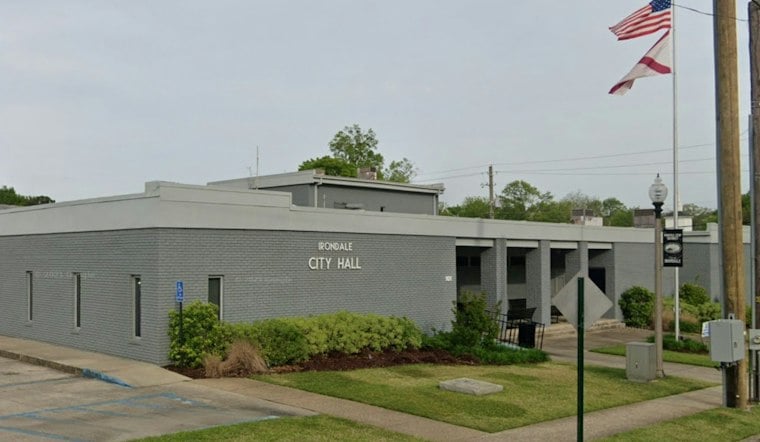
Irondale Mayor James Stewart Jr. says his city will not join the growing list of Alabama municipalities banning new data centers, even temporarily. Instead, the city is betting on a detailed zoning ordinance to get ahead of an industry that, for now, has shown no interest in building there at all.
The Irondale Planning and Zoning Commission recommended the new ordinance to the City Council following a public hearing on Thursday, according to AL.com. The council is expected to take up the measure in December, when it will cast the binding vote on whether the rules become law. Stewart, who also chairs the planning and zoning commission and has led the city since his first election as mayor in 2020, has made clear where he stands on the broader debate playing out across the state.
He has called data-center moratoria “the easy way out,” the outlet reports, arguing Irondale should tackle the issue through regulation rather than delay. That stance puts him at odds with a wave of Alabama cities that have chosen to pump the brakes. At least 17 cities statewide had temporary bans on new data centers in place as of September, per the same AL.com reporting.
What's Actually In the 18-Page Ordinance
The proposed ordinance runs 18 pages and was drafted by Aaron Sims, who spent six months studying the data-center industry before bringing the proposal forward, the outlet notes. It defines hyperscale data centers alongside other, smaller categories and sets minimum setback distances from residential areas that vary depending on which type of facility is being built.
The rules would also require closed-loop cooling systems and cap daytime noise at under 50 decibels measured at the property line. Sims told the commission the City Council could still make small tweaks or additions before a final vote, leaving room for adjustment ahead of December.
Notably, Sims said Irondale might be able to attract a micro data center someday but lacks the space for anything larger, a point that underscores just how hypothetical this entire exercise remains. The city currently has no data centers proposed and none seeking permits, the AL.com report confirms.
No Developers, No Land, Still Writing the Rules
That absence of actual projects isn't new. Speaking to WBRC back in May, Stewart said bluntly, “The city of Irondale is not pursuing data centers and nobody is pursuing us.” He added that he had not identified any piece of city land suitable for selling to a data-center developer, telling the station, “I did not identify a piece of land that we would sell.”```
Stewart has acknowledged the financial case cuts both ways. He told WBRC that data centers can bring short-term municipal revenue through “the construction, the permits, and all the things that go into the initial build,” but said the long-term payoff is less certain, noting “the jury's still out on the long-term impact” when it comes to jobs and sustained revenue for the city.
Turnout at Thursday's hearing was modest. Roughly 15 people attended, and two residents asked the city to pass a moratorium rather than move straight to permanent zoning rules, according to AL.com's account of the meeting.
How Neighboring Cities Have Handled the Same Fight
Irondale's approach mirrors what happened in Birmingham, whose own data-center moratorium has already expired and been replaced by zoning regulations, the AL.com report on the statewide trend notes. Birmingham's ordinance sorts facilities into micro, medium and hyperscale categories and requires hyperscale operations to use closed-loop cooling systems, according to WBHM.
Other metro Birmingham cities took the opposite route, pausing development outright. Leeds, Homewood, Chelsea, Pinson, Fairfield, Helena, Springville and Calera all followed Birmingham's lead in enacting moratoria, per AL.com. Anniston unanimously adopted a yearlong moratorium in August even though it already hosts at least one colocation data center, while Westover passed a six-month pause the same month amid resident pushback over a proposed 450-acre site along Highway 280. Foley approved its own six-month moratorium on Sept. 8, and Rogersville was weighing a similar measure as of September but had not yet voted, the outlet reported.
The debate isn't confined to Alabama. In Little Rock, the city's Board of Directors declined to advance a proposed six-month moratorium on large data-center projects this week, with the vote ending in a 4-4 tie and one recusal, according to KATV. For now, Irondale finds itself in similar company: regulating ahead of demand that, by its own mayor's account, doesn't yet exist.


