

























































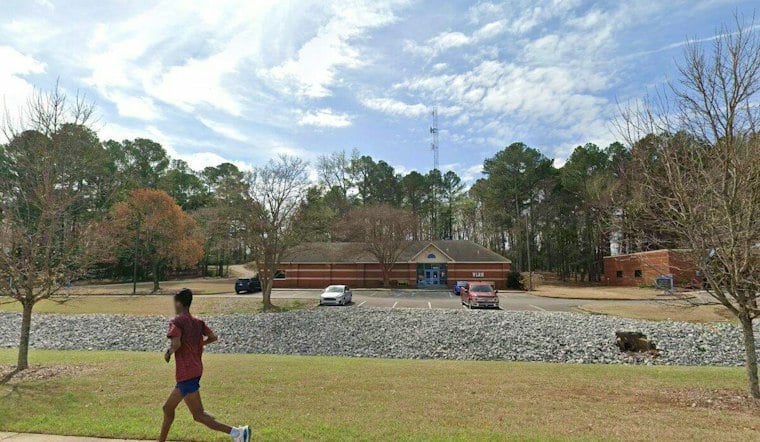
Governor Kay Ivey has removed five members of the Alabama Educational Television Commission, which oversees Alabama Public Television. The ousted commissioners — Ferris Stephens, William Green, Bebe Williams, Pete Conroy and Les Barnett — each received termination letters from Mason Bass, Ivey's appointments director.
The dismissals land at the end of a year-long fight over whether APT should sever its affiliation with PBS.
Two commissioners, Logan Glass and Tijuanna Adetunji, remain on the board. Five new appointees filled five congressional-district seats: Wallace Gilberry for District 1, replacing Barnett; Ric Smith for District 3, replacing Conroy; Dr. Neil Lamb for District 5, replacing Williams; Sally Smith for District 6, replacing Stephens; and Dr. Samory Pruitt for District 7, replacing Green.
A Fight That Started With PBS Content
The commission debated whether to keep its PBS affiliation.
At stake was a lot more than politics. If the commission had severed ties with PBS back in October 2025, it stood to lose access to roughly 90 percent of its programming, including staples like Sesame Street, NewsHour and Daniel Tiger's Neighborhood, according to AL.com's reporting. The commission was simultaneously grappling with federal funding cuts tied to the dissolution of the Corporation for Public Broadcasting and mounting political pushback.
Ivey Called For A Survey First
Rather than let the board vote immediately, Ivey intervened in November 2025, asking the commission to delay any decision on disaffiliation until a comprehensive survey of Alabama viewers could be completed, according to Alabama Daily News. That survey didn't come cheap or without controversy. On September 16, 2026, the Alabama Educational Television Foundation Authority voted 5-2 to pull $39,500 from its $4.7 million emergency reserve fund to pay for the poll, a move that drew sharp criticism from dissenting members, per the Alabama Political Reporter's account of the meeting.
Conroy argued at the time that tapping emergency reserves for political polling was inappropriate. The pollster hired was Cygnal, a GOP firm, which surveyed 600 registered Alabama voters in September 2026. The results undercut the case for disaffiliation: 54 percent supported maintaining APT's relationship with PBS, only 18 percent favored dropping it, and 28 percent were undecided, according to WBHM. The same survey found nearly 62 percent of respondents believed political officials should stay out of public television programming decisions, while just 16.5 percent favored political oversight.
Commission Voted To Keep PBS Before The Purge
Facing that evidence, the Alabama Educational Television Commission voted to maintain its PBS affiliation, AL.com reported. The five commissioners who had been on the board also held seats on the Alabama Educational Television Foundation Authority, the nonprofit that manages private donations and controls that $4.7 million emergency reserve fund.
There's local precedent for what severing network ties can look like. Huntsville public radio station WLRH, licensed to the commission, dropped NPR programming in 2025 after federal funding cuts, according to the Alabama Political Reporter.
A Budget Hole Still Looms
Even with the PBS question settled for now, APT's finances remain strained. The dissolution of the Corporation for Public Broadcasting cost the network roughly $2.5 million in annual federal funding, about 10 percent of its budget, though it secured more than $10.8 million in state funding for FY2027 covering roughly half of its operations, according to Current.




