

























































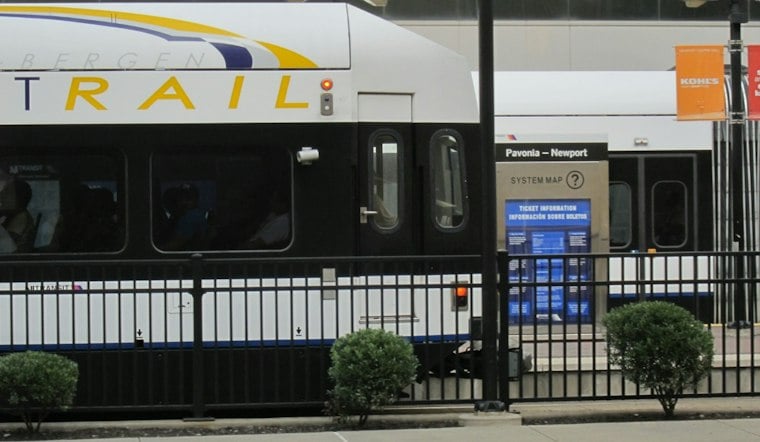
A union representing Hudson-Bergen Light Rail workers says a woman was on the tracks in Jersey City for more than two hours before she was struck and killed by a train, and that the system's contractor never ordered trains to stop. The union is also fighting to clear the name of the operator who was driving the train when the woman died, arguing the company scapegoated him instead of acknowledging its own failures.
The fatal strike happened before dawn on September 25, near Newport Station, according to nj.com, which reported the woman was struck around 6:20 a.m. and that the operator and 125 passengers aboard the train were not injured. Transportation Workers United Local 229, the union representing light rail operators, rallied in Jersey City this week to demand accountability over how the incident was handled, as reported by Hudson County View. Union president Wallace Phalone Williams said operations should have stopped all train traffic once the report came in that a woman was on the tracks, and said management instead tried to shift blame for her death onto the train operator.
What the Union Says Happened That Morning
Per the union's account relayed in the Hudson County View report, the train operator had reported a severely inebriated woman on the tracks in the pre-dawn darkness. Rather than halting service, rail operations instructed operator Ronald Kangalee to proceed with extreme caution toward the reported hazard, without a specific speed restriction and without clearing the track first, according to the same account. Williams argued that clear, consistently enforced protocols could have stopped trains, secured the area, and summoned emergency assistance before the woman was killed — calling her death preventable.
Kangalee was suspended for 10 days from operating light rail trains and from working in the yard, a disciplinary action the union says was the first of its kind under ACI-Herzog's management, according to the Hudson County View report, which also noted that similar fatalities elsewhere had not previously resulted in a comparable consequence for a train operator. The union's own review of Kangalee's disciplinary letter found that it listed operating rules without identifying the specific act that supported his suspension. The union is now demanding the company explain precisely what Kangalee is accused of doing wrong, along with full disclosure, preservation of records, and rescission of the suspension.
Allegations About a Broken Radio and Missed Fixes
Bill Brennan, an attorney representing the union, alleged that a train radio had malfunctioned and remained in service until it broke entirely the next day — and that ACI-Herzog then accused a train operator of breaking that same radio and sought to discipline them. Brennan said video and a prior report showed the radio was broken before the operator was accused, according to the Hudson County View account. He also said passenger interface buttons on the system are frequently out of service, and characterized the contractor as having a history of cutting corners and avoiding responsibility, favoring profits over people.
The union further argued that ACI-Herzog could have invoked a contract exception to on-time performance bonus deductions in this case rather than issuing a proceed-with-caution order instead of stopping all traffic. Brennan's allegation ties into one of the union's broader demands: an independent investigation into whether on-time performance incentives influenced the decision to keep trains moving. The union says the operations and maintenance contract itself lists a person on the tracks as a valid excuse for stopping train service.
NJ Transit's Response and the Contractor's Silence
NJ Transit said the matter remains under active investigation led by the New Jersey Transit Police Department, which nj.com reported was already investigating the Jersey City strike in the immediate aftermath. The agency said its safety department and light rail management teams will conduct a comprehensive safety review, adding that it maintains high safety standards and expects everyone to meet them, and that it will refrain from further comment until investigative processes are complete. ACI-Herzog responded to Hudson County View’s coverage with a statement disputing the union’s account and expressing condolences.
ACI-Herzog, not NJ Transit, holds the contract to operate and maintain the Hudson-Bergen Light Rail system, a 15-year base agreement with two five-year extension options worth up to $1.5 billion, according to Mass Transit, which also notes the system spans 20.6 miles across 24 stations and serves more than 48,000 weekday riders. Herzog announced it had been awarded the operations and maintenance contract for the system.
A Pattern of Fatal Strikes on the Line
The September 25 strike was one of two fatal NJ Transit train incidents reported that morning, the other in Plainfield, according to nj.com's initial coverage. It followed another deadly strike weeks earlier: an adult male trespasser was fatally struck near Garfield Avenue Station shortly before midnight on August 8, per RLS Media. In that earlier incident, one of 25 passengers aboard and the train operator were taken to a local hospital with non-life-threatening injuries, and service was halted in both directions between Garfield Avenue and West Side Avenue before later resuming.
The union's demands also include clear protective procedures for future reports of people in the track area and trauma support for the operator and other affected employees. For now, the cause of the September 25 strike and the outcome of the police investigation remain open questions, with NJ Transit saying it will not comment further until its review concludes.


