

























































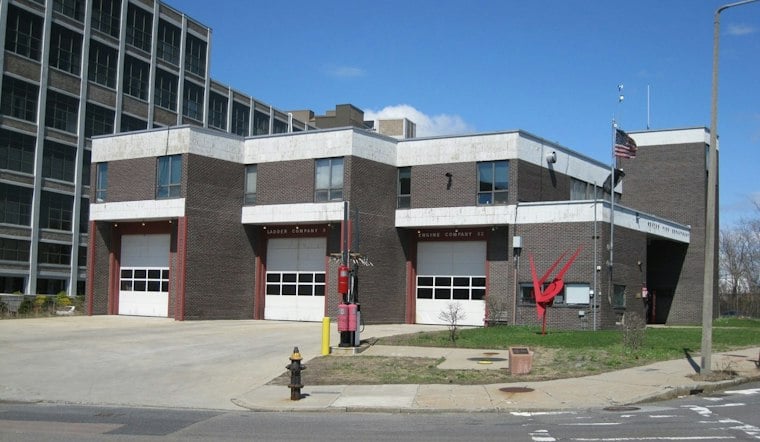
Firefighters in Johnston, Rhode Island have been called to Amazon's sprawling fulfillment center roughly 200 times since it opened, with about 160 of those runs for medical help ranging from chest pain to psychiatric crises. A July conveyor-belt fire at the facility compounded the scrutiny, with investigators finding that about 850 employees tried to flee through the building's front entrance instead of using any of its 55 marked emergency exits.
The tally, reported through September 26, comes from The Boston Globe, which detailed both the volume of medical calls and the fire department's lingering concerns about safety equipment inside the 3.8-million-square-foot, five-story warehouse. The medical complaints included chest pain, back pain, psychiatric problems, pregnancy issues, and general sick-person calls, according to the Globe's reporting. Amazon has said workers are encouraged to call 911 whenever they feel it's necessary, and that part-time employees receive 40 hours of paid flexible time while full-time workers get up to 48 hours, according to spokesperson Sam Stephenson.
A Fire That Exposed Evacuation Problems
The more alarming incident unfolded on July 23, when a fire broke out in a conveyor belt on the facility's second floor. The Rhode Island State Fire Marshal's Office later ruled the blaze accidental, attributing it to friction caused by debris jamming under the running belt, per the same Globe account. No one pulled the fire alarm during the incident; instead, workers received evacuation instructions over two-way radio and were ordered out of the building.
What happened next worried fire officials more than the fire itself. Roughly 850 employees attempted to leave through the building's front entrance rather than fan out to any of the 55 emergency exits, and firefighters say it can take 15 to 20 minutes just to walk from the front entrance to the far end of the structure. No one was injured and the fire was contained quickly, but the state fire marshal's office identified broader problems with Amazon's fire safety practices, the Globe reported. Amazon has since provided additional Knox boxes for emergency access, and the company and Johnston fire officials had a meeting planned to discuss evacuation procedures and other concerns.
Equipment Requests Still Unmet
Johnston's fire chief told the Globe that hoses and compressed-air tanks requested for placement at various points inside the building still had not been installed. Amazon, for its part, said there was no formal request for that equipment and maintained it is not required by code. Both the company and the fire chief agree the building otherwise meets all relevant fire codes and regulations. Johnston firefighters carry about 30 minutes of oxygen supply, a figure that underscores why the building's size looms large in their planning for a worst-case scenario.
Rescue Squads Stretched Thin
Johnston Fire Chief Keith A. Calci said most of the emergency calls appear to involve people becoming ill at work, according to the Globe. Some Amazon employees have reported feeling they could risk being fired if they called in sick, though Stephenson said only a small fraction of the rescue calls were work-related and that the vast majority involved personal health matters unrelated to the job.
Johnston Mayor Joseph M. Polisena said town rescue squads should not be used as what amounts to a medical taxi, and argued that Amazon has no excuse for failing to address public-safety concerns, per the Globe's reporting. The town's fire department normally handles about 7,000 rescue calls a year, and officials say that when Amazon-related calls spike, Johnston may need to lean on neighboring towns' rescue squads — a workaround that could stretch emergency response times across the broader area.
How Johnston Compares to Other Amazon Sites
Johnston isn't alone in fielding heavy call volume from an Amazon warehouse. North Andover's fire department responded 71 times to its own 3.8-million-square-foot Amazon facility in 2026, including 62 emergency medical service calls, the Globe reported. In North Haven, Connecticut, firefighters responded 68 times over the past year to Amazon's 855,000-square-foot warehouse there, mostly for medical calls — and one of those calls, according to WTNH, ended in a death.
The pattern echoes concerns raised years earlier about Amazon's Fall River warehouse, which sprawls over 1.3 million square feet. A 2021 Globe investigation found that facility had one of the highest worker-injury rates in Amazon's national distribution network, reporting a serious injury rate of 11.8 per 100 workers in 2018 — more than three times the industry average — that climbed another 17 percent in 2019. Four injured workers who appealed denied claims eventually won settlements after a state judge found Amazon liable, the Globe's investigation found.
A $400 Million Investment With Strings Attached
Amazon's Johnston facility, which opened in July 2025, cost roughly $400 million to build and promised more than 1,500 jobs for a town of about 30,000 residents. As part of a 20-year tax deal, Amazon is set to pay Johnston an average of $7.2 million a year in property taxes and committed $5.3 million to add four additional firefighters to a nearby station — an arrangement that now underscores just how central the warehouse has become to the town's public-safety planning, for better or worse.



