

























































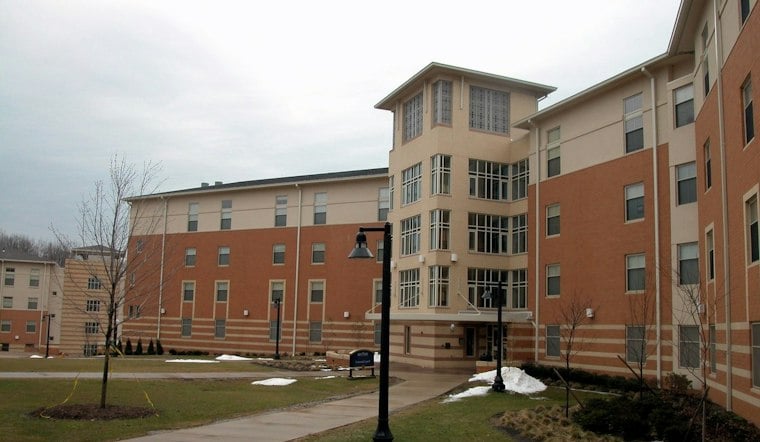
Kent State University students are planning to knock on thousands of dorm-room doors this month urging their peers not to vote for state Rep. Heidi Workman, the Rootstown Republican and Kent State alumna who backed the sweeping higher-education law that shuttered several campus centers. The push, organized by student group members tied to the Ohio Student Association, targets Workman as she seeks reelection to the Ohio House District 72 seat she won in 2024 — a district that covers much of Portage County, including Kent State's main campus.
The campaign's main door-knocking effort is set for October 23, according to Signal Cleveland, with organizers planning to reach all 24 residence halls on campus, which house nearly 6,000 students, as well as nearby off-campus apartments. Kent State's broader enrollment tops 24,300 students, and the local Ohio Student Association chapter — which includes about 20 to 30 members — hopes to bring in at least 100 students from other Ohio chapters to help knock on doors. Outside volunteers may only participate if paired with a Kent State student who actually lives in the dorm being canvassed.
The campaign's central grievance is Senate Bill 1, which took effect in 2025 and overhauled how Ohio's public colleges and universities operate, ending diversity, equity and inclusion work and introducing new rules across the system. Workman said at the time she was incredibly proud to support Senate Bill 1, which passed despite public opposition from many Ohio college students and faculty members, the outlet reports. Gov. Mike DeWine signed the measure, formally titled the Advance Ohio Higher Education Act, on March 28, 2025, and it took effect that June 27, banning DEI-based hiring, training and scholarships at state institutions while also prohibiting faculty strikes, according to Wikipedia.
A Law That Reshaped Campus Life
To comply with the statute, Kent State closed its LGBTQ+ Center, Women's Center and Multicultural Center in June 2025 and announced the elimination of 19 academic programs, per the same Wikipedia account of the law. University officials said the center closures were made specifically to comply with Senate Bill 1. Nica Delgado, a 2025 Kent State alum and digital organizer with the Ohio Student Association, put it bluntly in comments to Signal Cleveland: Senate Bill 1 destroyed Kent State.
The law's financial fallout reached beyond the shuttered centers. Implementation of Senate Bill 1 led to the cancellation of Kent State's Oscar Ritchie Memorial Scholarship, which had previously awarded $3,000 annually to more than 300 underrepresented students, according to Kent State NewsLab. In response to those losses, the Ohio Student Association launched a Save Our Scholarships campaign pushing for a $5 student fee that would generate $500 emergency grants for roughly 250 affected students, the same outlet reported. Kent State also paid $27,500 from its operational budget for third-party software to comply with a separate Senate Bill 1 mandate requiring public universities to post undergraduate syllabi online, according to earlier Hoodline reporting.
Measuring the Mood on Campus
A Spring 2026 survey conducted by Kent State journalism students found that 66% of 47 surveyed students held a negative overall impression of Senate Bill 1, while 45% said they felt less comfortable expressing opinions on campus, per Kent State NewsLab's reporting on the survey. The sample is small, but organizers point to it as evidence that discontent runs deep enough to translate into votes. Delgado told Signal Cleveland that college students are not a demographic politicians should disregard or ignore in politics, adding that politicians who do not have students' best interests in mind will not have a job.
The student campaign plans to target registered voters who may feel apathetic or remain unsure whom to support, highlighting Workman's connection to Senate Bill 1 as its central message, Signal Cleveland reports. Workman currently serves on the Ohio House Workforce and Higher Education Committee and is Vice Chair of the Technology and Innovation Committee, according to the Ohio House of Representatives, tying her legislative duties directly to the policy students are campaigning against.
The Race Students Are Trying to Flip
Students plan to support Democrat Jeff Clapper, president of Kent City Council, who won the May 2026 Democratic primary uncontested with 7,739 votes, according to MultiState. Libertarian Michael Fricke is also running in the race. Delgado told Signal Cleveland she believes Clapper will win in a landslide and that the District 72 seat is 100% within students' reach.
That optimism runs up against recent electoral history. Workman received nearly 60% of the vote in the 2024 general election after defeating fellow Republican Gail Pavliga, who had held the seat for two terms, in that year's primary. MultiState's district data puts Ohio House District 72 at an R+16.7 margin in the 2024 presidential election, underscoring how the district has leaned right in recent years. Whether a dorm-focused canvassing push can overcome that conservative baseline — and how Workman defends her record to the broader Portage County electorate beyond Kent State's campus — remains to be seen as Election Day approaches.





