

























































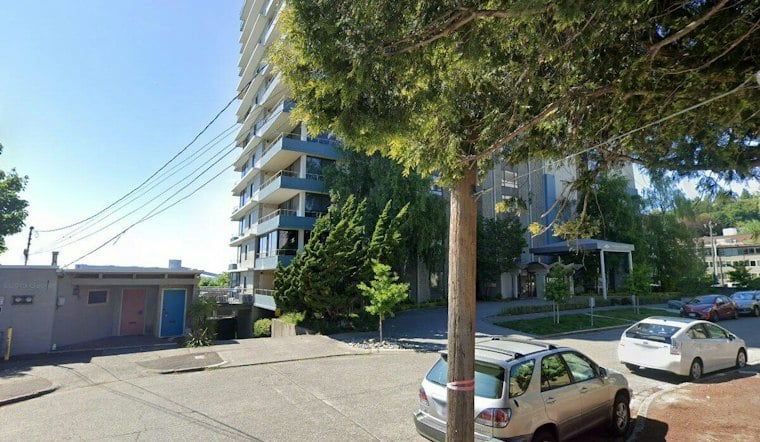
Kelly Kay McGinness was 18 years old when she walked away from the Three Bears Motel near S. 216th St. and Pacific Highway S. on June 28, 1983, to do sex work, and she never came back. Her boyfriend reported her missing two days later. More than four decades on, her remains have never been found, and King County investigators still consider her case an open, unsolved disappearance.
A Life Marked by the Streets
McGinness had run away from home at age 13 and later became involved in the sex trade, according to Jim Fuda, executive director of Crime Stoppers of Puget Sound and a former officer who worked the area. Fuda told the station McGinness had children with Raphael Wilson and was known to stay at the Three Bears Motel, which he described as a rundown spot long associated with sex work. The Doe Network has noted that McGinness frequently used aliases during her years living on the streets, a detail that complicates efforts to trace her final movements.
She was described in missing persons records as 5 feet 5 inches tall and 160 pounds, with dyed blonde hair, last seen wearing blue jeans, a tan sweater, a camel-hair coat, and beige spiked heels, according to the Doe Network. Those identifiers remain part of the official record in case her remains are ever located.
A Documented Brush With Gary Ridgway
Four months before McGinness disappeared, in February 1983, police stopped Gary Ridgway in his truck near Sunset Junior High School while he was soliciting her; she gave officers the alias Jennifer Kauffman, and both were released, per the Doe Network's account of the encounter. That contact later became central to detectives' theory of what happened to her. Ridgway went on to plead guilty in November 2003 to 48 counts of aggravated first-degree murder in King County, a deal that took the death penalty off the table and made him, at the time, the most prolific convicted serial killer in U.S. history, as reported by CBS News. He later received a 49th life sentence in 2011.
During those plea negotiations, Ridgway told investigators he was certain he had killed McGinness and had disposed of her body near Lake Fenwick in King County. But because her remains were never recovered, prosecutors never formally charged him in her death, according to the Doe Network's reporting on the case. Fuda believes Ridgway's guilty plea may have been shaped by his desire to avoid execution, calling that self-serving aspect of the confession significant, and investigators have long questioned whether all of his claimed victims were genuine or inflated for legal leverage.
Returning to the Scene, Decades Later
Ridgway's uncertain credibility hasn't stopped King County from chasing physical confirmation. In September 2024, he was temporarily transferred from the Washington State Penitentiary in Walla Walla to the King County Jail under a sealed judicial order so major crimes detectives could take him to local sites in an effort to locate undiscovered victims' remains, KING 5 reported. Court records unsealed in March 2025 showed detectives brought Ridgway to those sites between September 9 and September 13, 2024, after verbal descriptions alone proved insufficient to pinpoint burial locations, according to FOX 13 Seattle. He spent four days in King County before being returned to prison. Despite that effort, Ridgway never led investigators to McGinness's remains.
Fuda said the area around the Duwamish Y and Kent Downs Road was known for sex work in 1983, and that people who spent time there may hold information about what happened to McGinness. He noted McGinness had reportedly told her mother she would leave the Seattle area for good if she ever left the sex trade and would likely never return — leaving open, alongside the primary theory of foul play, the formal possibility that she simply left and stayed gone.
Modern DNA Tools Keep Closing Old Files
Technology has continued to chip away at the backlog of Green River-linked cases even when confessions alone could not. The King County Sheriff's Office used advanced DNA profiling to identify 15-year-old runaway Lori Anne Razpotnik in December 2023, nearly four decades after her remains were first discovered in 1985, according to The Mirror. Statewide, roughly 28% of all homicides in Washington between 1965 and 2019 — nearly 3,000 cases — remain unsolved, with nearly half of those cold cases concentrated in King County, per KING 5. Since establishing a dedicated Cold Case Unit and joint prosecutor review framework, King County has identified 193 dormant homicide and missing person cases dating back to 1942, according to the Federal Way Mirror.
The persistence of unsolved disappearances like McGinness's has also drawn attention from artists and survivors. In Hoodline's earlier coverage, sex-trafficking survivor Laura LeMoon launched a 49-photograph exhibition called What the Earth Knows at Lottie's Lounge in Seattle's Columbia City, documenting the present-day landscapes where Green River Killer victims were last seen or found.
Crime Stoppers Wants Tips, Even Small Ones
Fuda is urging anyone with information about McGinness's disappearance to come forward, even if they're not sure it's relevant. Please pass it on, he said. Let the detectives decide if that's relevant or not. Crime Stoppers of Puget Sound accepts anonymous tips through the free P3 Tips app or by phone at 800-222-TIPS, and Fuda said callers can remain anonymous while the organization passes tip information along to investigators still working the case.





