

























































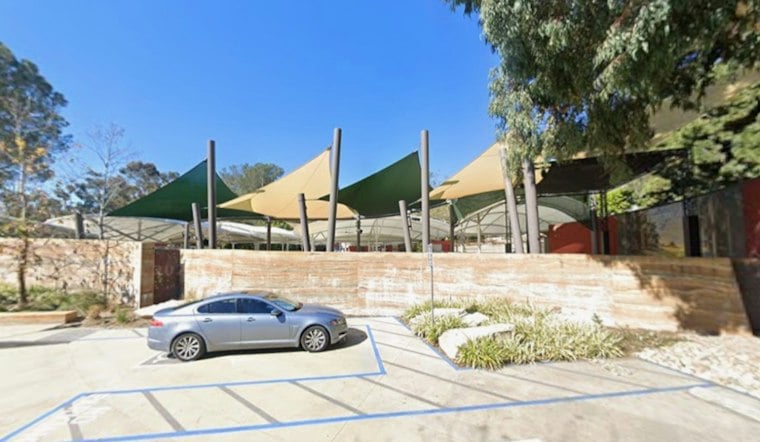
Nine candidates vying for three seats on the Laguna Beach City Council faced off on parking, arts funding and housing during a forum held inside the Forum Theater on the Festival of Arts grounds. The field includes three incumbents and six challengers, all competing to steer a city that depends heavily on tourism and summer art festivals, as well as managing the traffic and parking pressures that come with visitors.
The Sept. 26 event was hosted by the Laguna Beach Arts Alliance and moderated by Tom Johnson, according to the Los Angeles Times. Candidates were given two minutes each for closing statements after fielding questions on everything from parking capacity to public art funding, the paper reported.
Parking Dominates the Debate
Candidates largely agreed the city needs more parking, even as they splintered over how to build it, fund it and whether it should exist at all in certain neighborhoods. Some suggested maximizing existing lots first and studying whether a parking structure investment is even justified before breaking ground anywhere new, per the Times account.
Joy Berry opposed building a parking structure in the arts district but proposed an alternative: working with the city of Irvine to create a large parking garage, paired with mass transit running through the canyon. Alex Rounaghi took a different tack, backing a parking structure at the Village Entrance while insisting taxpayers shouldn't foot the bill. He floated funding it instead through parking revenues and a $5 or $10 fee tacked onto each Irvine Bowl ticket.
Edward Bayuk framed the issue around residents, saying neighborhood dwellers are struggling with visitor parking spilling into their streets. His fix: strategic parking structures designed to funnel visitors toward paid parking rather than residential blocks. Karen Martin pushed for something more foundational, advocating for a capacity study to determine how many people Laguna Beach can comfortably hold before any parking fix is designed around that number.
A Debate With a Long History
The parking fight long predates this election cycle. A 2023 city parking study examined 23 locations citywide and found 15 that yielded viable parking concepts, according to Stu News Laguna archives. That same report tied expanded public parking in strategic locations to continued investment in local transit and active transportation, arguing the combination would encourage a “park once” mentality among visitors rather than repeated short car trips around town.
Potential parking-structure sites have included 777 Laguna Canyon Road. The Village Entrance has surfaced in a candidate proposal, underscoring how unresolved the city's parking question remains heading into this election.
Irvine Bowl Sound Policy and Festival Timing
The forum's parking talk arrived against the backdrop of a separate, recent council action involving the Irvine Bowl, the 2,600-seat amphitheater on the Festival of Arts grounds. On Sept. 22, the City Council unanimously approved suspending the Festival of Arts sound policy for three nights of concerts tied to the Coast Film & Music Festival, according to the Los Angeles Times. The council also authorized up to $12,386 in additional work by Rincon Consultants to monitor sound at as many as nine locations during the suspension.
The festival itself is scheduled to return to Laguna Beach Oct. 16 through Oct. 25 as a 10-day event culminating in those three nights of concerts at the venue, per Laguna Beach Indy. Candidate Ashley Cintas used the forum to pitch a different long-term vision for the venue, proposing TEDx talks, educational events, artist series and smaller-scale conventions at the Irvine Bowl, while saying she was “not saying that we need” a massive Comic-Con-style convention in Laguna Beach.
Artist Housing Takes Center Stage
Housing for working artists emerged as another flashpoint. Mark Orgill, who helped form the Laguna Beach Community Land Trust, described it at the forum as one of the city's most successful nonprofit formations, the Times reported. The trust, about 30 months old, has already preserved 75 units for artists to live and work in.
That housing push has real dollars behind it. Laguna Beach City Council members approved an $8 million loan in late January to help the trust buy two properties in Laguna Canyon, providing 25 live-work units for artists, according to Voice of OC. City staff told the outlet that rents at those properties would likely need to rise by 25% to cover net operating income. Voice of OC also noted that Anaheim introduced its own housing trust in 2024, backed by $15 million from Disney in exchange for approval of a Disneyland expansion, offering a comparison point for how other Southern California cities have structured artist and workforce housing deals.
Public Art and City Governance
Beyond parking and housing, candidates addressed the city's broader arts identity. Sue Kempf proposed using the newly opened Promenade on Forest for the Laguna Art Museum's annual art and nature event, while the city has commissioned a centennial art piece for the same promenade space, which held its grand opening ceremony the night before the forum. The promenade could host the annual event, while the city's public art collection already includes work from local and outside artists at roughly a 70-30 split.
Governance and trust also came up. Laura Parisi said she sought to restore the working relationship among the elected treasurer, city staff and the City Council. Nick Aronoff said residents want to feel heard by council members and pledged to let residents criticize decisions and offer different ideas without fear of repercussions. Candidates repeatedly pointed back to the city's cultural backbone — its summer art festivals, the Pageant of the Masters and Laguna Playhouse productions — as the identity voters are being asked to protect while the city wrestles with how to manage the crowds those very events draw.



