

























































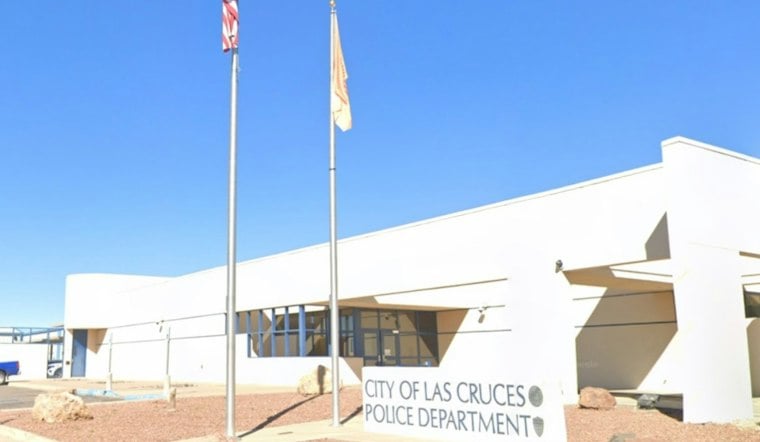
Las Cruces Police Chief Jeremy Story told state lawmakers this week that Flock Safety license plate cameras have helped his detectives close several cases, including homicides and a bank robbery in El Paso, Texas. His pitch came as New Mexico legislators wrestle with how much surveillance power departments like his should have, and at least one lawmaker on the committee was not fully convinced the safeguards around the system are real.
Chief Says Cameras Fill In the Gaps
Story briefed lawmakers on the interim Courts, Corrections and Justice Committee on Oct. 6 about how the Las Cruces Police Department uses Flock technology, according to Source New Mexico. He told lawmakers the cameras are “very valuable for law enforcement when a crime involves a partial license plate or good vehicle description,” per the outlet's report. The department has access to 43 Flock cameras across Las Cruces, and the city says the technology is meant to capture objective evidence for investigations — a description echoed in the Las Cruces Police Department's own public transparency page.
According to that same city page, LCPD uses two main approaches: retroactive searches to solve crimes after they happen, and real-time alerts tied to hotlist vehicles meant to help officers catch wanted suspects. The department has also published policies and usage statistics, including a preliminary second-quarter crime report covering January through June of this year, which the city frames as a way to promote accountability. During his presentation, Story demonstrated the Flock software live by entering his own license plate number and pulling up photographs of his pickup truck, the Source New Mexico report notes.
A Lawmaker Pushes Back on the Safeguards
That demonstration drew sharp questions from state Rep. Christine Chandler, who asked how Story was able to access photos of his truck without tying the search to a specific criminal case number. Story told the committee he had created a case number specifically for the demonstration, according to the same report. Chandler said she was concerned that the ability to generate fake case numbers could be abused, calling it an illusory check on the system.
Story also told lawmakers that most Flock camera hits cannot determine where a vehicle came from, where it went, who was inside, or who was driving — a limitation he offered as reassurance about the technology's reach. Not every lawmaker on the committee shared Chandler's skepticism; Rep. Andrea Reeb said Flock cameras have been beneficial for criminal investigations, per the Source New Mexico account.
New Mexico's New Privacy Law
The scrutiny comes months after Gov. Michelle Lujan Grisham signed Senate Bill 40, known as the Driver Privacy and Safety Act, in March. The law took effect in July and bars New Mexico law enforcement from using license plate reader data for general surveillance or civil traffic enforcement, according to Source New Mexico's earlier coverage of the statute. The law also bars agencies from sharing plate-reader data with out-of-state third parties and prohibits using the data in investigations tied to a person's immigration status, protected health-care activities such as seeking gender-affirming or abortion care, or participation in First Amendment activities.
Those restrictions follow real incidents cited during the legislative debate: a Texas sheriff's deputy reportedly used Flock's nationwide camera network without a warrant to track a woman suspected of attempting to get an abortion, and U.S. Immigration and Customs Enforcement has accessed Flock data through local law enforcement agencies to read license plates, according to facts presented to lawmakers. Flock has denied having a contract with ICE. The ACLU of New Mexico has identified Flock as the most popular license plate reader vendor operating in the state, the outlet's earlier report notes. Closer to home, Bernalillo County Sheriff John Allen nixed his department's contract with Flock, according to the same reporting.
Scrutiny Beyond New Mexico
The debate in Santa Fe mirrors a wave of concern playing out nationally. Fortune reported that U.S. Customs and Border Protection accessed more than 80,000 Flock cameras during an undisclosed nationwide vehicle-tracking pilot in 2025, including cameras belonging to at least one police department that reportedly did not know its cameras were being accessed. The Washington Post identified at least 50 officers accused of misusing automated license plate readers nationwide, including 26 who allegedly used Flock's cameras to spy on current or former partners or people they hoped to meet, Fortune reported. Flock has said those officers represent a tiny share of its more than 140,000 monthly users and has pointed to permanent audit logs as a tool for uncovering misconduct. The company made changes in August that shortened its recommended data-retention period from 30 days to seven and added misuse-detection requirements along with mandatory case codes for searches.
Flock Safety says its license plate readers, typically mounted on tall poles with a camera and solar panel, are used in more than 6,000 communities across 49 states, partnering with thousands of law enforcement agencies nationwide. Some jurisdictions have gone the other direction. The Custer County Sheriff's Office in Colorado announced on Oct. 7 that it had ended its Flock contract and removed its remaining cameras, according to FOX21 News Colorado, even though the office credited the system with helping deputies track down a suspect connected to a 2023 triple homicide who had fled to New Mexico, and with locating a stolen vehicle in a Silver Cliff carjacking case. The sheriff's office said it does not currently plan to install license plate reader or photo radar cameras going forward.
In the Detroit area, the town of Milford reportedly became the latest jurisdiction to end its Flock contract, according to FOX 2 Detroit, which examined a Detroit News analysis of five incidents involving the Oakland County Sheriff's Office and police departments in Brownstown, Southfield, Taylor and Troy. As NPR has reported, Flock cameras have faced intense backlash in recent months amid stories of abuse, even as experts note that other real-time crime-center software can combine footage and data from body cameras, dashcams, 911 dispatch, gunshot detectors and surveillance cameras — with more than 100 agencies having deployed one such platform, Fusus, in 2024, a number Axon says has since more than doubled. For now, the legal status of automated license plate reader use nationally remains unsettled, even as Las Cruces and other New Mexico departments continue to defend the technology's role in solving local crimes.





