

























































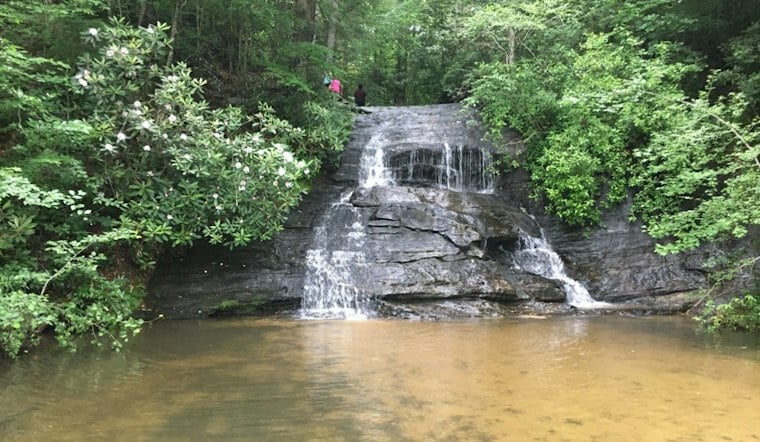
A man fell 40 to 50 feet from the top of Wildcat Falls in Greenville County on Monday, triggering a hours-long rescue operation that ended with him being airlifted out of the woods with serious injuries. Rescue crews were called around 2:15 p.m. to help get him out, according to officials.
Greenville County Emergency Management reported it took part in the rescue operation after the man fell from the top of the waterfall, according to FOX Carolina News. Ground crews performed a rope rescue to reach him, and he was airlifted with serious injuries before 5 p.m., per officials. The River Falls Fire Department assisted with the rescue, officials said.
A Waterfall With a History of Severe Falls
Wildcat Branch Falls, also known as Wildcat Wayside, is a three-tiered waterfall system along SC Highway 11 that totals roughly 140 feet in height, according to the SC Picture Project. The site sits within the Mountain Bridge Wilderness Area and draws heavy roadside traffic to its accessible lower 30-foot cascade. The upper tier, however, drops 100 feet in a free-fall, and climbing to that crest is illegal and explicitly closed to the public due to slippery rock hazards, per VisitGreenvilleSC.gov, which notes state park officials have posted warning signs there following a history of severe and fatal falls.
This is not the first time emergency crews have had to respond to a serious fall at the same spot. In March 2026, first responders and Greenville County Sheriff's deputies carried out a rescue at Wildcat Falls after a child fell off the waterfall and was taken to Prisma Health Greenville Memorial Hospital, according to WYFF 4. And in February 2022, local first responders were dispatched to the falls after a person survived a 75-foot fall off the waterfall structure, FOX Carolina News reported at the time.
How Mountain Rescue Teams Coordinate in Northern Greenville County
Pulling an injured hiker off a steep waterfall in the Blue Ridge escarpment typically requires more than one agency. Backcountry and mountain rescues in northern Greenville County regularly draw on joint responses involving the River Falls Fire Department, Greenville County Emergency Management, and the Greenville County Special Operations Team, according to a Heard County Emergency Management announcement describing regional coordination.
Notably, the week of October 5-9, the South Carolina Helicopter Aquatic Rescue Team, known as SC-HART, conducted multi-county training exercises across Greenville, Pickens, and Oconee counties to practice air extractions in mountainous terrain, per Pickens County, SC. SC-HART is a joint effort between South Carolina State Fire and the South Carolina Army National Guard. The drills came just two weeks before Monday's rescue at Wildcat Falls.
Steep Terrain Makes Rope Rescues Slow and Labor-Intensive
Technical waterfall extractions in the Upstate often demand significant time and personnel because steep gorge environments limit access for conventional ground ambulances. In July 2019, a 60-foot fall down Blue Hole Falls in neighboring Oconee County required 40 emergency personnel and more than two hours to assemble a multi-rope rescue system, according to coverage republished by Blue Ridge Outdoors.
Hoodline reported last month that crews carried out a similarly technical wilderness extraction at Big Bradley Falls near a Blue Ridge gorge near Saluda, NC, where spotty cellular coverage in mountain gorges frequently delays emergency reporting. Falls remain one of the public health indicators the South Carolina Department of Public Health tracks statewide, with the state recording 6,173 total injury deaths and 28,629 injury hospitalizations in 2023.
Wildcat Falls traces its roots to the late 1930s, when it was established by the Civilian Conservation Corps as Greenville Wayside Park, one of six roadside rest stops built across South Carolina to accommodate growing automobile tourism. Stone stairs and the foundation of a 1930s shelter still remain visible on the nature trail today, according to the SC Picture Project.




