

























































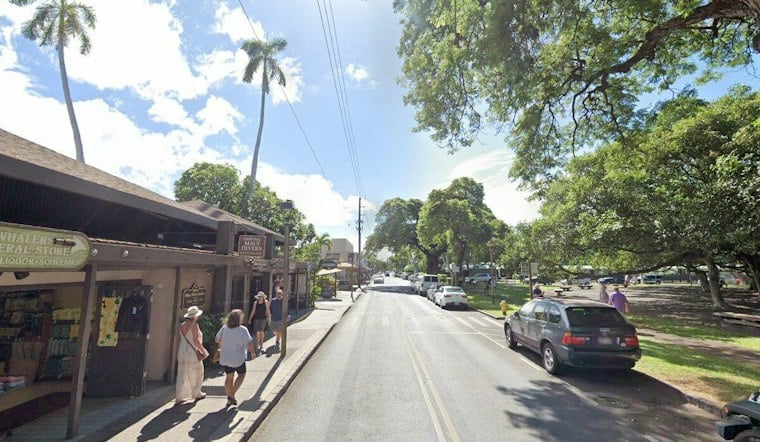
Property owners rebuilding near the Lahaina shoreline after the 2023 wildfires now have a faster path through one of the county's most time-consuming permit steps. As of Wednesday, Oct. 7, qualifying Special Management Area Major Use Permit applications for certain properties makai, or seaward, of Front Street can be reviewed directly by the Planning Director instead of going before the Maui Planning Commission at a public hearing.
The change comes through Recovery Coordination Directive No. 10, one of a series of emergency measures the county has rolled out since the fires. According to mauirecovers.org, the directive applies specifically to reconstruction tied to structures damaged or destroyed by the 2023 Maui wildfires, and it is described by the site, the official County of Maui disaster-recovery portal, as a temporary administrative process rather than a permanent rule change.
Importantly, the directive does not waive the underlying rules that govern construction along Maui's coast. The same mauirecovers.org posting states plainly that it does not eliminate applicable SMA requirements, shoreline setbacks, environmental regulations, historic-preservation requirements or coastal-resource protections — those obligations remain in force regardless of which review track a project takes.
Who Actually Qualifies for the Shortcut
Not every seaside lot gets the expedited treatment. As KHON2 reported, the change applies to certain properties makai of Front Street in Lahaina, but location alone does not guarantee approval through the new process. Per the same mauirecovers.org posting, a reconstructed structure can qualify if it sits entirely outside the applicable shoreline setback, or if the parcel in question simply does not abut the shoreline at all.
Size and scope matter too. Reconstructed single-family homes must come in under 3,500 square feet of floor area, while other rebuilt structures and uses need to stay substantially like-for-like with what existed before — matching the prior footprint, scale, intensity and use. Any project that misses those marks remains subject to the standard SMA permitting process, hearing and all.
Oversight Doesn't Disappear, It Shifts
The Planning Director isn't being handed a rubber stamp. The mauirecovers.org posting notes the director may require additional studies, conditions or agency review based on site-specific circumstances, which can include coastal hazards, cultural resources, drainage, infrastructure capacity and environmental conditions. If those issues, public concerns or potential impacts warrant it, the director can still refer an application up to the full Maui Planning Commission for a closer look.
Property owners unhappy with an administrative decision aren't without recourse either — the same source confirms that administrative decisions under RCD No. 10 can be appealed to the Maui Planning Commission.
The Mayor's Pitch, and the Permitting Backlog Behind It
Mayor Richard Bissen framed the move as a balancing act. “This directive creates a more streamlined path for qualifying reconstruction projects while maintaining the protections that are important to Lāhainā's shoreline, cultural and historic resources, and community,” he said, according to KHON2.
The directive lands against a backdrop of a strained permitting system. A separate wildfire-rebuild permit lane and a combined Disaster Recovery Building Permit — which folds electrical, plumbing, grading and building requirements into a single application — have been in place for months, with contractor 4LEAF managing that fast lane and conducting agency reviews, according to AsAmNews. That outlet reported 4LEAF approves simple permits within 30 days, while more complex ones can take eight months to over a year, even though the county's overall average timeline runs about 90 days.
Permit totals reported at different points this year don't fully line up. AsAmNews cited Maui County data from January showing 112 completed building permits, 334 processing and 559 issued, while Maui Now cited MauiRecovers figures from March putting issued permits at 563 — 538 residential and 25 non-residential — with 356 in processing. Maui Now's March report also noted the Planning Department was handling the rebuilding workload with a 17.5% vacancy rate across 85.5 budgeted positions.
Bissen also connected the policy to the broader recovery effort, saying helping Lahaina families and businesses rebuild is an important step in recovery. More information on the new process is available through the county's shoreline permitting resources.





