

























































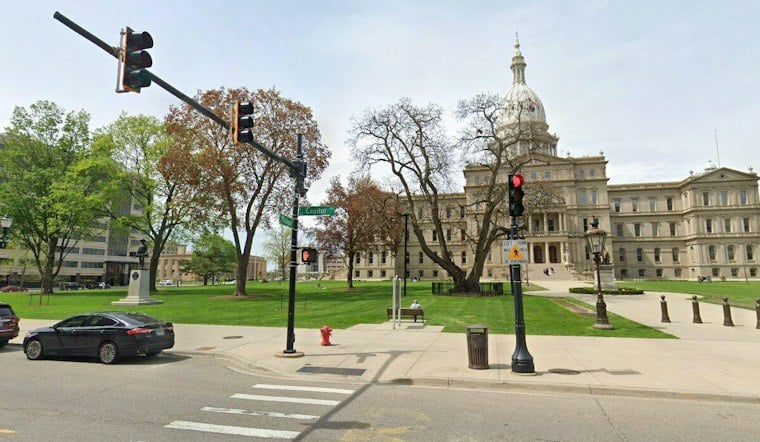
A bill that would ban handcuffs, blindfolds, hoods and chains on Michigan children being transported to residential treatment programs is now headed to Gov. Gretchen Whitmer’s desk. House Bill 5514 was sponsored by Rep. Cam Cavitt, a Republican who represents Cheboygan, after a constituent’s 12-year-old son was leg-shackled and handcuffed while being driven to a treatment center in Missouri.
What the Bill Would and Would Not Do
The legislation, as reported by MLive.com, would prohibit private transportation companies from using blindfolds, hoods, handcuffs, chains and straitjackets on children during transport, and would also limit physical restraints such as holds. Those physical restraints would only be permitted when no other means could alleviate a substantial likelihood of imminent serious physical harm to the youth or others. The bill would also bar companies from picking children up between 9 p.m. and 6 a.m., and it would not apply to state-licensed hospitals or licensed foster family homes. Violations could carry civil fines of up to $1,000, according to the seed reporting. The measure would not reach every mile of a child’s journey, however: Cavitt has said the state cannot regulate restraints once transport vehicles cross state lines, a limit MLive also reported after his March testimony before the Michigan House panel.
The Michigan Senate approved the bill in a nearly unanimous vote, with Sen. Jim Runestad casting the lone no vote over concerns about potential danger to transport staff members. Earlier in the process, the House Families and Veterans Committee voted 11-0 to send the bill back to the House floor with a recommendation to pass, according to a brief from Michigan Advance. Cavitt’s office has said the bill is especially important for youth traveling long distances, and the lawmaker has called its passage a major step toward treating Michigan children with dignity and respect.
Paris Hilton and Others Testify to Their Own Transports
Paris Hilton testified in March about her own experience being taken to a youth residential treatment facility, telling the panel that at 16 she was taken from her bed “in the middle of the night by two men I’d never seen before,” and that she was handcuffed and carried out of her home while screaming for help. She has publicly supported House Bill 5514 and urged Whitmer to sign it, saying children entering treatment are often already in crisis and deserve safety and dignity. Hilton is linked to 11:11 Media Impact, which advocates for nationwide policy reforms relating to youth residential treatment.
Kyra Frankowski also testified, saying she was taken at 14 from her parents’ home in Ohio to Utah, where she spent two years in therapy. Frankowski, who went on to graduate high school with high honors and earn a psychology degree from Bowling Green State University, said she has since heard from thousands of young people transported to residential treatment and that many of those restraint-related experiences resulted in post-traumatic stress disorder symptoms. She also said the forceful removal of vulnerable children lacks scientific support.
An Industry Michigan Regulators Haven’t Reached
Youth transport remains largely unregulated outside of existing restraint limits already placed on treatment facilities and childcare institutions within Michigan. A 2022 investigation from APM Reports described this corner of the teen-treatment industry as almost entirely unregulated, and found that from 2015 through 2020, Utah alone received 34% of teenagers who crossed state lines to enter a youth treatment facility — nearly 3,000 kids a year on average, compared with 1,200 to 1,300 annually in Virginia and Texas. Oregon responded in 2021 by requiring transporters entering the state to register with its Department of Human Services and banning mechanical restraints like handcuffs, the same outlet reported, while a 2021 Utah law restricted restraints inside treatment programs without touching the transport itself.
Michigan’s own shortage of in-state beds helps explain why so many families end up relying on these long-distance transports in the first place. Youth bed placements in Michigan child care institutions fell from 1,200 in October 2020 to 398, Cavitt noted during his March testimony reported by the same MLive panel coverage. A separate report from ARC West Michigan found the state’s child-caring-institution bed count has fallen more than 60% since the pandemic, and that as of September 2025, 152 youth in Michigan’s direct placement program were living in out-of-state facilities, up from 122 referred out of state as of September 2024. The state spent more than $13 million sending youth out of state for mental health treatment that year, up from $9.7 million the year before, per the same report. A new facility, the Southeast Michigan Psychiatric Hospital in Northville Township, is expected to open this fall with 72 youth beds, according to ARC West Michigan.
Residential treatment programs are live-in behavioral health facilities that provide intensive therapy for youth with emotional and behavioral problems. Michigan has already implemented limits on restraints used on youth once they are inside those facilities and childcare institutions — it is the trip to get there that House Bill 5514 now aims to address, with the bill’s fate resting with Whitmer.




