

























































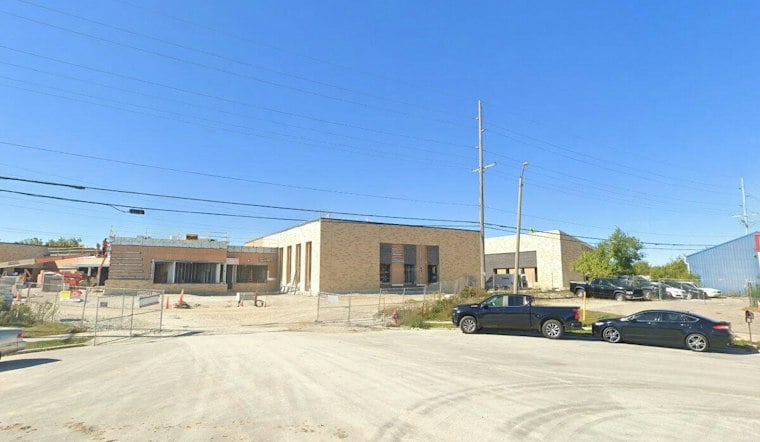
A new 32-bed facility built to replace Wisconsin's troubled Lincoln Hills and Copper Lake youth prisons is set to start taking in young people from southeastern Wisconsin in early November, swapping out traditional lockup for therapy, vocational training and family connection. Gov. Tony Evers and state corrections officials toured the facility on Wednesday morning, walking through classrooms, workshops and counseling spaces built to look and feel nothing like the isolated prison campuses the state is trying to leave behind.
The Southeast Regional Care Center for Youth sits in an industrial stretch of West Clinton Avenue near 76th Street and Good Hope Road on Milwaukee's northwest side, according to FOX6 News Milwaukee. The facility will eventually house up to 32 boys from the region, according to TMJ4, which reported the project cost $65.6 million; FOX6 News Milwaukee separately put the price tag at $65 million. State officials expect the first group of young people to arrive in early November, the station's report notes.
What's Inside the New Facility
Rather than the austere housing units associated with juvenile prisons, the center includes classrooms, metal and woodworking shops, and a recording studio, per FOX6 News Milwaukee. The same report from the station describes additional spaces for a gymnasium, recreation, counseling, medical care and family visits built into the design. Staff will lean on dialectical behavior therapy, a treatment approach aimed at teaching emotional regulation and coping skills, the station's account states.
Spectrum News 1 reports the center will provide targeted mental-health support, addiction treatment, academic help and career counseling to court-ordered youth, framing the approach as a sharp break from the state's older model. Spectrum News 1 also reports that Wisconsin plans to transition Lincoln Hills and Copper Lake into prisons for adult men by spring 2029, closing the loop on a restructuring years in the making.
From Lincoln Hills to Smaller, Community-Based Care
The project is part of what the state calls its Closer to Home plan, built around 2017 Wisconsin Act 185, which required the closure or replacement of Lincoln Hills and Copper Lake as youth facilities, according to the Wisconsin Legislature. Those deadlines were later pushed back six months under 2019 Wisconsin Act 8, per the Wisconsin Legislature's legislative memo on the change. The state laid financial groundwork for the shift in February 2020, when the Wisconsin Building Commission approved $348.1 million in projects, including grant funds for secure residential care centers in Brown, Dane, Milwaukee and Racine counties, according to the Office of Wisconsin Gov. Tony Evers.
Construction on the Milwaukee site began in the summer of 2024 once land was secured on West Clinton Avenue and the design was finalized, according to the Wisconsin Examiner. By July 2025, the project was about 20% complete and on track for completion in the summer of 2026, per the Milwaukee Neighborhood News Service, which also described the facility as a Type 1 center, the most secure classification in the state's juvenile system.
A System in Transition
The shift mirrors a broader move described by the TMJ4 report, which frames Wisconsin as moving away from large, isolated correctional institutions and toward smaller facilities centered on treatment, education, accountability and rehabilitation. A similar Type 1 facility, the South Central Regional Care Center for Youth, is already under construction in Dane County, according to ibmadison.com.
The push toward smaller facilities comes even as juvenile crime has fallen sharply statewide. Juvenile arrests in Wisconsin dropped 66% between 2012 and 2021, even as the state's under-18 population declined only 3.2% over the same period, according to Wisconsin Public Radio. That same reporting found Wisconsin budgets nearly $463,000 a year to incarcerate each child at the Lincoln Hills and Copper Lake complex, compared with an average of $14,882 per student spent on K-12 public education in 2023 — a gap that has fueled criticism of the old model's cost relative to its outcomes.
Population counts at the existing youth prison complex have also been climbing. The on-grounds juvenile population across Lincoln Hills, Copper Lake, Mendota and Grow Academy stood at 122 as of April 18, 2025, up from 95 in early January of that year, according to the Wisconsin Examiner's reporting on a court-appointed monitor's findings.
What State Leaders Are Saying
For Evers, the Milwaukee center represents a chance to redirect young people before they're entrenched in the justice system. Evers said the center will help youth learn, grow and return to their families and community as soon as possible, according to FOX6 News Milwaukee's account of the governor's remarks during Wednesday's tour.
Lance Horozewski, the state Department of Corrections' Division of Juvenile Corrections administrator, argued that treatment grounded in dignity and respect, rather than punitive confinement, is what ultimately reduces repeat offenses, per the same FOX6 News Milwaukee report. Kashunda Brown, a DOC juvenile youth counselor assigned to the new center who previously spent four years working with incarcerated youth in Dane County at Grow Academy, offered a simpler read on the kids she expects to meet: she said they want to do well but often lack the skills to do so, FOX6 News Milwaukee reported.





