

























































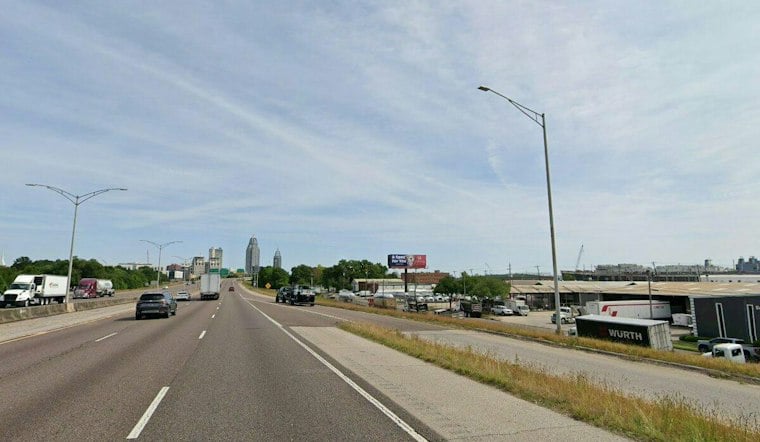
Alabama officials and U.S. Transportation Secretary Sean Duffy broke ground Friday at Cooper Riverside Park in Mobile on the $3.2 billion Mobile River Bridge and Bayway project, the largest transportation build in state history. At the ceremony, President Donald Trump suggested the new span connecting Mobile to the Eastern Shore could someday carry his name.
The groundbreaking, held on October 2, 2026, marked the formal start of Phase One construction on the long-delayed Interstate 10 crossing, according to ALDOT News Hub. Trump told the crowd the project was made possible by roughly $3 billion in funding from his administration and floated the idea of naming the bridge after himself, according to The Independent. He also told the Mobile crowd he loves Alabama, noted he won the state in all three of his presidential elections, and said he received the highest vote total of any candidate in Alabama history, per the same report.
Why the Bridge Matters to Gulf Coast Commuters
The new six-lane, cable-stayed span is meant to relieve a corridor that has outgrown its own design for decades. Traffic through Mobile's existing I-10 Wallace Tunnel and Bayway now peaks at roughly 95,000 vehicles a day, even though the original roadway was built to handle only 35,000, according to Lagniappe Mobile. Beyond easing passenger congestion, the bridge will also give hazardous-materials trucks a direct interstate route across the Mobile River for the first time — those trucks are currently barred from the Wallace Tunnel and forced to detour through local city streets, a routing that has long drawn complaints from downtown neighborhood groups, per the AASHTO Journal.
Who's Actually Paying for It
The funding picture is more layered than the ceremony's political framing suggested. The $3.2 billion Phase One package leans on a $2.52 billion federal Transportation Infrastructure Finance and Innovation Act loan through USDOT's Build America Bureau, plus a $550 million federal Bridge Investment Program grant and a $125 million INFRA grant originally awarded back in 2019, according to the AASHTO Journal. That TIFIA loan isn't free money — Alabama must repay it over time using toll revenue collected from the very drivers the bridge is meant to help.
The $550 million grant has become its own point of political tug-of-war. The Biden administration awarded that grant in July 2024, and the Trump administration finalized it in May 2025, per The Independent. Rep. Shomari Figures thanked the Trump administration for its role in getting the project underway while also crediting the Biden administration's $550 million investment, the outlet reported.
Once finished, the crossing won't be free to use. Under ALDOT's approved tolling plan, motorists without a transponder will pay $7.70 per trip, drivers with an ALGO electronic pass will pay $3.00, and frequent commuters can buy an unlimited monthly pass for $60, according to AL.com. Those toll rates matter locally: a previous public-private partnership plan collapsed in 2019 after backlash over higher proposed tolls.
Construction Timeline and a Shrinking Scope
Construction was formally authorized on September 25, 2026, when ALDOT issued a notice to proceed to joint-venture design-build team Kiewit Massman Traylor, with primary heavy construction targeted for completion in late 2031, per the AASHTO Journal. Alabama transportation officials split the megaproject into two phases after rising construction costs pushed the original combined estimate for the bridge and Bayway replacement above $3.5 billion. That leaves Phase Two — demolition and replacement of the 7.5-mile Bayway viaducts — without a set budget or timeline, according to AL.com.
A Pattern of Naming Proposals
Trump's suggestion in Mobile fits a broader pattern of efforts to attach his name to public infrastructure. A Trump-appointed Kennedy Center board voted in December 2025 to put his name on that building, but a federal judge, Christopher Cooper, ordered it removed in May 2026, and construction crews carried out the removal in Washington, D.C., per The Independent.
Florida offers a completed example of the same push. Palm Beach International Airport officially changed its name to President Donald J. Trump International Airport in July 2026 — the first time a major U.S. commercial airport has been named after a sitting president, according to PBS NewsHour. Florida Gov. Ron DeSantis signed the state law requiring the rename in March 2026, a measure that preempted local county authority over the airport's name; state officials estimated the cost of changing signage, airport graphics, and branding at up to $5.5 million, per WLRN.org. Hoodline previously covered the related push to pitch a permanent presidential golf course tied to that licensing arrangement. Tennessee officials held a similar ceremony in July 2026 designating the Interstate 40 bridge over Douglas Lake as the Donald J. Trump Bridge, per PBS NewsHour.
According to MS NOW, Trump officials have also circulated a list of government sites that could receive the president's name, including Ford's Theatre — the Washington, D.C. site where Abraham Lincoln was assassinated — a proposal The Independent reported Trump called fake news. Trump also said in September 2026 that no one else would paint Washington, D.C. in his image after he leaves office, according to the same report. Back in Mobile, Trump said he plans to attend a Georgia-Alabama football game the following Saturday, October 10.


