

























































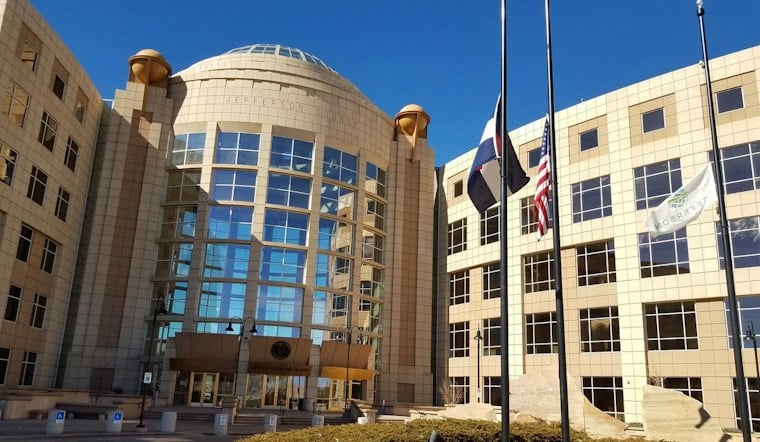
A Jefferson County judge has cleared the way for contractors Damien Davis and Ken Hoyt to subdivide 30 undeveloped acres near Morrison into three 10-acre home lots, ending — for now — a years-long fight with a neighbor who says the land may hold a Native American burial site. Judge Christopher Rhamey ruled on Oct. 9 that the project, known as the Cimarron Peak Subdivision, can move forward south of the North Turkey Creek Road and Starlight Drive intersection.
The ruling is the latest setback for Richard Finney, a neighbor who has opposed the development for years and has sued twice to try to stop it, according to BusinessDen. Finney filed his most recent lawsuit around October 2025, and in it he and co-plaintiff Joyce Rutherford alleged that Colorado State Archaeologist Holly Norton had found support for an Indigenous person's burial site on the property. Finney and Rutherford were represented by attorneys Ernesto Delgadillo of Lakewood and John McKendree of Brighton, both of whom declined to comment on the ruling.
What the State Archaeologist Actually Found
Norton's own account, reported by The Denver Post, is more cautious than the lawsuit's characterization. “Given the landform, I think that there could potentially be an archaeological site or a burial,” she said — but she had viewed the property only from public rights of way and had not visited the private land itself. Norton and her team ultimately found no archaeological materials there. “We didn't find anything. We just saw an area where there is the potential for archaeological sites,” she said, per the same report.
Several families in the neighborhood maintain an oral history of a burial on the parcel, a claim central to the opposition's case. Rural Morrison residents have also claimed that Jefferson County took their land to enable the subdivision.
How the Legal Fight Unfolded
Jefferson County commissioners voted 2-1 to approve the subdivision on Sept. 30, a decision that followed a unanimous recommendation from the county planning commission on Sept. 10, according to CitizenPortal.ai. County engineer Laura Armstrong told commissioners at the time that no cultural sites had been identified and that no impacts to historical, archaeological or paleontological resources were expected. Finney sued again on Oct. 27, 2025, naming Jefferson County planners and commissioners along with the developers.
Rhamey had already weighed in once before the Oct. 9 ruling: on Oct. 30 of last year, he declined to halt the development because Finney had not yet served his lawsuit on the Cimarron developers or the county, per the Denver Post. In the Oct. 9 ruling, Rhamey rejected Finney's latest effort to stop the project.
What Colorado Law Requires If Remains Turn Up
Colorado requires a permit to excavate any unmarked human burial more than 100 years old on nonfederal land, regardless of ethnic affiliation, according to History Colorado. Those archaeological excavation permits authorize subsurface investigation of specific historical or archaeological resources, or of an unmarked burial, under an approved research design.
Developers Call the Ruling a Vindication
Dylan Woods, the developer's lawyer, said the decision settles the matter in the developers' favor. “The court has completely vindicated the county's decision to approve Cimarron's application,” Woods told BusinessDen.
Davis, speaking before the county's September vote, said the plan was always straightforward. “Our intent is to have three homes ultimately built here,” he said, according to the Denver Post. Following Rhamey's ruling, the 30-acre parcel south of North Turkey Creek Road and Starlight Drive appears set to move from contested ground to finished subdivision.


