

























































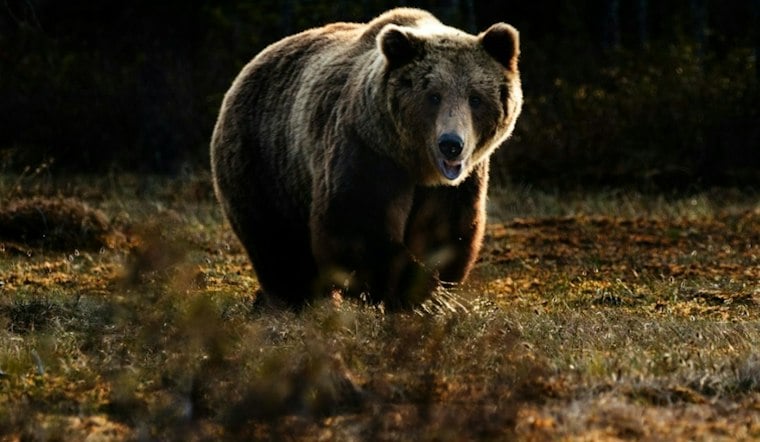
A mother bear died this week after being sedated and trapped during a capture operation at Tanoan Country Club in Northeast Albuquerque, leaving two cubs that wildlife officials now plan to relocate away from populated areas. The sow and her cubs had been spotted up a tree at the golf course on Oct. 19, prompting a joint response from fire crews and state wildlife officers.
Albuquerque Fire Rescue was dispatched to Tanoan Golf Course just after 12:30 p.m. that day to assist the New Mexico Department of Wildlife with the mother bear and her two cubs, according to KOAT. Game and Fish officers sedated and trapped the mother, while a fire crew helped load her into a cage, the station reported. The mother bear later died from injuries sustained during that sedation and trapping, per a New Mexico Department of Wildlife spokesperson cited by the Albuquerque Journal.
As of the latest reporting, from KOAT, the New Mexico Department of Wildlife has not provided additional information about the capture or about the current condition of the two surviving cubs. Officials have said the cubs will be relocated to a suitable bear habitat away from populated areas, the same wording the department used when a different mother bear and cub captured in northwest Albuquerque were eventually returned to the wild, according to KRQE.
A Rehabilitation Question Still Unanswered
Nirankar Horak, executive director of the Land of Enchantment Wildlife Foundation, told KOAT that keeping mothers and cubs together for as long as is natural is the ideal outcome, and that capture operations meant to protect animals can carry unpredictable consequences. Horak said whether young bears need rehabilitation depends on several factors, and that healthy cubs with good weight — at least 35 pounds — may be able to avoid it altogether. The foundation has not been contacted about taking in the Tanoan cubs, per that same KOAT report.
Horak also said wildlife officials face increasing pressure to respond as more bears move into populated areas, and that the Department of Wildlife is doing the best it can with the resources it has. The station reports Horak urged the public to help move bears along on their own rather than relying solely on an overwhelmed game department. The Albuquerque Journal reported that the foundation was caring for 15 bears.
New Mexico's Rough Year for Bears
Cottonwood Rehab in Santa Cruz is the only facility in New Mexico equipped to rehabilitate bears, and it was caring for four cubs whose mothers had been euthanized by the Department of Wildlife, with those cubs being trained to avoid humans and residential areas ahead of a possible release, according to a separate KOAT report. The bear biology research group bearbiology.org notes that a North American review found science-based rehabilitation and release of orphaned cubs is generally feasible, with survival rates similar to wild bears, though a lack of reliable centers following strict protocols remains a common challenge nationally — and most surveyed jurisdictions rehabilitate fewer than 25 orphaned cubs annually.
Wildlife officials have tied the surge in bear encounters to drought, pushing animals into populated areas in search of food and water, the Albuquerque Journal reported. New Mexico's governor said earlier this year that the state had seen its highest number of human-bear conflicts in more than a decade, driven by historically low snowpack, high temperatures and limited precipitation that reduced the natural food bears rely on.
That strain has shown up in the state's bear-death numbers. Source New Mexico reported wildlife managers killed more black bears this year than any full year on record, as severe drought pushed bears to travel longer distances for food and into human-populated areas. Separately, New Mexico In Depth found the state recorded 254 black bears killed in conflicts with people between April 1 and Sept. 8 — nearly four times the annual average over the prior 25 years of published statistics — even as the department estimates the state holds a stable or growing population of roughly 9,000 black bears. The outlet also cited a Wisconsin study of more than 1,200 relocated bears that found only about half survived any given year after being trapped and moved.
How to Avoid a Bear Encounter
Wildlife experts have advised New Mexicans to secure trash, remove outdoor food sources, and never approach or feed a bear, according to KOAT. KRQE has also advised removing fruit, outdoor pet feeding and bird feeders. Those precautions are meant to keep bears from being drawn into neighborhoods and golf courses like Tanoan in the first place, reducing the odds of another capture operation ending the way this one did.


