

























































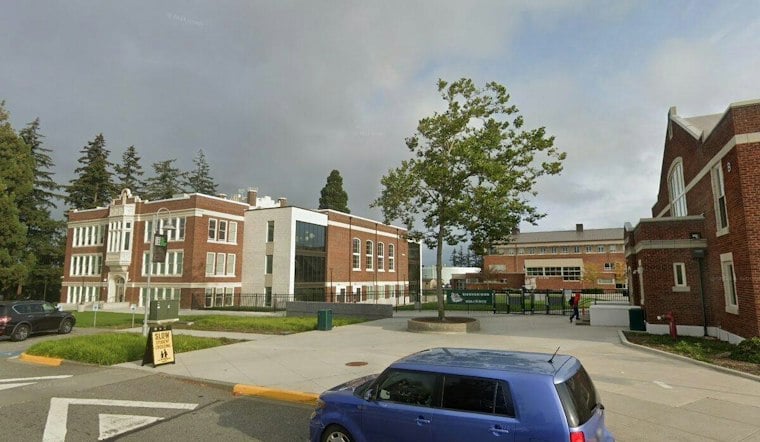
Mount Vernon School District is taking the first formal steps toward replacing outdoor athletic facilities at Mount Vernon High School that have functioned as a stopgap for more than two decades. As FOX 13 Seattle reports, district leaders are now discussing concrete steps toward an overhaul of the high school's outdoor sports facilities, a conversation that has been building since a community advisory committee delivered its recommendations last month.
That committee, known as the Community-led Outdoor Athletic Advisory Committee, presented what it calls Option 1 to the Mount Vernon School Board on September 16: a $14.45 million, six-year capital levy estimated at 28 cents per $1,000 of assessed property value. According to the Mount Vernon School District, the plan would fund a covered stadium, ADA-accessible bleachers, a lighted multi-purpose turf field, retrofitted stadium lighting, and new restroom, concession, and storage facilities. The committee voted unanimously to recommend Option 1 as the district's top priority.
A Pricier Alternative With a New Track
The same committee also drew up a more expansive alternative. Option 2 carries a $17.95 million price tag, funded through a 34-cent capital levy over six years, and would add a new six-lane middle school track on top of every improvement included in Option 1, per the district's report. The school board has asked for public feedback specifically on whether Option 2 is viable for the community before deciding how to proceed.
District estimates lay out what each option would cost a typical homeowner. A property assessed at $540,000 would see roughly $140 per year, or about $12 a month, under Option 1. Under Option 2, that same homeowner would pay around $184 per year, or about $15 a month, the district says.
Two Decades of Temporary Fixes
The push for new facilities follows years of discussion about Mount Vernon High School's outdoor athletic setup, where temporary solutions have been in use for more than 20 years. The advisory committee itself was formed in spring 2026 by Superintendent Dr. Victor Vergara and grew to include more than 25 parents, coaches, school staff, and civic leaders, who were tasked with evaluating facilities that had fallen behind those in neighboring school districts. Committee leaders have emphasized student safety and facility access as driving concerns behind the recommendations.
Following the committee's report, the district launched a public survey in late September to gauge which option voters prefer, timed ahead of the school board's scheduled review at its October 7 meeting. The district says that feedback will help the board determine next steps.
Capital Funds Versus a Strained Operating Budget
The timing raises an obvious question for taxpayers: how does a district ask for new facility money while also grappling with financial strain elsewhere? The district faced a projected $5.5 million operational shortfall for the 2026–2027 school year that led to teacher layoffs and staff transfers in June 2026, according to Cascadia Daily News. The proposed levy would fund the facility work described above, while the shortfall concerns the district's operating budget.
The proposal is structured as a six-year capital levy.
The district's budget pressures have also been compounded by declining enrollment, a trend that affects state funding tied directly to student headcount.



