

























































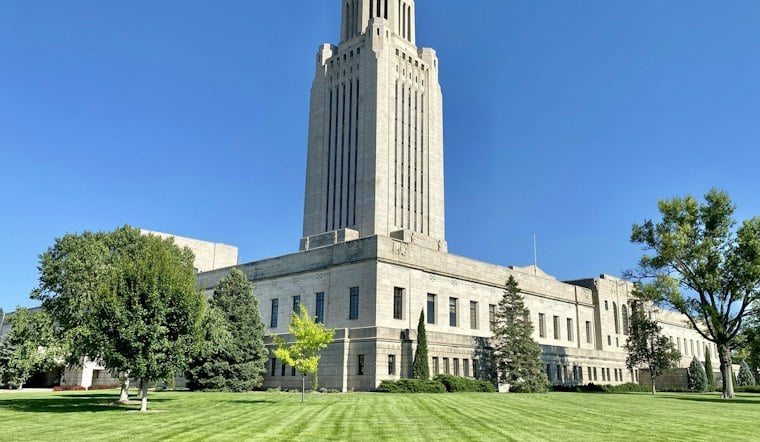
Nebraska Sen. Robert Hallstrom is taking up the effort to repeal the state inheritance tax after former Sen. Rob Clements left the Legislature because of term limits. Hallstrom is weighing a direct repeal bill against another constitutional amendment that would let voters decide the question, the Nebraska Examiner reported Oct. 1. Either route leaves a central issue unresolved: how counties would replace the revenue they now collect.
County receipts are substantial, but uneven
The Nebraska Department of Revenue’s Property Assessment Division recorded $92,482,608.90 in county inheritance-tax payments statewide from July 1, 2024, through June 30, 2025. Its county report lists Buffalo County at $2,165,058.13 for that period. That single-county figure illustrates the local stakes but does not establish a statewide pattern. The Examiner has reported that the tax supplies roughly 10% of combined county revenue, with Douglas County collecting about $20.7 million annually and Lancaster County about $7.8 million.
Hallstrom’s predecessor spent years pursuing repeal or restrictions, but the most recent legislative proposal described in the reporting took a narrower approach. LB 468, introduced in 2025, would have lowered rates for more distant relatives and nonrelatives rather than abolishing the tax. At a Revenue Committee hearing, representatives of Douglas and Lancaster counties said they would need to raise property taxes to replace lost revenue; the committee took no action after the hearings, according to the Examiner’s coverage.
Clements proposed possible offsets for an estimated $33.8 million in annual county losses: higher county fees, a higher tax on wind farms and ending a sales-tax break for data centers. The Nebraska Association of County Officials conditionally supported the proposal if replacement revenue was provided and estimated those changes would raise $42.7 million, the Examiner reported. Those were proposals tied to LB 468, not a replacement plan Hallstrom has put forward.
Volatility adds to the replacement-revenue debate
A Platte Institute analysis, as described by the Examiner, found year-over-year inheritance-tax collection changes of at least 50% in 73 of Nebraska’s 93 counties over the two years it examined. The finding is the institute’s argument for why the tax may be an unpredictable funding source; it does not resolve how counties could replace the money. The institute has not proposed replacement revenue of its own. Hallstrom has said reducing some state requirements imposed on counties could ease the pressure, but has not presented that as a revenue-replacement plan. In the Examiner’s account, commissioners he had spoken with wanted replacement funding.
The tax’s local-government role is longstanding: Nebraska adopted it in 1901, before the state had a sales or income tax, according to the Platte Institute. Under current law, children, parents and siblings pay 1% on inheritances above $100,000; aunts, uncles, nieces and nephews pay 11% after a $40,000 exemption; and nonrelatives pay 15% after a $25,000 exemption, the Examiner reported. Hallstrom has criticized the higher rates for distant or unrelated beneficiaries and argued that inherited assets may already have been taxed before they are passed on, according to the same report.
Hallstrom’s 2025 constitutional amendment cleared committee but did not reach floor debate, the Examiner reported. He has said the 2026 general election could affect repeal’s prospects over the next two legislative sessions. Whether he pursues another amendment or a direct-repeal bill, the county revenue question that complicated earlier efforts remains unanswered.





