

























































The New Braunfels Railroad Museum reopened its newly renovated Pullman dining car on September 25, giving the century-old railcar a fresh look as a rentable 1920s-style parlor space for private events. Museum volunteers repainted, refurnished and redecorated the car's interior, and they added new displays detailing its decades-long journey before it ever reached Texas.
The renovation was led by Alli Correa, the museum's marketing director, according to Community Impact Newspaper. Correa is also the granddaughter of Bill Taylor, the museum's interim board president, who said she and museum volunteers were instrumental in completing the project. Taylor told the outlet that the museum used city Heritage Grant funds to pay for the work, funding that flows through New Braunfels arts and culture programs backed in part by local hotel occupancy taxes, according to the city's arts and culture master plan published by Designing Local.
A Railcar With a Long Road to New Braunfels
The dining car, identified as RPCX138, was built in 1922 as a passenger coach for the Illinois Central Railroad before later running on the Dodge City, Ford and Bucklin Railroad in Kansas, per the New Braunfels Railroad Museum. The car was reconditioned in the late 1940s after heavy wartime use. Decades later, the Guthrie, Oklahoma Arts Council acquired it for a central Oklahoma dinner train project that never got off the ground, which allowed the New Braunfels museum to purchase the car in May 2009 using an endowment from benefactor Doyle P. Bond.
The car was moved to the museum site in May 2010, after BNSF and Union Pacific freight trains hauled it to town and cranes lifted it onto the display tracks, the museum's website notes. Once it arrived, volunteers logged more than 850 man-hours across four months converting the rusted interior into a 1920s-style parlor dining car, which was named in Bond's honor.
What Visitors Will Find Aboard
Board members said the newly finished car is meant to replicate an immersive 1920s parlor-car experience, now with capacity for 44 people, according to the museum's website. Mike Bean, speaking for the museum, said the goal is to give visitors an experiential environment where they can look, touch and experience the space themselves. The car sits at 302 W. San Antonio St. in downtown New Braunfels and can be rented for private events.
Inside the 1907 Depot That Houses the Museum
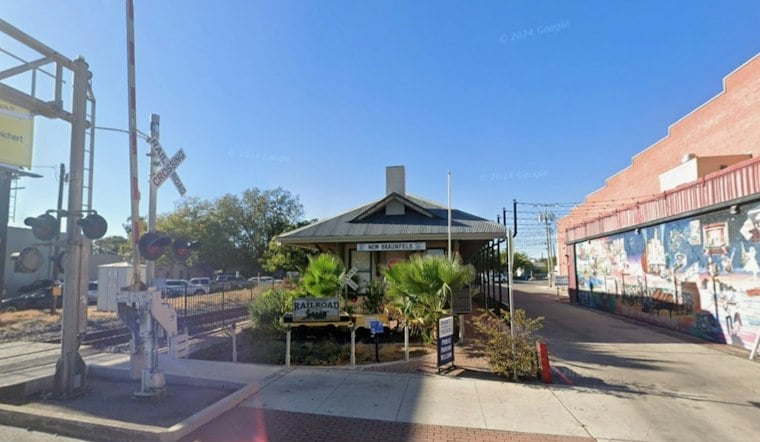
The museum itself occupies the 1907 International & Great Northern Railroad depot, built on a concrete slab laid with custom dark gray cement tiles and red grout produced by the local firm Moeller, Mordhorst, and Blumberg — tiles that were not used anywhere else on the I-GN system, according to the museum. The building also still contains preserved segregation-era waiting rooms that document Jim Crow-era passenger rail travel in Texas, a detail highlighted by Texas Time Travel.
Scheduled passenger service at the depot ended in the spring of 1977, when Amtrak took over national passenger routes and dropped New Braunfels as a stop, per Community Impact Newspaper's history coverage. Amtrak trains between San Antonio and Chicago still roll through town today, but they no longer stop. The depot sat vacant until the New Braunfels Historic Railroad and Modelers Society, chartered as a nonprofit in 1985, secured a long-term lease on the building from the city in October 1986, according to the Locomotive Wiki. Volunteers began converting the empty depot into a public museum in 1986.
A Living Rail Yard Along an Active Line
Beyond the Pullman car, the museum's outdoor collection includes a 0-6-0T Porter steam locomotive, a 1950s Missouri Pacific caboose and an authentic Missouri Pacific boxcar, sitting alongside indoor model train exhibits inside the depot. The grounds also run directly alongside an active Union Pacific mainline track, where more than 30 freight trains pass through downtown New Braunfels every day, according to Visit New Braunfels, giving visitors a live backdrop to the static historic displays.




