

























































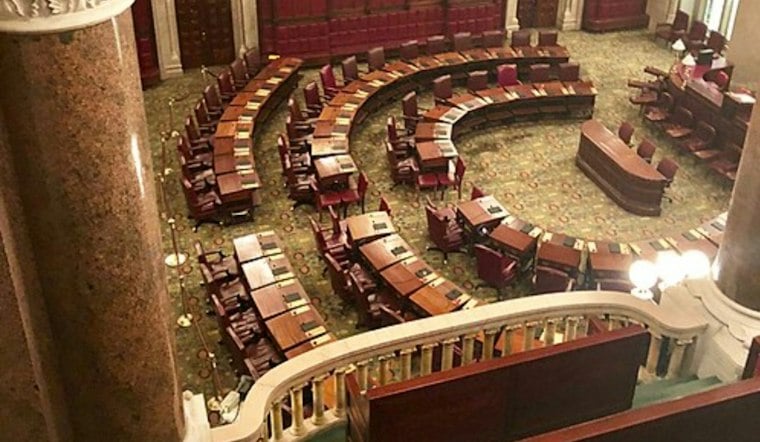
A bill moving through the New York State Senate would stop local school districts from approving homeschooling for any public school student whose parent or prospective instructor is under active investigation for child abuse or neglect. Senate Bill S10715, introduced by State Senator Patricia Fahy, also would block approval of home instruction when a custodial parent or instructor has a prior conviction for domestic violence, child abuse, or neglect, regardless of whether any current investigation exists.
Named for an 8-Year-Old Who Died After Leaving School
The bill is known as Raylee's Law, named for Raylee Browning, an 8-year-old West Virginia girl who died in 2018 after her father and stepmother removed her from public school, according to Shore News Network. She died from sepsis after drinking from a toilet, with severe dehydration and malnutrition worsening her condition, and her medical history showed previous injuries consistent with abuse, per the same report. Her father, Marty Browning Jr., and two family members were convicted of child neglect resulting in her death, receiving sentences ranging from 3 to 15 years in prison, convictions the West Virginia Supreme Court of Appeals upheld in May 2025, as reported by WOAY News.
S10715 was formally introduced on October 2 and referred to the Senate Rules Committee, carrying forward momentum from a prior version, A10183, introduced during the 2023–2024 session, according to the New York State Senate. A companion measure in the Assembly, Bill A3429, was introduced in January 2025 and remains referred to the Assembly Education Committee, per BillTrack50. Neither bill has passed its chamber, per the seed report.
How the 48-Hour Check Would Work
The legislation would explicitly amend New York Education Law § 3205, requiring local school boards to institute policies under which superintendents contact the state Office of Children and Family Services once a staff member reports suspected abuse, according to the New York State Assembly. After confirming an investigation has begun, the superintendent would ask OCFS to verify the case status, and the agency would have 48 hours to respond, the seed report notes. While a qualifying investigation remains pending, the district could not approve home instruction for that student.
The bill would take effect immediately if enacted and does not create a separate criminal penalty, nor does it impose a general ban on homeschooling, according to Shore News Network. Supporters, including Fahy's bill memorandum, argue that removing a child from school during an active investigation can cut off daily contact with teachers, counselors, and other mandated reporters, and that children involved in child protective cases can become more isolated when pulled from school and taught at home. Bill supporters do not argue that homeschooling itself constitutes abuse, the report adds.
New York's Existing Homeschool Oversight
New York already enforces among the strictest homeschool reporting requirements in the country. Under 8 NYCRR § 100.10, parents must file an annual Letter of Intent by July 1, submit an Individualized Home Instruction Plan, provide four quarterly progress reports, and submit standardized test results or evaluations each year, according to Buffalo Public Schools. The state has more than 50,000 homeschooled students, with particularly strong growth in New York City, per the seed report. If S10715 becomes law, it would add a new layer of oversight specifically for homeschooling decisions tied to an open abuse or neglect investigation.
Research compiled in the Coalition for Responsible Home Education's Homeschooling's Invisible Children database found that 38% of documented severe child abuse or fatality cases involved a child being withdrawn from public school to homeschool in response to truancy or abuse concerns, according to the Coalition for Responsible Home Education. That data underpins supporters' core argument that school withdrawal can sever a vulnerable child's contact with the adults required to report abuse.
Opposition Cites Due Process Concerns
The Home School Legal Defense Association actively opposes Raylee's Law bills nationwide, arguing that pausing home instruction based on an unverified report violates parental due process rights and presumes guilt before an investigation concludes, according to the Home School Legal Defense Association. Pennsylvania already imposes a narrower version of background screening, requiring homeschool supervisors to submit a sworn affidavit certifying that no adult in the home has been convicted of severe crimes like child abuse, assault, or homicide within the previous five years, per the Pennsylvania Department of Education.
Other states are moving on similar ground. In April, Nebraska Governor Jim Pillen signed omnibus education bill LB 937 into law, establishing a provision that temporarily restricts parents under active child abuse investigations from withdrawing children from public school for homeschooling, according to HSLDA. West Virginia lawmakers have tried repeatedly since 2019 to pass their own version of Raylee's Law; a 2026 push saw the Senate overrule its president in a procedural vote before the measure died in the House during the final hour of the legislative session, according to West Virginia Public Broadcasting. That 2026 version would have barred an alleged perpetrator from removing a child for homeschooling while an investigation remained open, ending the restriction if the case was closed without substantiation or ruled unfounded, but it had not become law as of the most recent session, per the seed report.
For now, S10715 sits before the Senate Rules Committee in Albany, with its Assembly companion still parked in committee as well. Whether the measure can clear the legislative hurdles that have repeatedly stalled similar bills in West Virginia remains an open question as New York lawmakers weigh the balance between child welfare oversight and parental rights.





