

























































A new unofficial project called the Department of New Yorker Verification is now accepting formal applications from people who want official-seeming proof that they are, in fact, a true New Yorker. There's no city hall stamp behind it and no real government authority attached to the effort, but that hasn't stopped it from asking some very pointed questions about bedbugs, scabies and alternate-side parking.
An Artist's Side Project Becomes a Civic Obsession
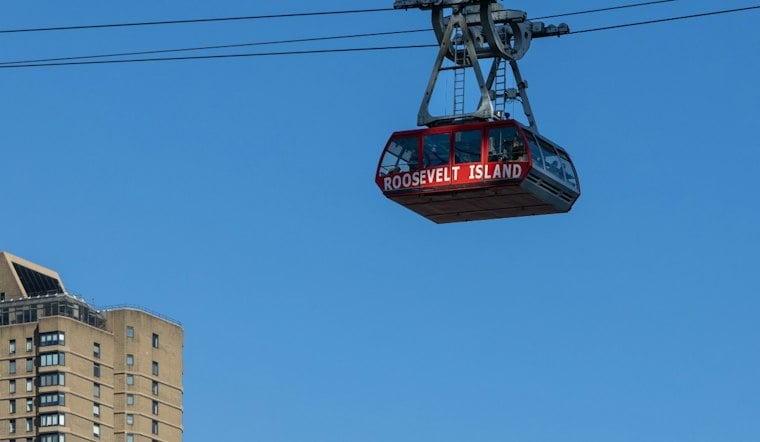
The department is the creation of Franz Aliquo, a creative director and artist who was born in Bayside and raised on Roosevelt Island, according to Gothamist. Aliquo built the department's website this past summer and currently runs every aspect of it himself, the outlet reports. The project was also covered by Time Out, which noted that Jennifer Lopez helped inspire the whole endeavor.
So far, Aliquo has handed out two honorary IDs and certificates of his own: one for J. Lo, and one for his late friend, the photographer Ricky Powell, per the same Gothamist account. The rest of the operation is meant to run on documentation, not celebrity status.
Two Tracks, But Only One Is Open
According to the department's own site, dnyv.nyc, there are exactly two recognized paths to verification, and no others. Track 1 is for people who came of age in New York City, including those who arrived as children, and it requires documented attendance at or graduation from a high school somewhere in the five boroughs. Applicants can also qualify with a borough birth certificate or by showing continuous enrollment in city schools from first through fourth grade — though the site is explicit that simply being born in New York does not automatically qualify anyone.
Track 1 is currently the only route open for applicants. Track 2, the experience-based path, is still in development and will not open until the department finalizes its full schedule of qualifying experiences, the site states.
The Point System Behind Track 2 — And a Discrepancy
Once it launches, Track 2 will require applicants to hit a threshold of 1,000 points, scored against the department's published list of qualifying experiences. Residency counts for a lot: every year living in New York City is worth 50 points, capped at a maximum of 500 points. Indefinite lease renewals alone won't cut it as proof, according to the site.
The hardship side of the ledger is where the sourcing gets murky. Gothamist reported that applicants must rack up at least 250 “suffering points” tied to qualifying New York ordeals, while the department's own website states the minimum is 200 points from hardship endured and survived. Neither figure has been reconciled publicly. Per Aliquo's comments to Time Out, potential qualifying ordeals include getting bedbugs, getting scabies, getting mugged, and surviving alternate-side parking — the same roster Gothamist also reported him describing.
What Counts as Evidence, and Who Gets the Final Word
The department says it will accept leases, receipts, photographs and witness testimony as evidence for either track. Sworn statements from bodega, corner-store or deli proprietors are also accepted, and the website notes that a bodega proprietor's statement carries particular weight in a review.
Applicants who hit 1,000 points, or who can prove they were born in the city, can receive a free PDF certificate and a digital ID, Gothamist reports. The certificates themselves never expire — though verification can still be revoked down the line.
A Conduct Clause With Teeth
Built into the system is a conduct clause that applies equally to native New Yorkers and newer arrivals alike, according to the department's site. It allows verification to be revoked for disrespect toward the city or its people, and it specifically prohibits contempt for different nationalities, languages or religions. It also bars a very particular kind of offense: claiming to have discovered an already inhabited neighborhood.
Applicants who get denied aren't entirely out of luck. The site says a denied applicant may appeal once, within 90 days of the decision — and the appeal filing fee isn't cash. It's one documented act of genuine kindness performed for a stranger.
Not Aliquo's First Citywide Stunt
This isn't the first time Aliquo has built an elaborate, voluntary system for New Yorkers to opt into. Back in 2006, he introduced the citywide water-gun assassination game StreetWars, and by the time of a 2008 interview with New York Magazine, he had organized nine far-flung editions of it. The verification department carries a similar spirit: an invented bureaucracy, taken just seriously enough to feel real.




