

























































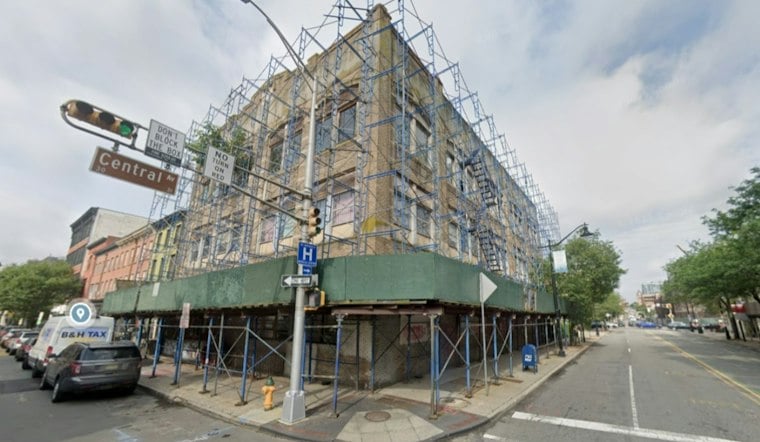
Fifty years after bulldozers quietly filled in its foundation, Kawaida Towers has finally cleared Newark's approval process. The city's Central Planning Board unanimously approved a 10-story version of the development on Monday, clearing the way for 33 affordable homes at 17-21 Halsey Street on a vacant, city-owned lot.
The approval marks the latest chapter in a project whose name has carried political weight in Newark since the early 1970s. According to TAPinto, the board's vote covers a building that will include 33 affordable homes, among them 21 rental apartments and 12 condominiums available for purchase, along with a ground-floor grocery store meant to serve as a neighborhood business at street level. The project is designed to house a range of incomes, including very-low-income families, the outlet reported.
Steve Hockaday, who represented the applicant before the board, described the plan in similar terms, saying it provides 33 homes, all affordable, including 12 for ownership, plus the street-level grocery store. The development is being advanced by Kawaida Towers JV Partners LLC, which is the registered agent of Aminata Dukuray, owner of Ancient African Formula on Halsey Street, per the same TAPinto account.
A Joint Venture Decades in the Making
Kawaida Towers JV Partners LLC is itself a partnership of several groups. As Essex News Daily reported, the venture includes Omni America LLC as designated redeveloper, the Mid-Atlantic Alliance as minority co-developer and 10-percent partner, and the National Action Network as another 10-percent partner. The property's location inside a historic district also meant the Newark Landmarks Commission had to sign off on the plans, which it reviewed, according to Jersey Digs.
The project's path to this point has been anything but straight. Jersey Digs reported that the Kawaida Towers concept resurfaced in 2021 after years dormant, but the revived plan — which initially envisioned a 16-story tower — stalled before this latest, smaller proposal moved forward. That earlier 2021 version called for roughly 66 units, with all of them designated as affordable housing, according to NJ.com.
The Name's Painful Origins
The name Kawaida comes from a Swahili term tied to the Temple of Kawaida, which was led by Amiri Baraka, the Newark poet, activist and political organizer who was the father of current Mayor Ras J. Baraka. Baraka envisioned the original Kawaida Towers in the early 1970s as part of his advocacy for affordable housing in a city still grappling with the aftermath of the 1967 civil unrest.
That original proposal was far larger than what's been approved now: a 16-story building with 210 affordable apartments planned for 129-141 Lincoln Avenue in Newark's predominantly Italian-American North Ward, according to reporting by The New York Times. The Times reported the design included community rooms, a theater and an audiovisual center for children.
Opposition to that version was fierce. Anthony Imperiale, who served as a Newark councilman and later a state assembly member, led the resistance, and critics at the time objected to the building's height, density, lack of off-street parking and potential effects on the neighborhood. Supporters, meanwhile, viewed that resistance as part of a larger conflict over racial integration and access to affordable housing, according to Star-Ledger reporting cited in the dossier's record of the dispute.
How the Original Project Collapsed
The standoff escalated into protests and legal battles that drove up costs and delayed construction for years. The Times reported that more than 350 demonstrators formed daily picket lines at the construction site and succeeded in stopping the contractor's work, while residents' objections centered on the project's size, its potential strain on already crowded schools and the lack of parking.
By the summer of 1976, the project had been abandoned. Rising construction costs had prompted an attempt to scale down the development, while opposition and prolonged legal and construction blockades had also stalled it for years.
Neighbors Weigh In on the Revival
Reaction from nearby residents to the newly approved plan has included support. Nii Abladey Otu, who lives in Hedden Terrace, backed the proposal and said he liked the project, felt the development team had selected its professionals well, and believed the project would benefit the area, per TAPinto's reporting.
The current plan is a fraction of the size of what Baraka originally imagined for the North Ward five decades ago — 33 homes instead of 210 units. Newark's City Council approved an $8 million grant to Kawaida Towers JV Partners LLC in April, and the project's latest plans went before the Newark Landmarks Commission in May before reaching Monday's unanimous vote from the Central Planning Board.


