

























































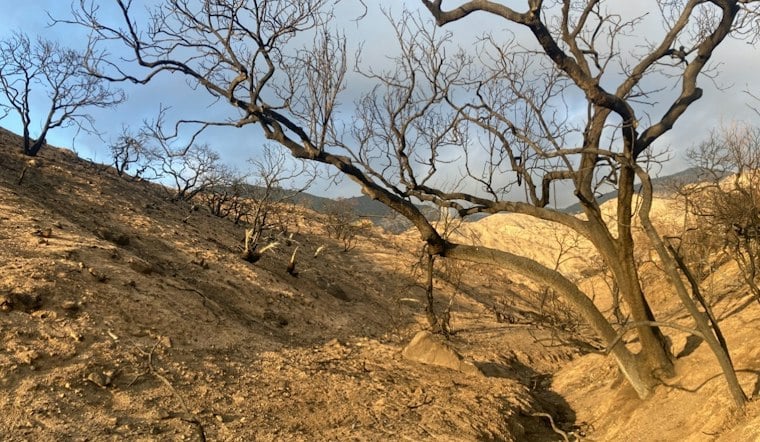
Gov. Gavin Newsom signed the Keep Altadena Land in Altadena Hands Act into law on Sept. 30, hitting pause for three years on a state housing law that would have allowed denser development across the fire-scarred community. The new law, known as SB 1090, is designed to protect Altadena from real estate speculators and investors while residents continue rebuilding from the Eaton Fire.
Newsom's signature freezes certain pathways under SB 1123, the state law that streamlines construction of multi-unit housing on multifamily-zoned lots under five acres and allows residential density of up to 10 housing units on certain residential properties, according to the Pasadena Star-News. The moratorium applies to development applications submitted from October 1 through January 1, 2030, a three-year-and-three-month window, while the moratorium itself runs for three years, as first reported by CBS News Los Angeles. Crucially, Eaton Fire survivors retain the ability to build accessory dwelling units or split their own lots even while the broader density rules are paused.
State Sen. Sasha Renée Pérez, who represents Pasadena, authored the bill alongside Assemblymember John Harabedian, also a Pasadena Democrat. Pérez said the moratorium gives Eaton Fire survivors time to rebuild without undue influence from real estate speculators, according to CBS News Los Angeles.
Newsom's Balancing Act On Housing Rules
Newsom framed his signature as a narrow exception rather than a retreat from the state's broader housing push. He said California's housing streamlining laws remain essential to addressing the statewide housing shortage and to giving property owners more building and rebuilding options, per CBS News Los Angeles. In a statement reported by The Real Deal, the governor added: “While extraordinary recovery challenges may warrant targeted adjustments, such measures should be carefully considered, narrowly tailored and responsive to demonstrated local conditions.” He also signed a letter on Sept. 30 addressing temporary building-law adjustments in two Altadena zip codes, according to CBS News Los Angeles.
The governor's cautious framing reflects just how fraught the rebuilding effort has become. The Real Deal reports that more than 2,300 of the 5,858 Altadena parcels where homes were completely destroyed — about 40 percent — had no rebuilding-related applications on file as of the law's signing.
Why Altadena Residents Pushed For The Pause
Altadena community members had advocated for protection from overdevelopment, worried that outside investors could snap up burned lots and build dense multifamily projects before longtime residents had a chance to rebuild. Those fears were not abstract: the Los Angeles Times previously reported that plans had been submitted or work had begun on at least 13 single-family lots in Altadena to create multifamily-housing subdivisions after the January 2025 firestorm. One disputed proposal would have built 10 houses on a single lot, according to FOX 11 Los Angeles, which described a banner protesting the plan.
Nic Arnzen, chair of the Altadena Town Council, said the community should rebuild reasonably while continuing to take on its fair share of density increases and affordable housing, according to CBS News Los Angeles. That comment captures the tension running through the debate: residents want to keep control of their neighborhood's character, but housing advocates have warned the moratorium could make it harder to rebuild and remain in Altadena.
Rebuilding Still Moves Slowly 21 Months Later
The financial and bureaucratic obstacles facing homeowners remain steep. The Los Angeles Times reported that about 44% of homeowners had fully approved permits to rebuild, but only 30% had started construction, with the average wait for a rebuilding permit stretching to about 155 days. A CalMatters survey found that the typical Altadena homeowner hoping to rebuild is short $550,000 after insurance payouts, a gap that helps explain why so many lots remain untouched.
Investor buying has also been a concern during the recovery. Still, the pace of recovery lags behind other disasters: of 22,500 houses burned in California wildfires between 2017 and 2020, only 38 percent had been rebuilt, per a Los Angeles Times analysis cited by The Real Deal, a benchmark Altadena residents are watching closely as their own rebuilding effort unfolds under the new moratorium.


