

























































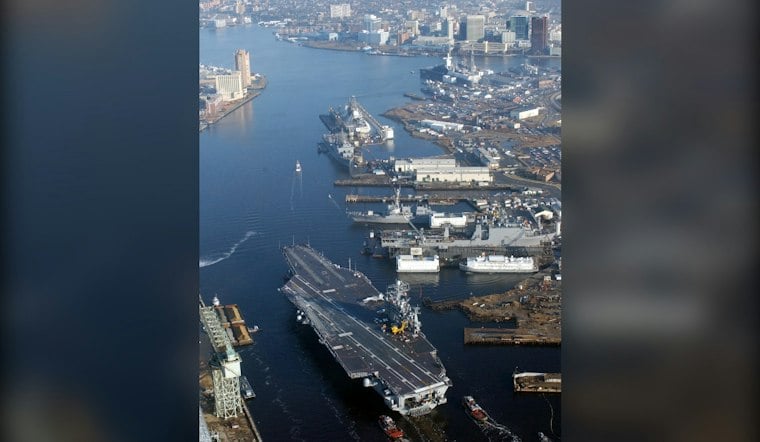
Norfolk Southern has finished turning nearly nine acres of crumbling riverbank along the Elizabeth River into a living shoreline, swapping out a stretch of eroding rail-yard edge for marsh grass, rock sills and a seven-acre oyster reef. The project, which transformed about 1,500 feet of eroded shoreline at the railroad's 300-acre Lambert's Point terminal in Norfolk, wrapped up construction this week after work that began in 2020.
The restoration protects critical rail infrastructure at a site where the Elizabeth River has bordered Norfolk Southern's operations for almost two centuries, according to WAVY.com. Josh Raglin, the railroad's chief sustainability officer, said the Elizabeth River and Hampton Roads have been tied to Norfolk Southern's history for nearly two hundred years, per the station's report. The company has several hundred employees active in the Hampton Roads area, and the shoreline sits beside Pier VI, which Dewberry describes as the largest and fastest rail-to-ship coal transloading facility in the Northern Hemisphere.
When the project began in August 2020, severe erosion along the river was threatening to undermine the rail tracks and terminal access roads that keep that coal operation running, according to a statement carried by PR Newswire. Rather than install a hardened rock barrier, the railroad chose a softer engineering approach built on native vegetation, oyster habitat and other natural features designed to absorb wave energy while still allowing tidal water to move through.
Oysters and a Decades-Long Partnership Do the Filtering
The finished shoreline now includes a seven-acre near-shore oyster reef, built through Norfolk Southern's partnership with the Elizabeth River Project, which has spent 30 years working to build a more resilient waterway, per the station's report. The nonprofit has been gardening oysters for more than a decade and releases them along the restored bank to create habitat, and a single oyster can filter up to 50 gallons of water a day. Lacey Shirey, executive director of the Elizabeth River Project, said the living shoreline restores conditions that would have existed along the bank naturally, as reported by WAVY.com.
To mark the finished work, Norfolk Southern presented a $100,000 check to the Elizabeth River Project. The final phase, completed in May 2026, added 173 trees, 192 shrubs and native marsh grasses planted behind rock wave-attenuation sills that slow wave energy from passing commercial vessels while still letting tidal water move in and out, according to Norfolk Southern. The railroad and the Elizabeth River Project marked the completion of the project's third and final phase with a ribbon-cutting ceremony at Lambert's Point on Tuesday, as reported by WVEC-TV 13News Now.
Cheaper Than a Sea Wall, and a Financial Win Too
Beyond habitat, the project reflects a financial calculation. Building the living shoreline cost Norfolk Southern roughly 75 percent less than constructing a traditional hardened barrier or concrete bulkhead, according to Trellis Group. WAVY.com separately reported that a hardened barrier would have cost almost twice as much as the living shoreline restoration the railroad ultimately built.
Trellis Group also reported that the project generated what Norfolk Southern called the largest release of state nutrient credits in Virginia history in 2025, avoiding 10,000 pounds of nitrogen, 2,000 pounds of phosphorus and 3.5 million pounds of sediment runoff. Raglin told the outlet that selling those credits to third-party developers is expected to yield a four-to-five-fold financial return on the shoreline investment, since Virginia regulations require waterfront developers to purchase credits offsetting runoff from new paved surfaces.
State Law Pushes Developers Toward Softer Shorelines
That credit market exists because Virginia lawmakers passed Senate Bill 776 in July 2020, amending the state's Tidal Wetlands Act to require the Virginia Marine Resources Commission to permit only living shoreline approaches for erosion control unless scientific evidence shows they will not work, according to Wetlands Watch. The stakes behind that mandate are steep: the Virginia Coastal Resilience Master Plan forecasts that without tidal wetland migration and nature-based coastal protection, the state could lose up to 89 percent of its existing tidal wetlands by 2080 as sea levels rise, Wetlands Watch notes.
The Lambert's Point project has already drawn national attention for that approach. Norfolk Southern was awarded Best Sustainability Program at the U.S. Chamber of Commerce Foundation's Citizens Awards in October 2025, beating out corporate finalists including Ford, FedEx and Pfizer, according to a Norfolk Southern announcement. For a railroad whose coal terminal and rail yard sit just feet from the water, the finished shoreline stands as both a conservation project and a bet that nature can do a cheaper, more durable job than concrete ever could.



