

























































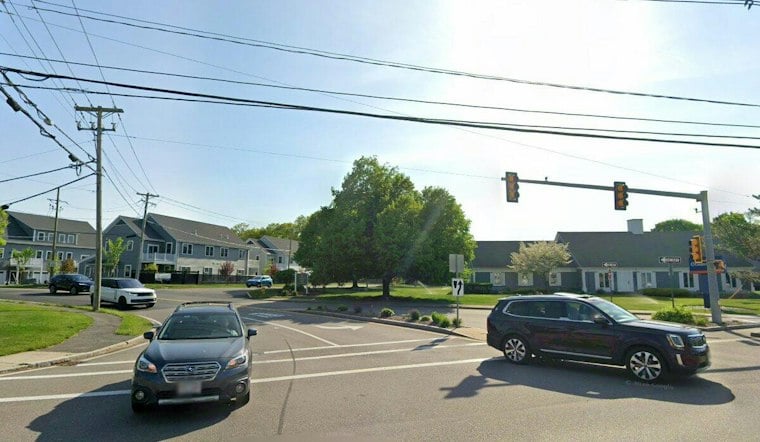
Norwell is shutting down its license-plate-reader cameras for good, directing Flock Safety to stop collecting data, remove the equipment installed around town and destroy whatever footage it has already gathered. The Norwell Police Department confirmed the decision affects both of the town's cameras — one at the Washington Street and Grove Street intersection, and another on Main Street near Jacobs Pond.
Police Chief Edward Lee said the move came after feedback from residents and discussions with the Norwell Select Board, according to a town announcement. Town Administrator Chad Lovett formally rescinded the permission Norwell had granted on December 3, 2025, allowing Flock Safety to install the camera equipment on town-owned property. Until the cameras are physically removed, the town says they will be covered or made inoperable, and the police department has already begun restricting internal access so officers and outside agencies can no longer view the feeds.
What the Cameras Were Tracking
Norwell's two-camera system had been active for less than a year but was logging a substantial amount of traffic. Over a recent 30-day stretch, the cameras captured 117,741 unique vehicle detections, and department users ran 21 search sessions that produced 72 hotlist hits, per the town's own published data. The town's policy on the cameras also states that Flock data is automatically deleted after 30 days unless it's preserved for a criminal investigation or other lawful law-enforcement purpose, and that the system does not use facial-recognition technology or attempt to identify drivers or passengers.
Norwell's reversal lands amid a broader reckoning playing out across Massachusetts. As WCVB reports, Flock Safety cameras remain in place in communities across the state even as the company holds deals with police agencies nationwide — deals it does not publicly disclose, and on which it declined to comment when WCVB sought a response. The station also noted it had requested a current list of Flock users from the ACLU of Massachusetts as part of its ongoing reporting on towns pausing or canceling their contracts.
A Statewide Pattern of Pullbacks
Norwell is far from alone. Boston.com reports that a growing number of Massachusetts communities are reconsidering their Flock relationships, with Natick, Watertown and Boston having already ended pilot programs with the company. Some towns moved after troubling misuse incidents: New Bedford temporarily disabled its cameras after an officer there was issued a protective hearing order following allegations she used the system to track a former girlfriend, while in Stow, police shut down cameras after an officer allegedly used the system and other police databases to look up someone he knew, according to the same Boston.com report.
Other towns have taken formal votes. The ACLU of Massachusetts says the North Attleboro Town Council voted 8-0 to temporarily suspend its seven Flock cameras after a public hearing, and that Nantucket's Select Board voted unanimously to end its Flock use, with police staff taking the cameras down themselves. In Ayer, the Select Board voted unanimously on Aug. 31 to terminate its contract and remove nine cameras, which were deactivated the following day, according to the Lowell Sun. Wilmington canceled its contract and said its two cameras would come down, citing privacy concerns raised by the community, per a separate Lowell Sun report. Not every town has moved as decisively — Quincy has tabled a decision on its own Flock contract, sending the matter to an oversight committee for further debate, the Boston Herald reports.
Conflicting Counts, Shared Direction
Just how many Massachusetts communities have walked away from Flock depends on who's counting. The ACLU of Massachusetts has put the number at more than 35 municipalities rejecting AI-powered mass surveillance cameras in one campaign page, and at more than 25 in another resource guide, while Boston 25 News has reported that at least 31 cities and towns have dropped or suspended their Flock contracts. The Boston Herald separately noted that at least seven communities took action in September alone to end local Flock use. Whatever the precise tally, the direction is consistent: more towns pulling back than adding on.
State lawmakers are also weighing in. According to WGBH, legislation filed on Beacon Hill, H 3755, would set guidelines and restrictions on automated license-plate-reader use, including limiting data retention to as little as 14 days unless tied to a criminal investigation. The same report notes a Suffolk County Superior Court judge has ruled that Massachusetts State Police must release audit-log documents and location records sought by the ACLU of Massachusetts, adding another layer of scrutiny to how the technology is used statewide.



