

























































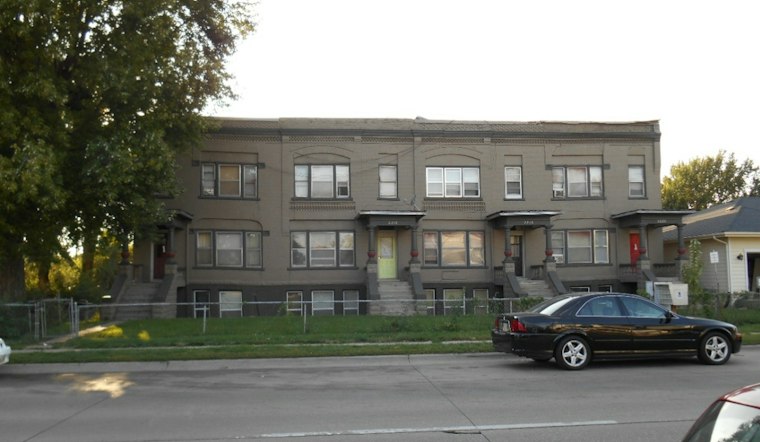
Omaha City Council voted Tuesday to lower the minimum number of parking spaces required for new residential developments, setting a new standard of one parking space per housing unit for projects including studios, townhouses and other residential units. The change marks a significant shift from the two-spaces-per-unit rule that has applied to single-family homes and townhome developments under the city's existing code.
According to KMTV 3 News Now Omaha, the council's approval reduces the minimum number of parking spaces developers must provide for new residential projects. Earlier reporting from KETV had described the existing rule requiring two spaces per unit for single-family homes and townhomes, a standard that WOWT reported would drop to one space per unit under the proposal, with duplexes and two-family housing falling from 1.5 spaces per unit to one.
The plan does not cap how much parking developers can build — it only lowers the floor. KETV's earlier coverage noted the proposal does not include a maximum number of parking spots, meaning builders can still add more spaces if they believe the market demands it. The Reader reported that the change would also let builders count a driveway space as a parking stall, and that Omaha's one-to-one parking ratio, as described by planning department representative Eric Englund, has already been in use for more than a decade in certain contexts.
Backers Point to Construction Costs and Affordability
Supporters of the change argue that requiring fewer parking spaces per home can trim land and construction costs, freeing up room for more affordable housing. Jonathan Spellman said as much in comments tied to the proposal, and Joshuah Marshall said reduced parking minimums give builders the flexibility to determine the optimal number of spaces based on actual market demand rather than a blanket mandate.
That argument tracks with research cited in the lead-up to the vote. KETV reported that the added cost of building a parking space is generally passed on to the renter or homeowner, and Omaha By Design executive director Kene Okigbo told the Reader that easing the requirement could allow for more affordable housing throughout the community. National research from localhousingsolutions.org similarly found that minimum parking mandates increase development costs by forcing builders to use more land or add structured parking, and that reducing those requirements can free up land for additional units.
Cost estimates for a single required parking space varied depending on the source. Spark Capital policy analyst Zeke Rouse told KETV that one parking requirement can add between $10,000 and $50,000 per space, while the Reader reported the same analyst citing a study putting the range between $5,000 and $50,000 per space. A separate 2020 national study referenced by localhousingsolutions.org found that parking structures added an average of $56,000 in total development cost per unit for Low-Income Housing Tax Credit projects.
Opponents Worry About Spillover Onto Neighborhood Streets
Not everyone welcomed the change. Jerry Johnson said cars displaced by reduced parking requirements will end up parked in surrounding southwest Omaha neighborhoods, a concern echoed broadly by opponents who fear the new standard will increase reliance on street parking. That worry was aired during a public hearing on the Omaha parking plan ahead of the council vote.
Research on similar reforms elsewhere suggests the concern isn't baseless, though outcomes vary by city and context. A study published on sciencedirect.com found that parking requirements were the most important predictor of how much parking actually gets built, and that removing those requirements leads to less parking provision overall — producing likely cost savings for developers and potentially lower housing prices for consumers. The same study found that even without mandates, demand doesn't disappear entirely: about 70% of developments with no parking requirements still included some parking voluntarily. Separately, localhousingsolutions.org cautioned that removing parking mandates without complementary transportation policy can increase reliance on public street parking.
How Other Cities Have Handled the Same Tradeoff
Seattle offers the most detailed case study of what happens when a city loosens parking mandates. The city reduced or eliminated parking requirements in many central and transit-oriented areas in 2012, and a study of 868 residential developments containing more than 60,000 housing units approved between 2012 and 2017 found that developers built 40% less parking than would have been required under the old rules — a reduction of about 18,000 parking spaces and an estimated $537 million in savings. Nearly 20% of the Seattle buildings studied included no parking at all, and about 88% had fewer than one parking space per unit, according to the same research.
New York City has taken a narrower approach, eliminating off-street parking requirements only for subsidized and senior housing located within designated transit zones, per localhousingsolutions.org. Whether Omaha's broader, citywide shift to a one-space-per-unit minimum will produce savings, affordability gains, or street-parking strain similar to what other cities have seen remains to be seen as the new standard takes effect for upcoming residential projects.





