

























































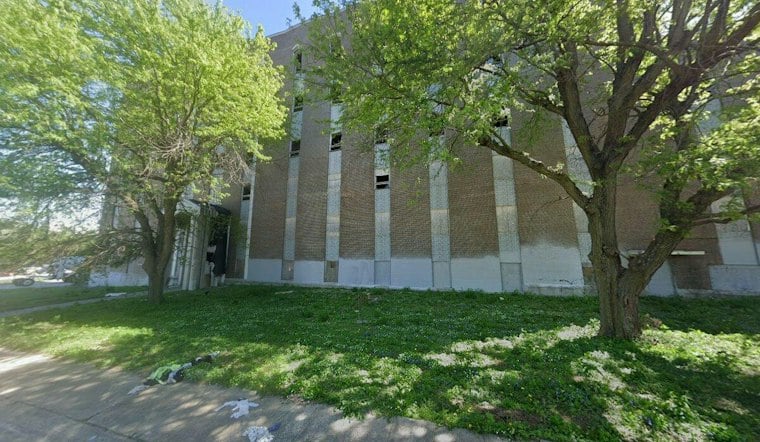
A vacant warehouse that once housed the Salvation Army's Men's Social Services Center near 25th and Center Streets could soon be demolished to make way for nearly 200 units of income-restricted housing, under a proposal that went before the Omaha City Council this week. Developers behind the plan say the new apartments and townhomes would be priced 20% below comparable market-rate projects in the area.
The proposal, from Clarity Development, calls for tearing down two vacant Salvation Army warehouse buildings at the site and replacing them with 180 affordable apartments spread across two structures, plus 18 rowhouses with two-car garages built on an acre the developer purchased across the street, according to KETV. The rowhouses are designed to closely resemble market-rate townhomes built in Elkhorn, while the apartment complex will include both garage and surface-lot parking, according to reporting detailed by the Omaha World-Herald.
Rahul Agarwal, who presented the investment proposal to the Omaha City Council, said the project should look and feel like a market-rate development, per the station's report. Clarity Development is seeking just over $3.6 million in tax increment financing from the city toward a project with a projected total cost of $56.5 million, and the developer is working with Front Porch Investments, an Omaha housing non-profit, on the financing. Front Porch Investments, created in 2021, launched its Urban Core Housing Fund in partnership with the City of Omaha to blend philanthropic and public dollars for affordable and workforce housing projects.
A Century of History at the Site
The property at 2501 Center St. has a long industrial and social-service history. It originally opened in 1917 as Miller Cereal Mills, was sold to Kellogg's in 1943, and was taken over in 1965 by the Salvation Army for its Men's Social Services Center, according to Omaha Exploration. The site has sat vacant and deteriorating in the years since the Salvation Army's program ended there.
The warehouse conversion sits within Omaha's historic Sheelytown area. Separately, The Intersections is a health and sports campus spanning 23 acres at South 28th and Martha Streets and is a $100 million development, per a report from Realty Resources. The residential proposal comes amid redevelopment of South Omaha industrial sites.
Council Members Weigh In
At the public hearing, City Council members Danny Begley and Pete Festersen both voiced support for the proposal, per the station's report. Begley said older neighborhoods like this one should be incentivized and invested in, echoing a broader push by city leaders to steer development dollars into aging commercial corridors.
Neeraj Agarwal said the project could begin converting industrial land in the area to residential uses. Clarity Development may also add 160 affordable apartments for senior veterans at an adjacent site, and the developer plans to complete the first phase of the project toward the end of 2028 or in early 2029. The City Council is expected to vote on the proposal at its next meeting, according to the same account.
Why the Long-Term Financing Option Exists
The extended TIF terms available to Clarity Development trace back to a 2022 decision by Omaha's Planning Board, which designated the broader South Omaha project area as extremely blighted. That designation qualifies redevelopments there for up to 20 years of tax increment financing under Nebraska law, rather than the standard 15-year term, according to The Reader.
Omaha has also updated its tax increment financing policies in connection with affordable housing, according to Baird Holm LLP. That policy shift gives the council a framework for weighing projects like Clarity Development's against the affordability commitments developers are willing to make.
A Housing Gap Far Bigger Than One Project
Housing challenges in the region help explain why a project of this size is drawing attention from city leaders. Nebraska Public Media has reported on affordable housing challenges in the Omaha area.
Affordable housing remains a concern near 25th and Center, helping explain why income-restricted developments there are drawing interest from both city officials and housing advocates.
The 2501 Center St. project also fits a wider regional trend: in 2026, apartment construction in the Omaha metro area outpaced single-family home construction for the first time, driven by elevated home prices and growing demand for multi-family rental options, according to the Flatwater Free Press. Statewide, Nebraska's Strategic Housing Framework provides a broader context for housing efforts.



