

























































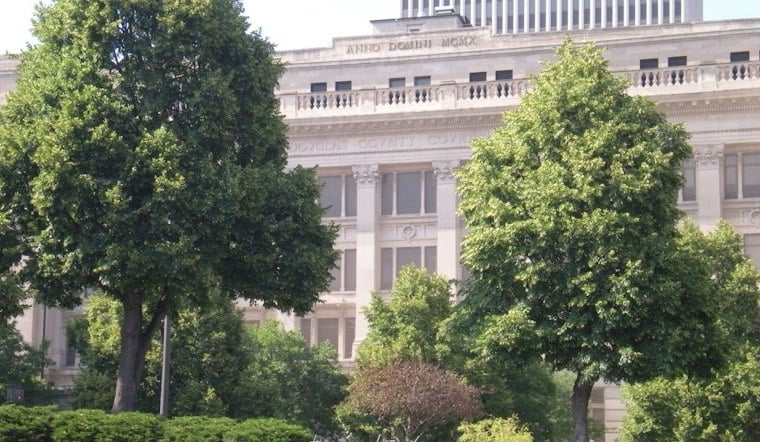
Omaha workers will see their minimum wage climb with inflation starting in 2027, but the city lost its bid to guarantee the same higher pay for teenage employees after a Douglas County judge split his ruling down the middle. Judge Timothy Burns decided on September 28 that Omaha can tie annual minimum wage increases to the Midwest Consumer Price Index because of local cost-of-living concerns, while also blocking the city's attempt to eliminate the lower youth minimum wage rates set by state law.
The ruling, first reported by the Omaha World-Herald, means Omaha's adult minimum wage ordinance may go into effect even as the city's push for a higher wage floor for younger workers remains blocked. According to Nebraska Public Media, Burns found that Omaha had failed to show a strictly local concern that would justify overriding the state's youth wage exemptions, even as he agreed the city could set its own inflation-based pace for adult pay.
The Omaha City Council had adopted an ordinance establishing a minimum wage for workers of most ages, which Mayor John Ewing signed into law, per the World-Herald's reporting. That ordinance included both a higher minimum wage for adults and a separate, higher rate meant to cover younger workers — the piece the judge struck down. City officials had argued the state constitution gives Omaha home-rule authority to set its own minimum wage, while the Nebraska Attorney General's office contended the ordinance was inconsistent with state law, according to the World-Herald.
How We Got Here: A Voter Mandate Rewritten by Lawmakers
The fight traces back to November 2022, when Nebraska voters approved Initiative 433 with nearly 60% support, creating a $15 hourly minimum wage that phased in from $9.00 in 2023 to $15.00 in 2026 and included annual inflation adjustments with no youth subminimum carve-outs, per Ballotpedia. That changed in early 2026, when the Nebraska Legislature passed Legislative Bill 258 on a 33-16 vote, replacing the voter-approved CPI indexing with a flat 1.75% annual cap and setting a reduced $13.50 hourly rate for 14- and 15-year-old workers. Governor Jim Pillen signed the bill on February 9, as detailed by Nebraska Public Media.
Under the revised Wage and Hour Act, effective July 18, the $13.50 youth rate applies only to non-emancipated 14- and 15-year-olds until 2030, and employers may also pay 16- to 19-year-old new hires that same $13.50 training wage for up to 90 calendar days, according to the Nebraska Legislature. Turning 16 or achieving emancipation automatically moves a worker to the standard minimum wage. State wage analysis published in September found that under LB 258's flat-rate formula, a full-time minimum wage worker earning $15.26 in 2027 will take home roughly $598 less annually before taxes than they would have under the original voter-approved inflation formula, based on a standard 2,080-hour work year, per KLIN.
Omaha's Adult Wage Will Outpace the State Rate
With Burns's ruling allowing the inflation-adjusted raises to stand, Omaha's minimum wage for adult workers is projected to rise 3.6% in 2027, pushing local pay above Nebraska's statewide statutory rate — a jump tied to August 2026 inflation data showing that same Midwest CPI increase, Nebraska Public Media reports. Omaha City Council President Danny Begley said the ruling favors working people and local control, according to the World-Herald's account of the decision.
Small business advocacy groups had lobbied for the youth wage changes earlier in the year. The National Federation of Independent Business supported the legislation in February, arguing that lower starting rates offset employer training costs and encourage businesses to hire inexperienced teenage workers, per the National Federation of Independent Business. Proponents of the change argued that high minimum wages reduce entry-level job opportunities for teens. With LB 258's passage, Nebraska became the fourth Midwestern state to set a separate, lower statutory minimum wage for minor workers, joining Illinois, Ohio and Michigan, according to the Council of State Governments Midwest — Illinois sets a $13 youth rate while Ohio's sits at $7.25.
Lincoln's Ordinance Remains Frozen Amid a Separate Suit
Omaha is not alone in this fight. Nebraska Attorney General Mike Hilgers filed lawsuits against both Omaha and Lincoln in 2026, arguing that municipal minimum wage ordinances violate the state constitution and create an unconstitutional patchwork of local labor rules, as outlined in a statement carried by the League of Women Voters of Nebraska. Lincoln's case has fared worse than Omaha's so far: on July 17, Lancaster County District Judge Lori Maret issued a temporary injunction blocking Lincoln from enforcing its own wage ordinance entirely, ruling that minimum wage regulation is likely a matter of statewide concern, Nebraska Public Media reported at the time. Lincoln's Ordinance 21872 had sought to preserve $15 pay across all age groups, a broader protection than what survived in Omaha's case.
The split outcome in Douglas County leaves Omaha's ordinance partially intact while the underlying legal question — whether Nebraska cities can set their own wage floors at all — remains unresolved. With Lincoln's ordinance frozen and Omaha's youth wage provision struck down, the fight over home-rule authority versus state preemption appears likely to continue working through Nebraska's courts.





