

























































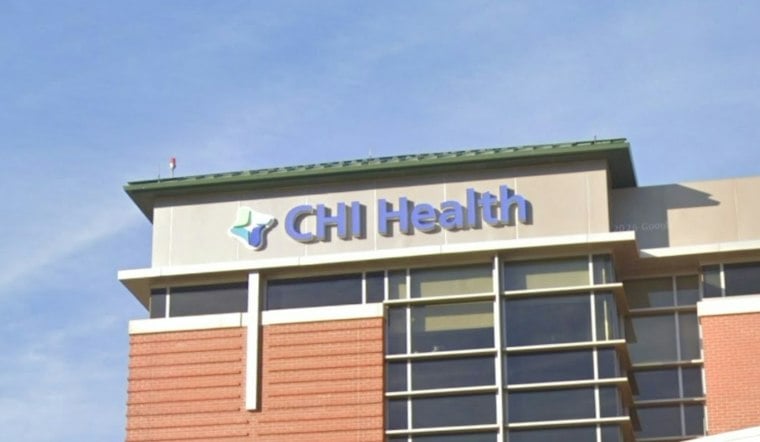
A 76-year-old Omaha woman who found a new breast lump last year just became the first person in Nebraska to have it destroyed by freezing instead of cutting it out. Char Malmgren had already been through a partial mastectomy seven years earlier and 16 weeks of radiation, but this time doctors offered her something different: an ice probe instead of an operating table.
Malmgren received Nebraska's first cryoablation, according to KETV, which reported on the procedure debuting at CHI Lakeside. The minimally invasive, image-guided treatment is used for select early-stage breast cancers. Rather than removing the tumor surgically, doctors use liquid nitrogen injected directly into the tumor through a biopsy needle to freeze it in place.
Malmgren found the lump in 2025, years after her first cancer diagnosis, and said she had kept up with regular mammograms for 50 years. She also said her husband died of cancer. For her, the freezing procedure meant avoiding another round of surgery after already going through a partial mastectomy and more than three months of radiation.
How the Freezing Procedure Works
Dr. Rakhshanda Rahman, who performs the procedure using a machine called Elsa, says the entire tumor needs to be visible during treatment and uses saline to prevent frostbite to the skin during the freeze. The appointment itself takes about two hours under local anesthesia, and patients can go home the same day. Afterward, the body breaks down the treated lump on its own rather than having it surgically removed.
Rahman, who is identified by CHI Health as chief of breast surgery for both CHI Health and Creighton University School of Medicine, has performed three cryoablations in Nebraska and 40 across the country. She said she prefers cryoablation for early-stage cancers, though the procedure comes with strict eligibility rules: it requires tumors 15 millimeters or smaller, estrogen-receptor-positive status, and is used to treat invasive ductal carcinomas.
What the Research Actually Shows
The clinical evidence behind cryoablation is still narrow. The pivotal ICE3 trial recruited patients aged 60 and older, enrolling 194 women with unifocal, ultrasound-visible invasive ductal carcinoma measuring 1.5 centimeters or smaller, according to CancerNetwork.
CancerNetwork reports that the ICE3 study authors said cryoablation may be considered an alternative to lumpectomy for this select, narrowly defined patient population when followed by appropriate adjuvant treatment. But not every expert in the field frames cryoablation as a universal substitute. Yolanda Bryce, M.D., told the Society of Interventional Radiology that surgery is still the best option for tumor removal, even though some patients cannot undergo it. A separate retrospective study of 60 such patients, who were not surgical candidates or had refused surgery, tracked tumors ranging from 0.3 to 9 centimeters and found a 10% recurrence rate after 16 months, with patients able to go home the same day under local anesthesia or minimal sedation, per the interventional radiology group's findings.
Why Doctors Keep Pushing Mammograms
Rahman's more immediate message, echoed in the KETV report, centers on screening. Rahman urged people to maintain regular cancer screenings and said mammograms save lives, noting that mammography can catch cancer at a stage that is 97 to 98% curable — a figure that drops to 80%, 60%, or lower when screening is skipped altogether.
She recommends regular mammograms starting at age 40, and says people with a family history of breast cancer should begin screenings ten years before their youngest affected relative was diagnosed — for example, starting at age 30 if an aunt was diagnosed at 40.





