

























































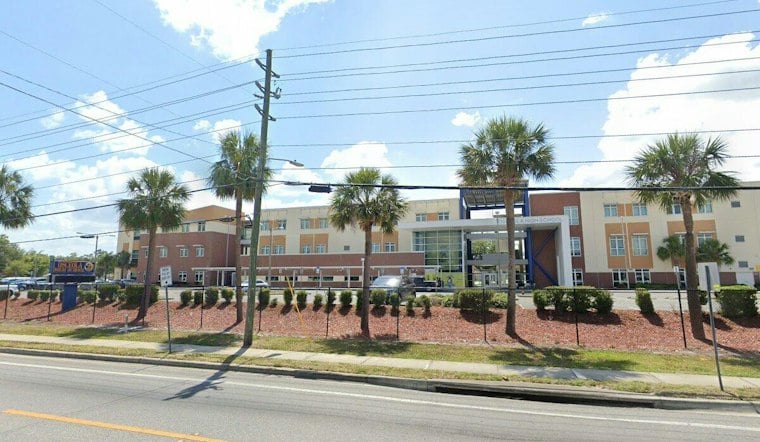
Eric Pinellas is the head football coach at Osceola High.
PSA results between 0 and 3 were once considered normal, though prostate cancer risk exists along a gradient even at low levels.
The U.S. Preventive Services Task Force notes that many men with prostate cancer never develop symptoms and, without screening, would never know they have the disease.
A Coach Who Won’t Step Away From the Sideline
Pinellas has deep roots at Osceola High. He was a four-year starting running back from 1986 to 1989, according to Around Osceola. He returned to the school in 2000 to coach linebackers for the junior varsity team and was later elevated to head football coach, succeeding longtime coach Doug Nichols, whose teams went 111-23 with three state championship appearances. Pinellas has also served for years as Osceola’s head track and field coach.
A Family’s Tragic Loss
Pinellas has also experienced profound loss. His son, Eric Pinellas Jr., was shot and killed in Kissimmee in January 2023, an attack ClickOrlando reported left the 30-year-old father of two dead early that Wednesday morning. Eric Pinellas Jr. was shot 11 times.
Turning a Program Around Through Adversity
Turning a Program Around Through Adversity On the field, Osceola reached the state championship game in 2024 under Pinellas, where the Kowboys fell to West Boca Raton but still closed the season with a 12-3 record.
The USPSTF notes that PSA-based screening programs for men ages 55 to 69 may prevent roughly 1.3 prostate cancer deaths per 1,000 men screened over about 13 years, and may also prevent around three cases of metastatic prostate cancer per 1,000 men screened. The task force frames the decision to pursue periodic PSA screening as an individual one to be made with a clinician, while recommending against such screening for men 70 and older. It also lists potential harms of screening, including false positives, overdiagnosis, overtreatment, and complications like incontinence and erectile dysfunction. Separately, Memorial Sloan Kettering has noted that while PSA screening has been shown to reduce prostate cancer deaths, it can also detect cancers unlikely to ever spread, leading to treatment that may not have been necessary.
The statistics highlight the trade-offs involved in prostate cancer screening.



