

























































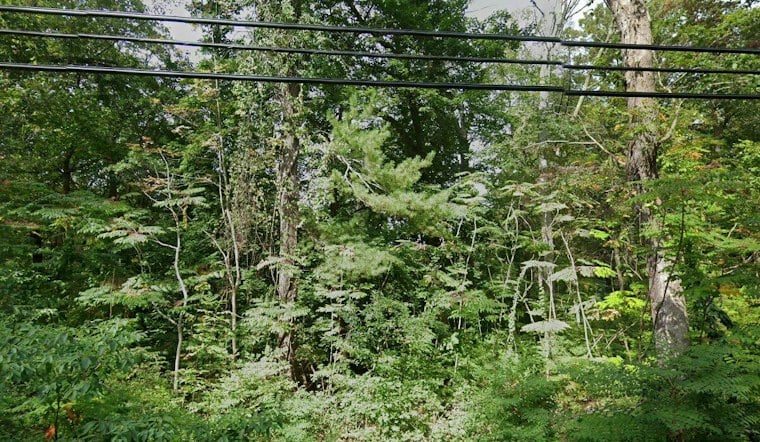
A pair of trees with roots tracing back to the age of the dinosaurs have found a new home inside the greenhouses of Planting Fields Arboretum in Oyster Bay. Staff planted two Wollemi pine specimens on September 17, one in the Main Greenhouse and the other in the Camellia Greenhouse, adding a species once presumed extinct to the Gold Coast estate's collection.
Planting Fields Arboretum acquired the rare conifers in September, according to Public Gardens, which detailed how the trees were sourced from Iseli Nursery, a respected grower on the West Coast, before being shipped east and received by Atlantic Nursery on Long Island. The Wollemi pine is an Australian native long believed to be extinct, the organization notes, making its arrival at the Oyster Bay arboretum a notable addition for a public garden on Long Island.
A Species Rediscovered in a Hidden Canyon
The Wollemi pine's story begins not in a greenhouse but in a remote gorge outside Sydney. In September 1994, David Noble discovered what is now called Wollemia nobilis in a deep, narrow canyon in Wollemi National Park, according to the Australian Botanic Garden. Because the tree's last known fossil record dates back roughly two million years, botanists had assumed the species was long gone until Noble's find proved otherwise.
That discovery left the Wollemi pine among the rarest plants on Earth. Fewer than 100 Wollemi pines grow at several sites in Wollemi National Park, in canyons about 150 kilometers from Sydney. A separate recovery-plan document from Australia's environment department lists the wild population at just 45 mature individuals and 46 seedlings, though that figure comes from a lower-confidence snippet.
Conservation Pushed the Tree Across the Globe
Since 2008, conservation efforts in Australia and around the world have focused on cultivating the species as insurance against its precarious wild numbers, Public Gardens reports. That work has included counting wild seedlings, which the Australian Botanic Garden says grow painfully slowly, averaging just 1 centimeter annually, with most topping out under 30 centimeters tall even as adults in the wild reach striking heights. More than 200 seedlings have been documented in the wild population, according to the same research project.
The push to propagate the tree in captivity means the Wollemi pine now turns up far from its native canyons. Public Gardens estimates that fewer than a few hundred specimens exist across public gardens, zoos and private collections throughout the United States. In Washington, D.C., the U.S. Botanic Garden features Wollemi pines among more than 500 rare plants in its collection, part of its stated mission to conserve threatened species and educate visitors, according to the Architect of the Capitol.
What Visitors Can See at Planting Fields
At Planting Fields, the newly planted trees join an estate that News 12 Bronx describes as spanning hundreds of acres, with formal gardens, wooded trails, landscaped grounds and greenhouses holding plants gathered from around the world. The report notes the Wollemi pine remains critically rare in the wild, with only a handful of specimens surviving there, even as conservation efforts have helped spread it to collections across the globe.
Planting Fields Arboretum State Historic Park sits in Oyster Bay, where the Main and Camellia greenhouses are open Wednesday through Monday from 10 a.m. to 4 p.m. and closed Tuesdays, per Public Gardens. The broader grounds are open daily from 9 a.m. to 4:30 p.m. Visitors hoping to see the ancient conifers in person should check the arboretum's official website beforehand, since greenhouse access and availability can vary seasonally.





