

























































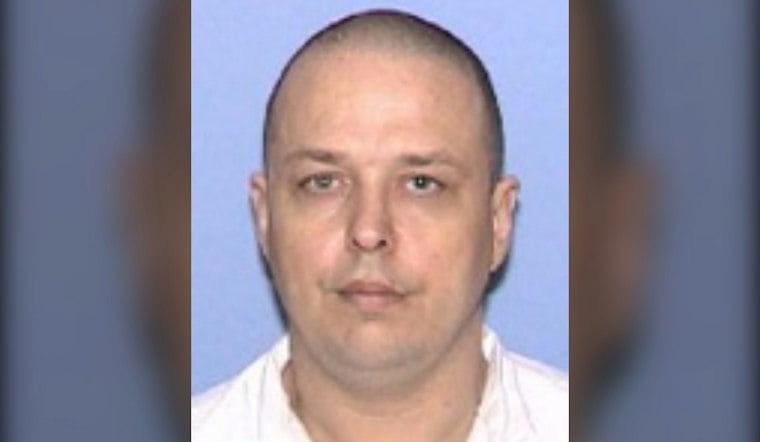
Robert Roberson, a 59-year-old Palestine man convicted in 2003 of killing his 2-year-old daughter Nikki, is still waiting to learn whether a Smith County judge will grant him a new evidentiary hearing — the latest turn in a death penalty case that has already outlasted three scheduled execution dates. The question now sits with Judge Austin Reeve Jackson, who must decide how to proceed after both sides filed competing briefs this summer over what role new scientific understanding should play in reexamining Nikki's 2002 death.
Roberson's prosecution relied in part on evidence that Nikki showed symptoms associated with shaken baby syndrome, a diagnosis that has since become one of the most widely scrutinized in forensic medicine. According to The Dallas Morning News, the dispute over that diagnosis's validity has already delayed three of Roberson's execution dates, including ones set for 2016 and 2024. At trial, doctors testified that Nikki exhibited the so-called triad of symptoms tied to shaken baby syndrome, according to the Texas Tribune, while Roberson's attorneys have countered that the girl, who was chronically ill, died of natural and accidental causes, including severe, undiagnosed pneumonia and a fall from bed, as reported by Yahoo News.
A Case That Keeps Circling Back
The current round traces to October 2025, when the Texas Court of Criminal Appeals granted Roberson a stay of execution and remanded his case to the district court for further consideration, per the Death Penalty Information Center. That halted an execution scheduled for October 17, 2025, sending Roberson's case back for further fact-finding, according to the Dallas Morning News. It wasn't the first time his legal team secured a reprieve: a 2016 stay led to an evidentiary hearing, but an Anderson County judge ruled in 2021 that the evidence presented there wasn't enough to change Roberson's fate.
Since the October 2025 remand, the Smith County district court has held two status conferences on the case but nothing further, the Dallas Morning News reports. At an April status conference, Roberson's attorneys and prosecutors agreed to brief the similarities and differences between his case and that of Andrew Roark, a Dallas County man whose conviction was vacated after courts found that shaken baby syndrome science had evolved since his trial. Both sides submitted those briefs in June and July, though the state's filing came in on June 18 after an extension request wasn't granted — it will still be considered, according to KLTV.
Roberson's Attorney Points to the Lucio Precedent
Roberson's lead attorney, Gretchen Sween, has asked Judge Jackson to schedule an evidentiary hearing as soon as possible, and she's pointing to another Texas death penalty case to make her case. Sween cited the Texas Court of Criminal Appeals' decision in Melissa Lucio's case, per the Dallas Morning News, in which the appellate court rejected Lucio's bid for relief in September despite a trial judge having declared her actually innocent nearly two years earlier. According to the Death Penalty Information Center, the court's 5-4 unsigned decision declined to adopt the habeas court's findings, even though a judge concluded in October 2024 that there was clear and convincing evidence no rational juror could convict Lucio of killing her daughter.
Crucially, Lucio did not present witnesses in a live evidentiary hearing after her case was remanded for further factual development, the Dallas Morning News reports. Sween has argued that failure to hold a robust evidentiary hearing in Roberson's case could itself become grounds for the appeals court to reject an affirmative recommendation — and she has said the appeals court's original order presupposed that a hearing was expected. An evidentiary hearing, unlike a paper review, allows both sides to present evidence and question witnesses before a judge, the outlet notes.
What a New Hearing Would Examine
Sween has proposed limiting any new hearing to developments since Roberson's 2021 evidentiary hearing, according to the Dallas Morning News, addressing changes in scientific understanding of infant injuries, Nikki's condition during her final medical crisis and autopsy, and the reliability of the state's witnesses. She has also asked Jackson to hold an in-person or Zoom status conference and, separately, to send the question of whether to proceed back to the appeals court for clarification if needed. Sween has described the proceedings she's requesting as carrying the gravity this case deserves, per the same report.
Texas prosecutors, meanwhile, have argued that the appeals court never expressly specified that an evidentiary hearing was required, and that the trial judge must first issue an order defining the hearing's scope and what evidence can be admitted. Without such an order, the state contends, new evidence — including a 2000 doctor's letter about Nikki's health problems and other documents not used at trial — cannot yet be allowed, according to KLTV. Sween has warned that organizing, scheduling and completing a full hearing could take months once it's approved.
The Roark Parallel Looms Large
The comparison to Andrew Roark's case is central to the current briefing fight. Roark's conviction was vacated after the Texas Court of Criminal Appeals found that scientific knowledge regarding shaken baby syndrome, short-distance falls, rebleeding of subdural hematomas and retinal hemorrhaging had evolved significantly since his original trial, according to the court's opinion published by Justia. The court concluded it was more likely than not that Roark would not have been convicted had that evidence been available at trial, and his expert witnesses would have testified differently had his case gone before a jury in 2024. Notably, the same child-abuse specialist testified at both Roark's and Roberson's original trials, according to Sween, as reported by the Texas Tribune.
Former Texas Court of Criminal Appeals Judge Bert Richardson has said Roberson should be allowed to develop his claims in a full evidentiary hearing, the Dallas Morning News reports. The stakes of that question are underscored by a broader pattern: at least 34 people convicted based on a shaken baby syndrome diagnosis have been exonerated, according to the Texas Tribune, and more than 30 people imprisoned after such convictions have later been declared innocent, per the National Registry of Exonerations as cited by the Dallas Morning News's earlier reporting on the Roark case.
Scientific Understanding Has Shifted Since 2003
Research conducted since Roberson's conviction has found that many symptoms associated with shaken baby syndrome can also occur from short falls, as well as a wide range of naturally occurring medical conditions and accidental traumas, the Texas Tribune reports. The American Academy of Pediatrics widened its terminology in 2009 to abusive head trauma and acknowledged symptoms could stem from causes other than shaking, though it clarified in 2020 that it continues to embrace shaken baby syndrome as a valid diagnosis. A juror from Roberson's 2003 trial has said that had the newer evidence been available, she would have found him not guilty.
A Jefferson County man convicted in 2004 in a shaken baby syndrome case was also recommended for a new trial after a judge reviewed new evidence, per KLTV, while a Georgia judge separately vacated Danyel Smith's shaken baby syndrome conviction after concluding changes in science had undercut its integrity, according to Yahoo News. Smith and Roberson were both convicted in 2003 in cases involving male caregivers who brought injured children to hospitals seeking medical care. For now, Roberson's case remains in Jackson's hands; the judge could grant the requested in-person hearing, call another status conference, or take some other path before ultimately sending a recommendation back to the Texas Court of Criminal Appeals.



